
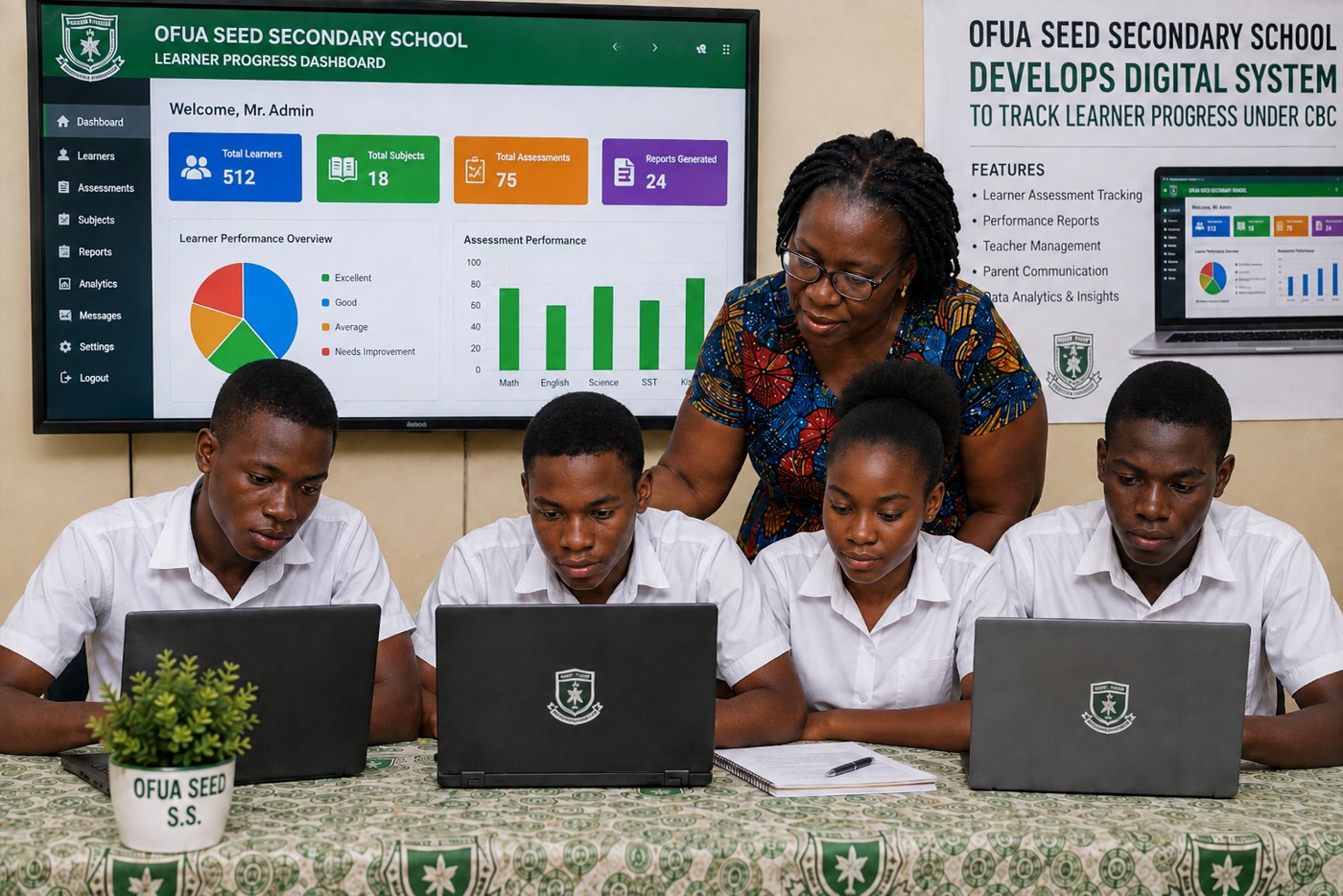
Ofua Seed Secondary School has developed an innovative CBC Learner Progress Tracking System designed to improve how schools record, monitor and report learners’ competency development.
The offline desktop application was presented as part of the NCC 2026 Secondary Schools’ ICT Club Competition. It demonstrates how learner-led digital innovation can help schools address practical challenges associated with implementing the Competency-Based Curriculum.
Student Innovators Behind the Project
The system was developed by a team of student innovators from Ofua Seed Secondary School:
- Kitara Simon Peter
- Aminyaira King David
- Madrama Peter
- Mania Philomena
Working together, the learners identified a major challenge facing teachers: the difficulty of continuously tracking learner competencies using manual records.
Addressing Challenges in CBC Assessment
Under the Competency-Based Curriculum, teachers are expected to assess learners continuously and monitor how they develop different competencies over time.
However, depending heavily on paper-based records can create several challenges, including:
- Difficulty tracking learner progress across different school terms
- Frequent errors when calculating assessment results
- Difficulty retrieving previous learner records
- Excessive paperwork and administrative workload
- Delays in preparing competency-based reports
- Reduced effectiveness of continuous assessment
The Ofua Seed Secondary School team therefore developed a digital solution that could make CBC assessment more accurate, organised and manageable.
About the CBC Learner Progress Tracking System
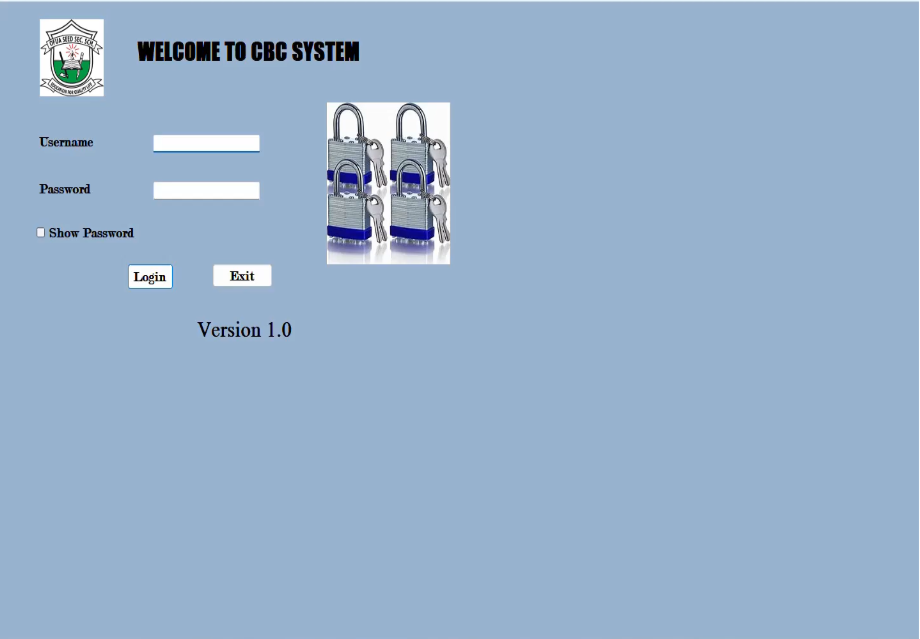
The CBC Learner Progress Tracking System is an offline desktop application developed using Visual Basic.
It enables teachers to record, monitor and evaluate learners according to demonstrated competencies instead of relying only on traditional marks and class rankings.
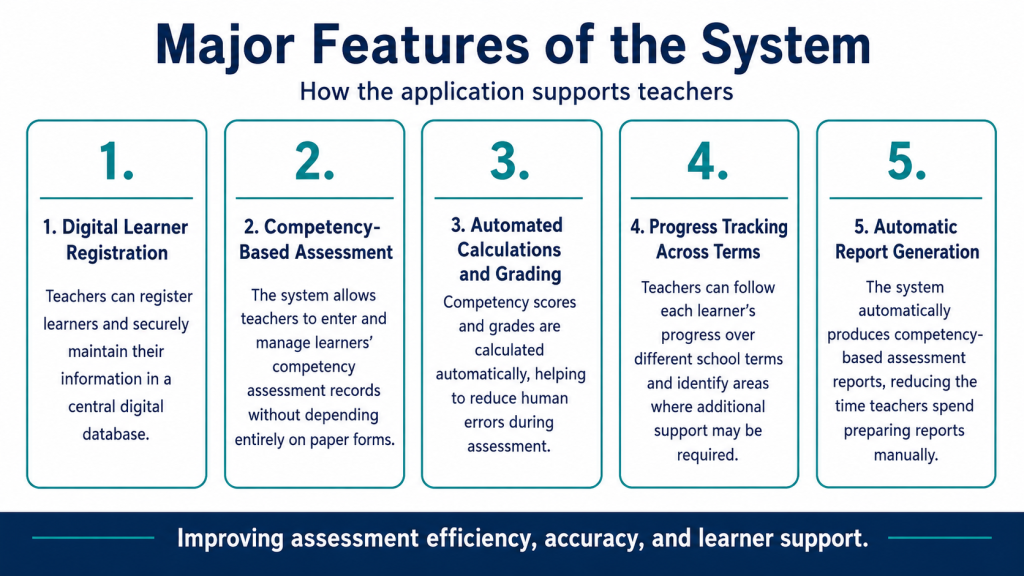
The system provides teachers with a central platform for managing learner information, assessments, progress records and competency-based reports.
How the System Works
The system was developed using the Rapid Application Development methodology, commonly known as RAD.
This approach allowed the student team to develop and test the application progressively while receiving feedback from intended users.
The development process included:
- Gathering user requirements
- Analysing the existing assessment challenges
- Designing the system interface
- Designing the database
- Implementing the application
- Testing its different functions
Through the main dashboard, a teacher can access learner registration, assessment, progress tracking and report-generation functions.
The application uses an SQLite database to store learner information and assessment records.
Expected Benefits to Schools
The CBC Learner Progress Tracking System has the potential to significantly improve assessment and reporting in schools.
| Reduced Paperwork | Digitally storing assessment records can reduce the number of paper forms teachers are required to complete and maintain. |
| Improved Accuracy | Automatic calculations, grading and report generation can minimise errors associated with manual assessment processes. |
| Faster Report Preparation | Teachers can generate competency-based reports more quickly instead of compiling every report manually. |
| Better Learner Monitoring | Progress records maintained across different terms can help teachers understand how individual learners are developing. |
| Quick Access to Records | A searchable digital database makes it easier to retrieve current and historical learner information. |
| Stronger Continuous Assessment | Maintaining accurate and up-to-date competency records can help teachers make better instructional decisions and provide appropriate support to learners. |
Challenges Encountered During Development
Like many student-led technology projects, the team experienced several challenges while developing the application.
These included limited development time because of academic responsibilities and other school activities.
Financial limitations also affected access to suitable computer hardware and advanced software-development tools.
The learners additionally had limited experience working with the Visual Studio development environment. This increased the time required to design, debug and implement some of the system’s functions.
Despite these challenges, the team successfully developed a promising prototype that demonstrates the value of practical ICT education in schools.
Plans for Future Development
The learners hope to improve the CBC Learner Progress Tracking System by introducing more advanced capabilities.
The proposed future improvements include:
- Artificial intelligence for analysing learner records
- Support for multiple schools
- Integration with the Education Management Information System
- Automatic backup of records to cloud storage
- SMS notifications for parents and guardians
These improvements could transform the system from a school-level desktop application into a wider digital platform supporting teachers, learners, school administrators and parents.
Empowering Learners Through Digital Innovation
The project shows that learners can use technology to develop practical solutions to challenges within their schools and communities.
By combining Visual Basic programming, database management and an understanding of the Competency-Based Curriculum, the Ofua Seed Secondary School team has demonstrated creativity, teamwork and problem-solving skills.
The CBC Learner Progress Tracking System is not only a competition project. It is an example of how school ICT Clubs can prepare young people to become innovators capable of contributing to Uganda’s digital transformation.

Leave a Reply
You must be logged in to post a comment.