Empowering Learners to Create, Lead and Solve Problems Through Technology
School-Based ICT Clubs for Digital Skills, Innovation and Sustainable Computer Laboratories
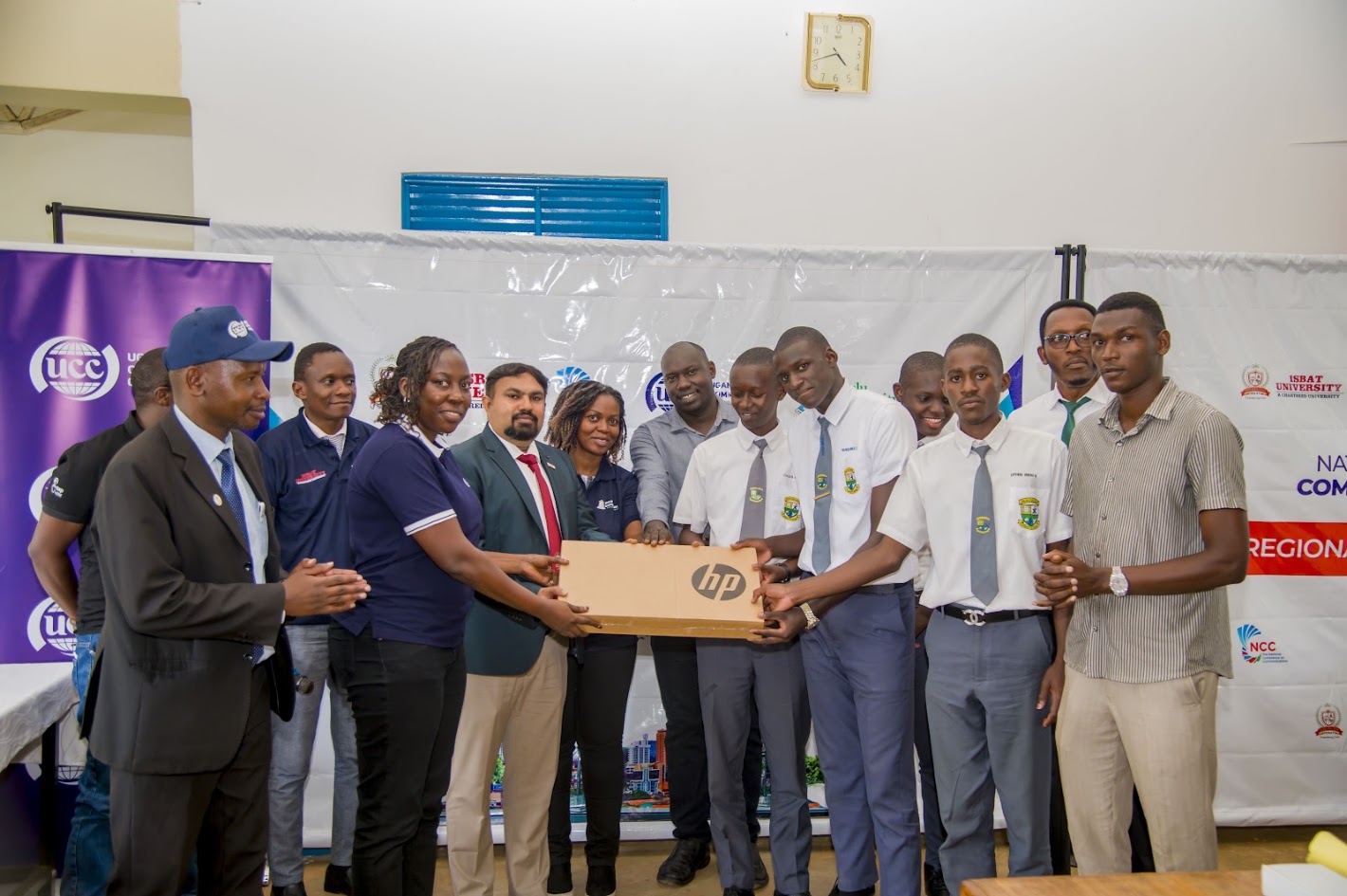
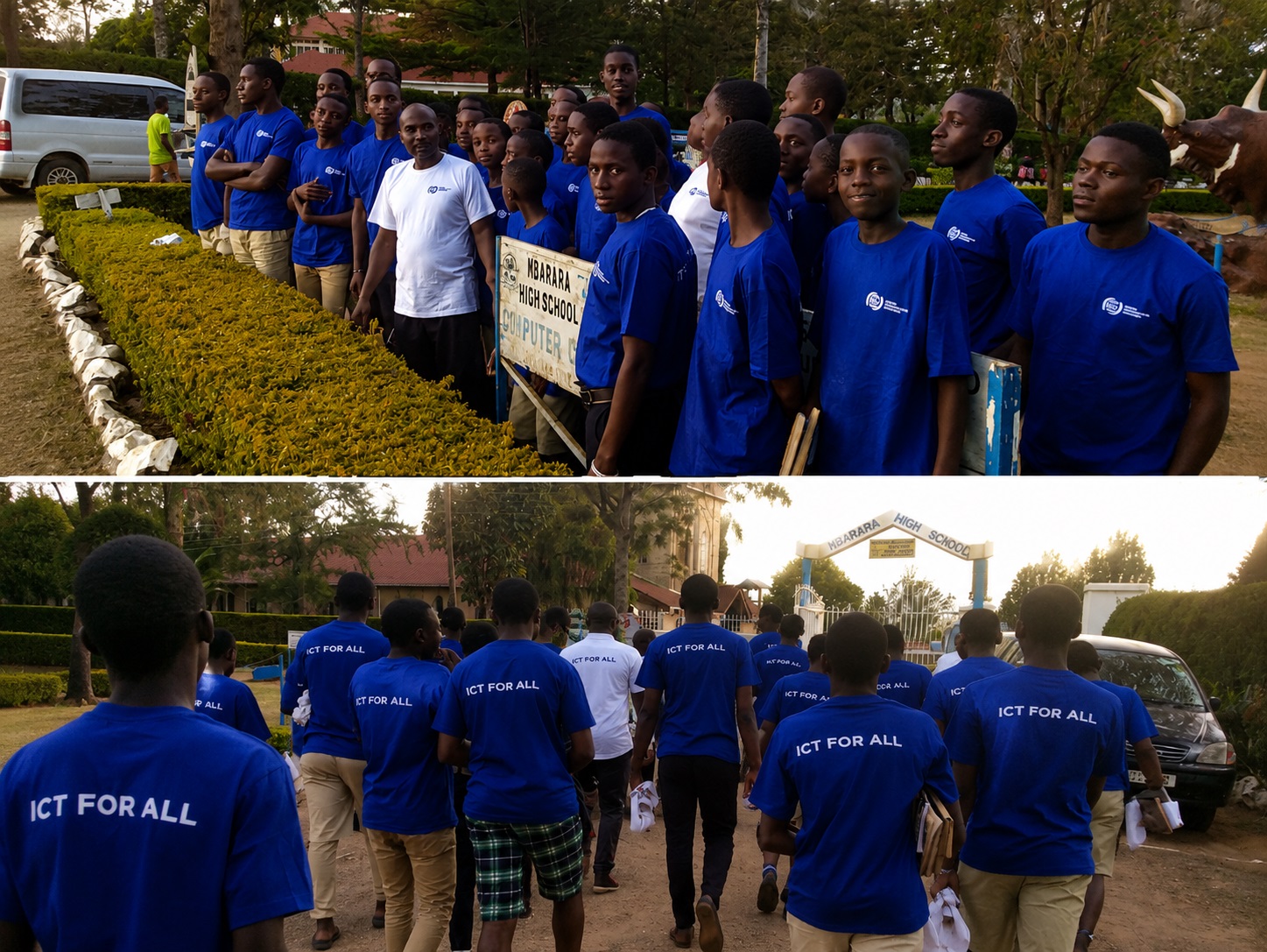
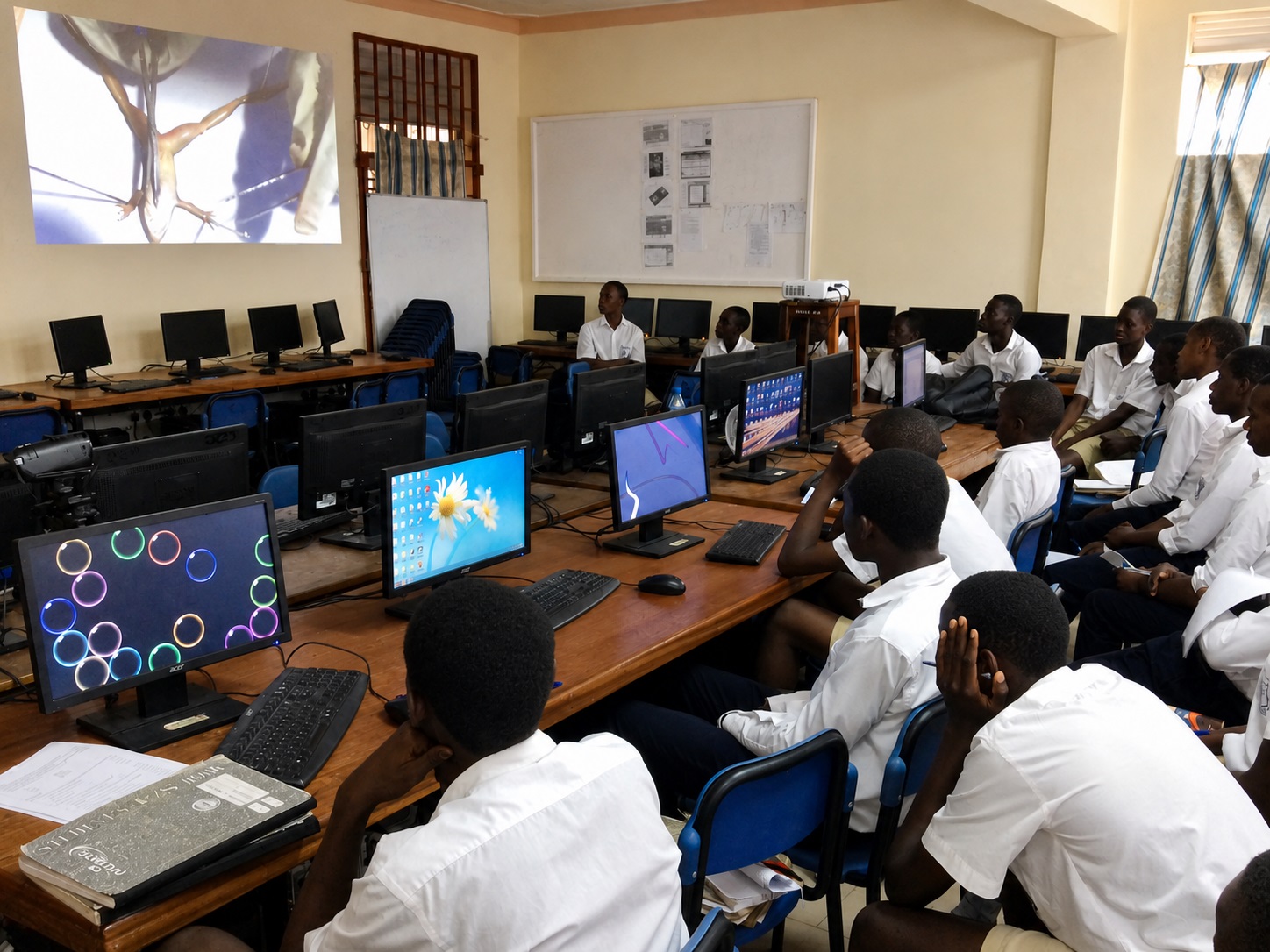

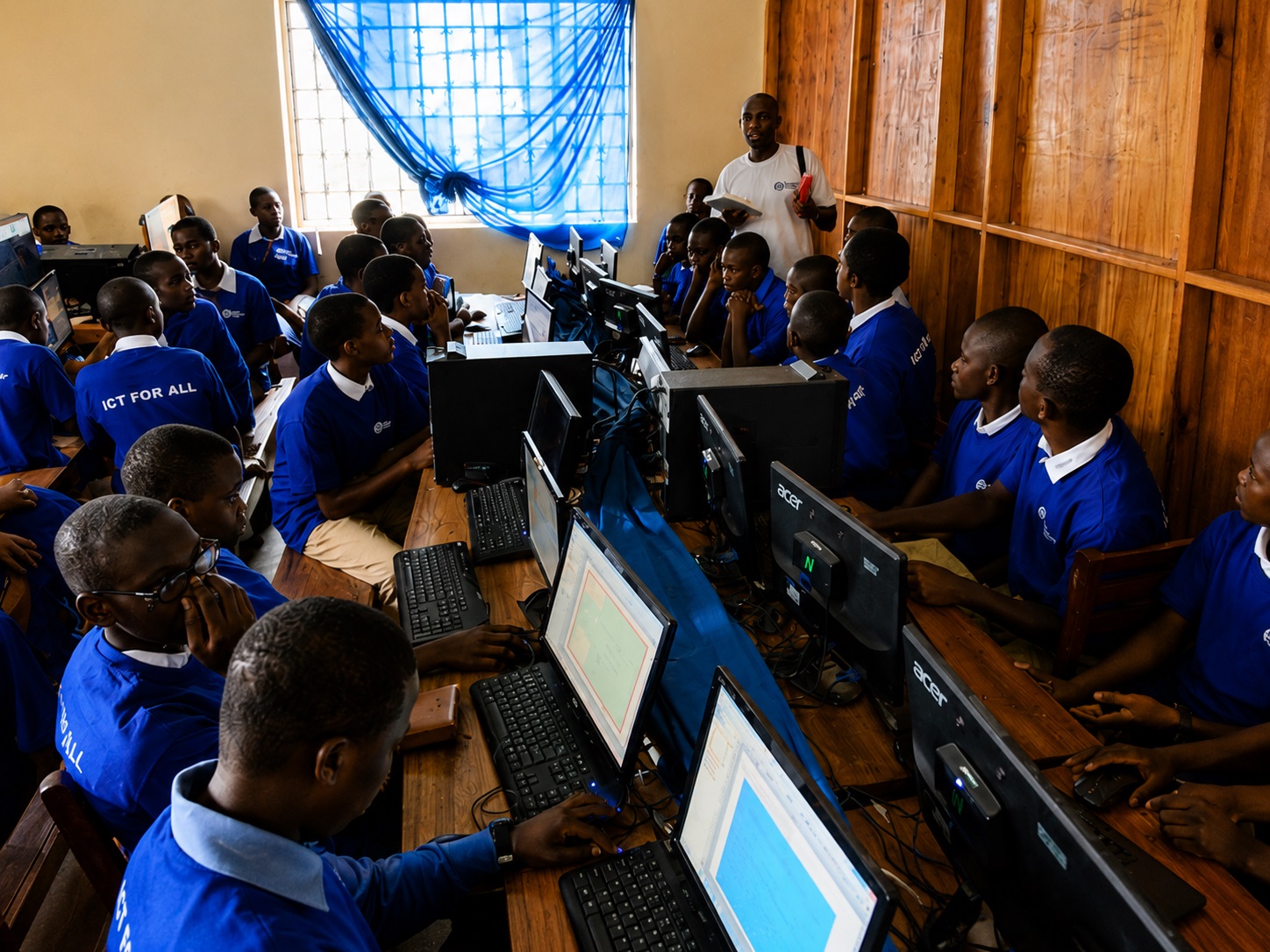
ICT Clubs Uganda supports secondary schools to establish active learner communities where young people practise digital skills, lead projects, mentor peers and use technology to address real school and community challenges. Through training, practical activities, patron support, project mentorship and competitions, KAWA helps ICT Clubs move from occasional computer use to structured learning, creativity and innovation.
Learners Should Not Only Consume Technology
Young people encounter technology in many parts of their lives, but access alone does not automatically develop useful skills. Learners need structured opportunities to:
- Practise;
- Make mistakes safely;
- Work in teams;
- Investigate problems;
- Build projects;
- Receive feedback;
- Explain what they have created.
ICT Clubs provide these opportunities within a supervised school environment.
Learners should not only use technology. They should understand it, create with it and apply it responsibly to real problems.
The Challenge ICT Clubs Address
Limited Practical Learning
Some learners study ICT concepts in class but receive limited opportunities to apply them through regular projects.
Underused Computer Laboratories
School laboratories may be used mainly for formal ICT lessons, leaving little time for wider creativity, peer learning and innovation.
Inactive School Clubs
Some ICT Clubs are formed but later become inactive because they lack:
- a clear purpose;
- trained patrons;
- meeting schedules;
- leadership structures;
- activity plans;
- records;
- projects;
- or school-management support.
Weak Learner Leadership
Learners may attend activities without receiving meaningful responsibilities or opportunities to lead.
Limited Project Guidance
Learners may have good ideas but lack a clear process for:
- defining the problem;
- designing a solution;
- building a prototype;
- testing it;
- and presenting the results.
Computer Laboratory Sustainability Challenges
Schools may experience:
- improper computer use;
- delayed fault reporting;
- disorganised cables;
- incomplete records;
- poor shutdown practices;
- and limited learner responsibility.
Digital-Safety Risks
Learners may use social media, artificial intelligence and online resources without enough guidance on:
- privacy;
- misinformation;
- cyberbullying;
- scams;
- digital footprints;
- and responsible communication.
Limited Career Exposure
Many learners may not understand the range of opportunities connected to:
- software;
- multimedia;
- computer networking;
- cybersecurity;
- artificial intelligence;
- digital entrepreneurship;
- educational technology;
- and other digital fields.
The ICT Clubs Uganda Solution

Who the Programme Is For
| Secondary Schools | Schools that: Have a computer laboratory Have some digital devices Are beginning a digital programme Already have an ICT Club Or want to increase practical learner participation. |
| ICT Club Patrons | Teachers appointed to guide and supervise club activities. |
| Learners | Young people interested in: Digital skills Projects Leadership Innovation Media Coding Maintenance awareness Responsible technology. |
| School Leaders | Headteachers, deputies and administrators responsible for supporting the programme. |
| Teachers From Other Subjects | Teachers who can connect ICT Club projects to: Agriculture Science Health Geography Entrepreneurship Languages Community issues. |
| Parents and Communities | Stakeholders who can provide: Encouragement Project ideas User feedback Mentorship Recognition. |
| Government and Development Partners | Institutions supporting: Digital inclusion Learner skills School technology Innovation Educational opportunity. |
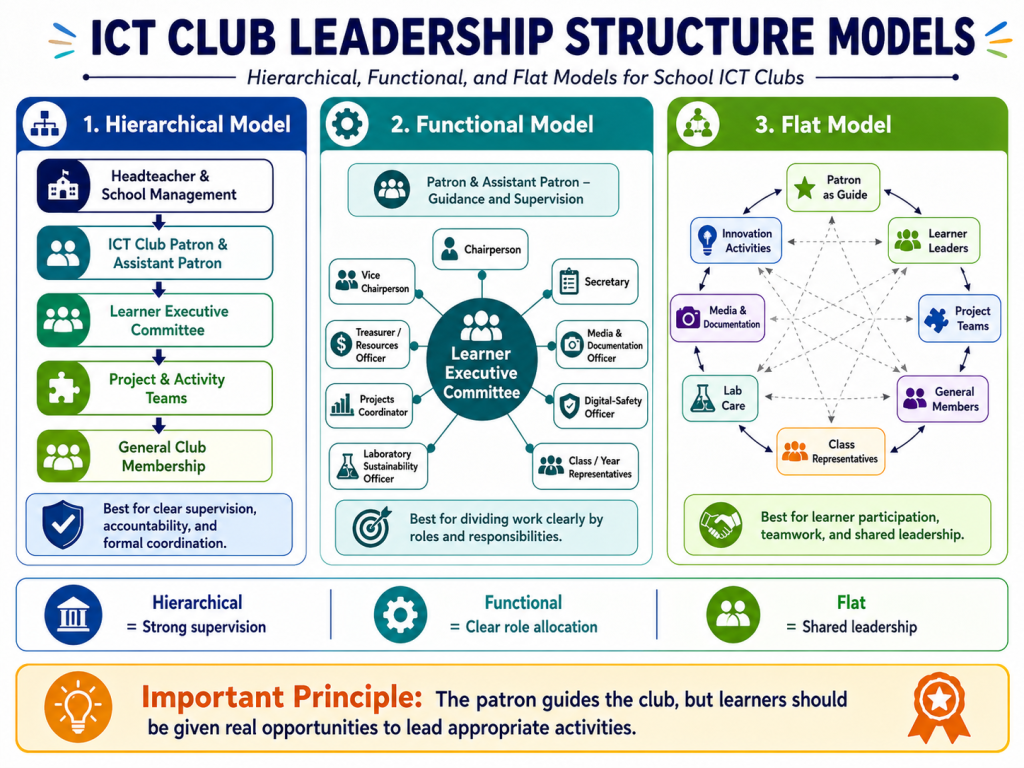
Responsibilities of the Headteacher
The headteacher should:
- Approve the club officially;
- Appoint a patron and assistant patron;
- Approve an appropriate meeting schedule;
- Provide access to a safe meeting space;
- Ensure learner safeguarding;
- Support responsible laboratory access;
- Review the club’s progress;
- Encourage participation by teachers;
- Support documentation;
- And help integrate the club into school programmes.
A sustainable ICT Club requires visible support from school leadership.
The headteacher does not need to attend every meeting, but the club should know that management recognises and supports its work.
Responsibilities of the ICT Club Patron
The patron is one of the most important people in the programme.
The patron should:
- Guide the club constitution;
- Support learner leadership;
- Help prepare the activity calendar;
- Supervise meetings;
- Promote safeguarding;
- Approve technology use;
- Guide projects;
- Maintain communication with management;
- Protect school equipment;
- Support inclusion;
- Submit reports;
- Connect learners to opportunities;
- Prepare another teacher or assistant patron for continuity.
Responsibilities of Club Members
Members should:
- Attend regularly;
- Participate actively;
- Respect equipment;
- Protect passwords and school data;
- Complete agreed tasks;
- Work in teams;
- Help peers;
- Follow laboratory rules;
- Ask for supervision where necessary;
- Report faults;
- Contribute ideas.
Main ICT Club Activity Areas
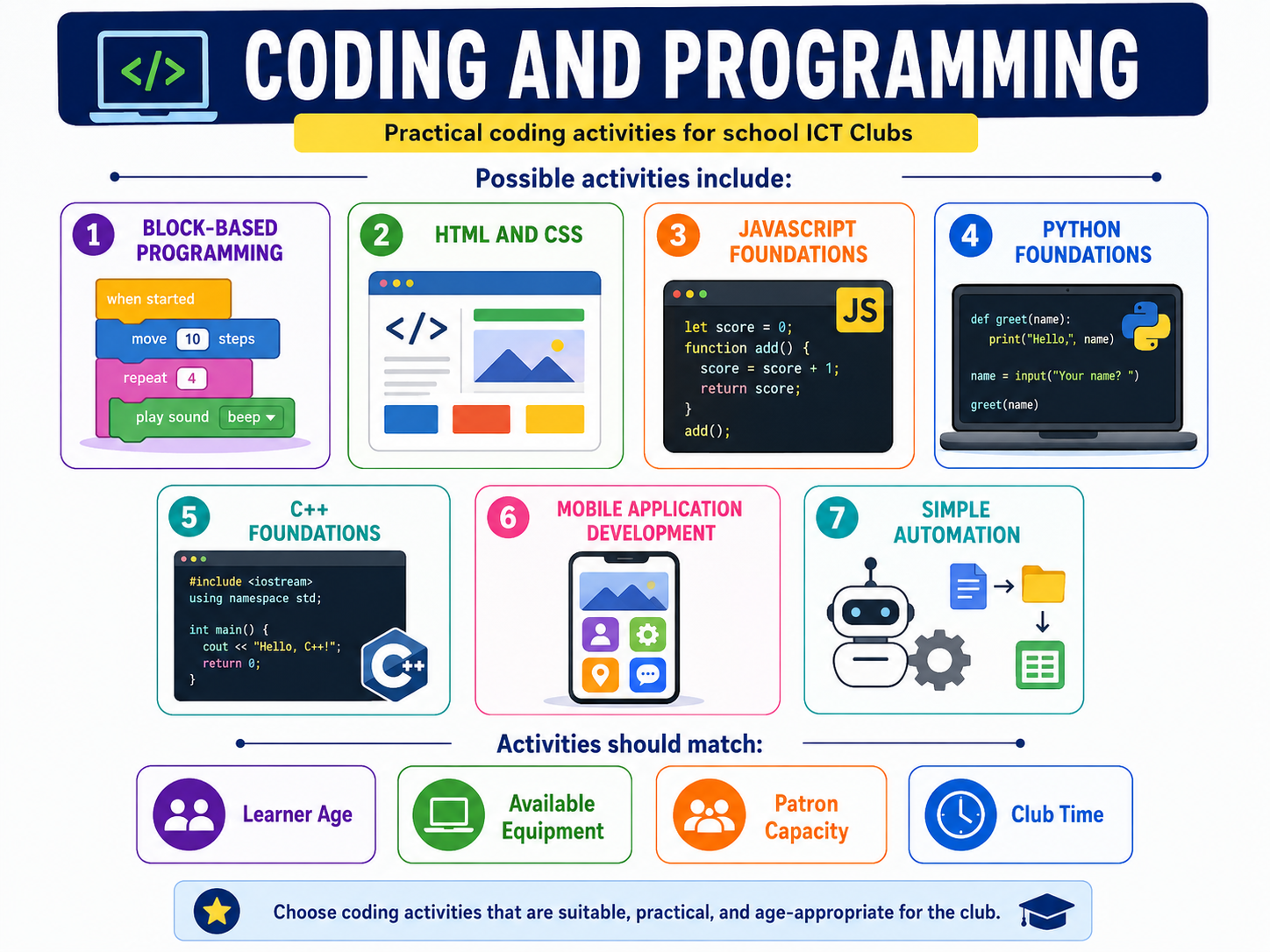
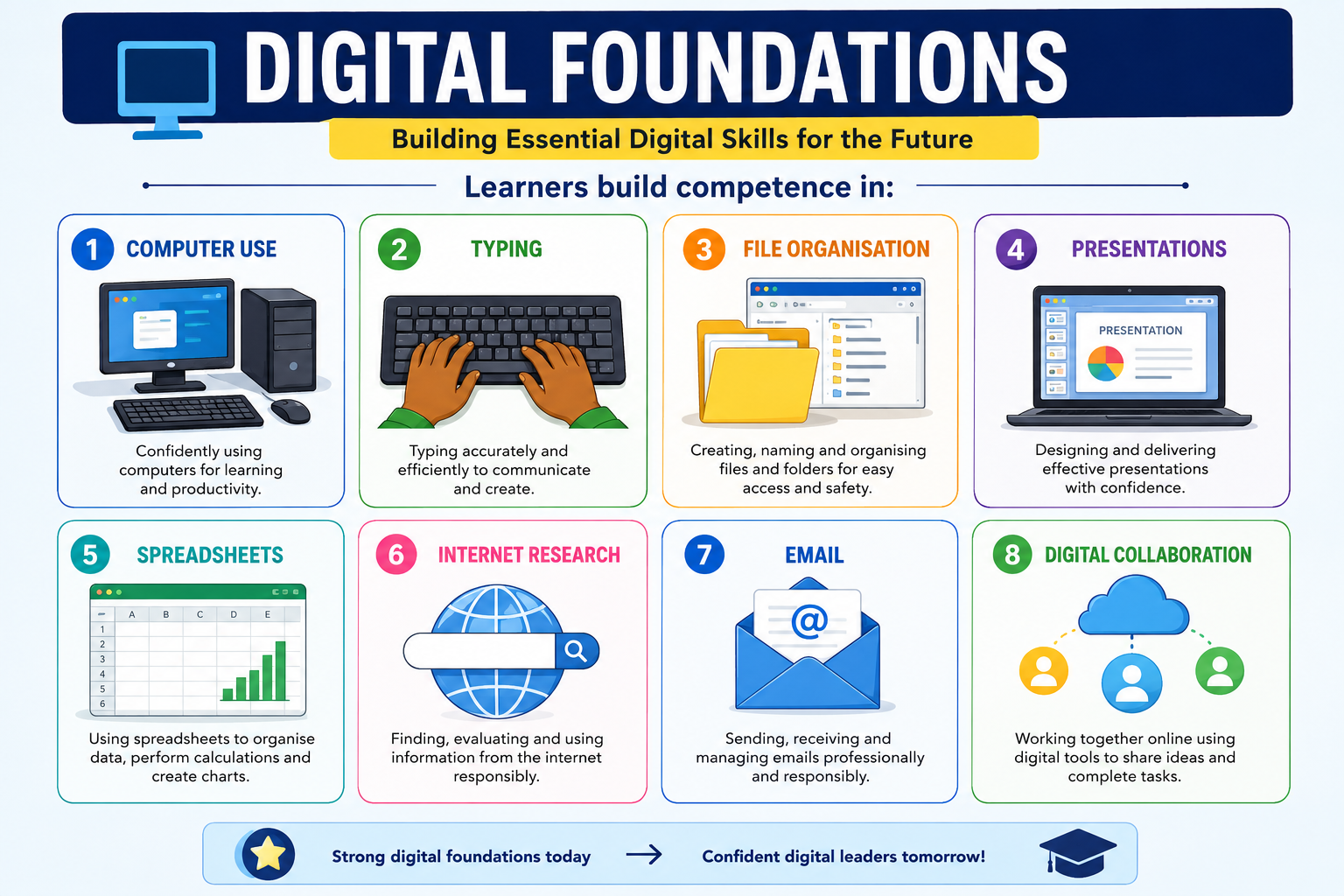
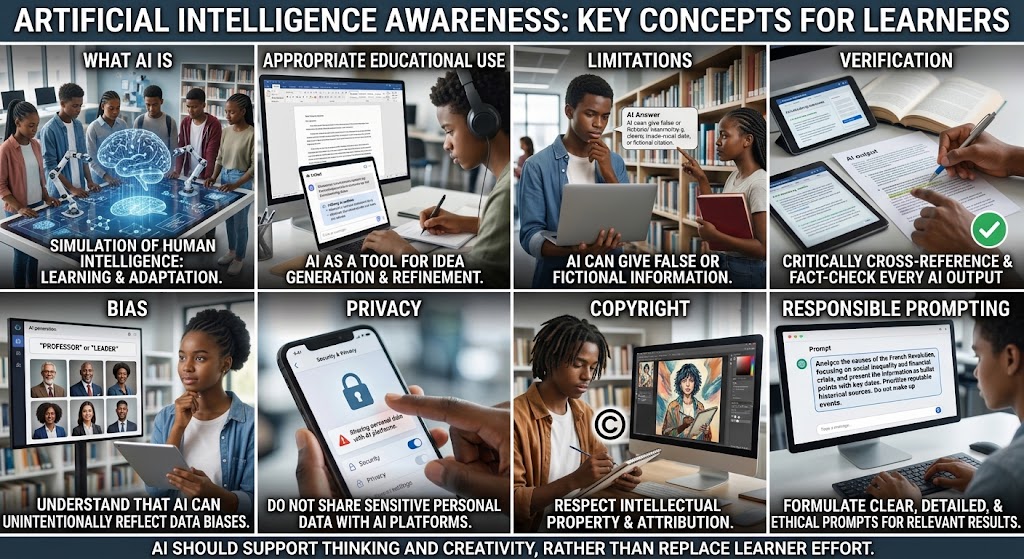
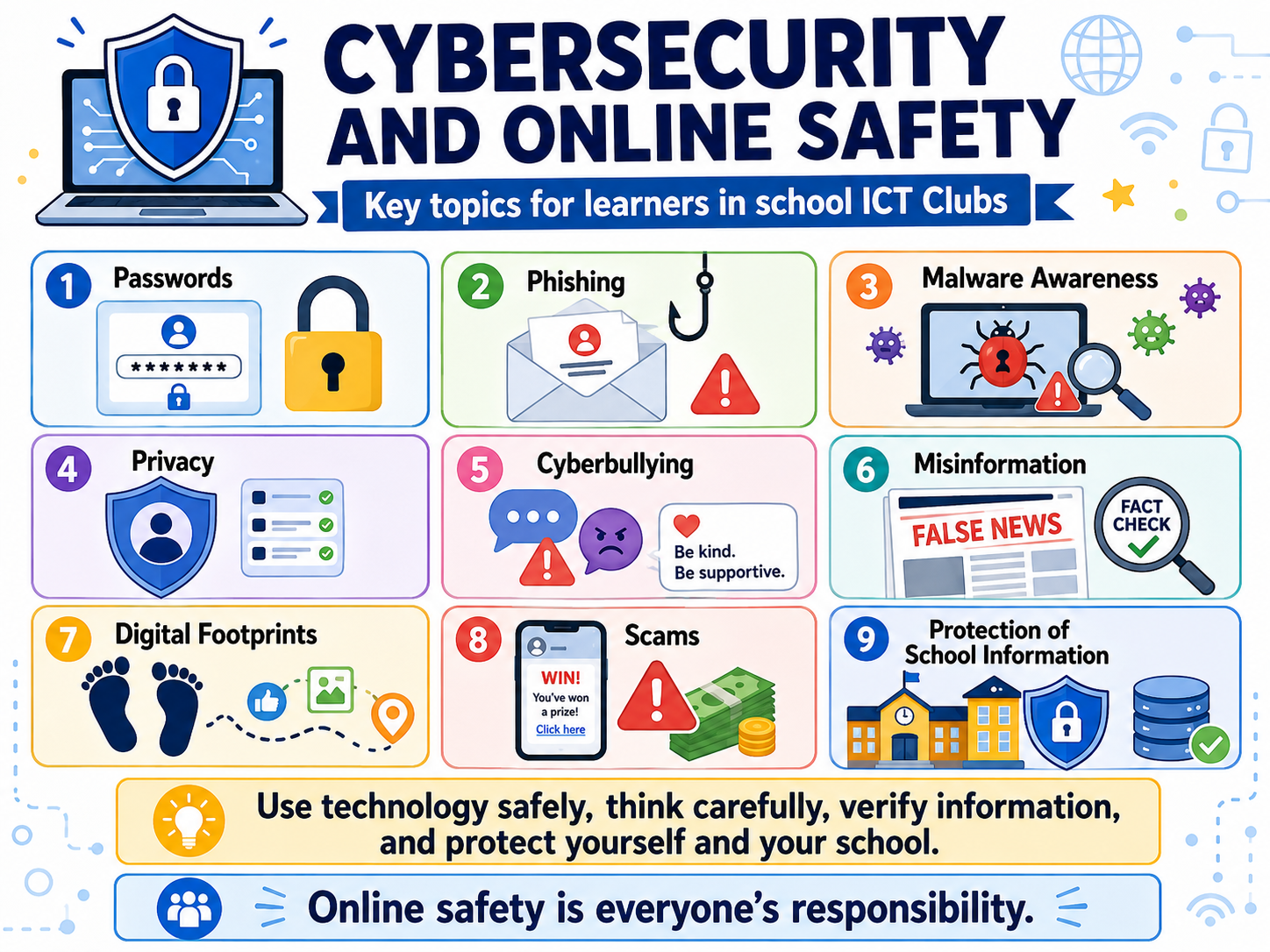
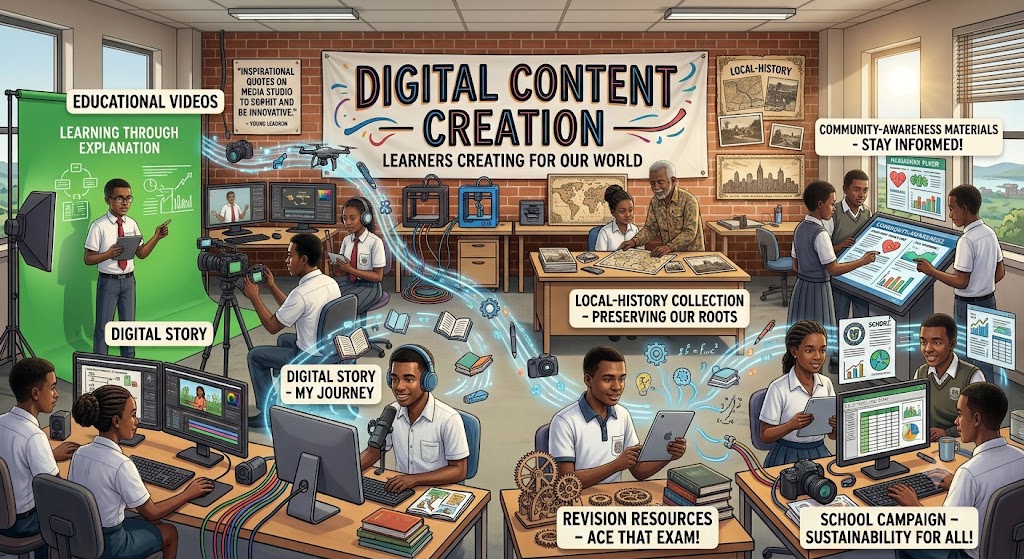
Computer Laboratory Sustainability
Computer laboratory sustainability ensures that school technology remains safe, functional, organised and useful for learning. It involves proper maintenance, responsible use, cleanliness, security, record-keeping, timely fault reporting and regular educational access. Teachers, learners, school leaders and technicians must work together to protect equipment and maximise its long-term value for schools.
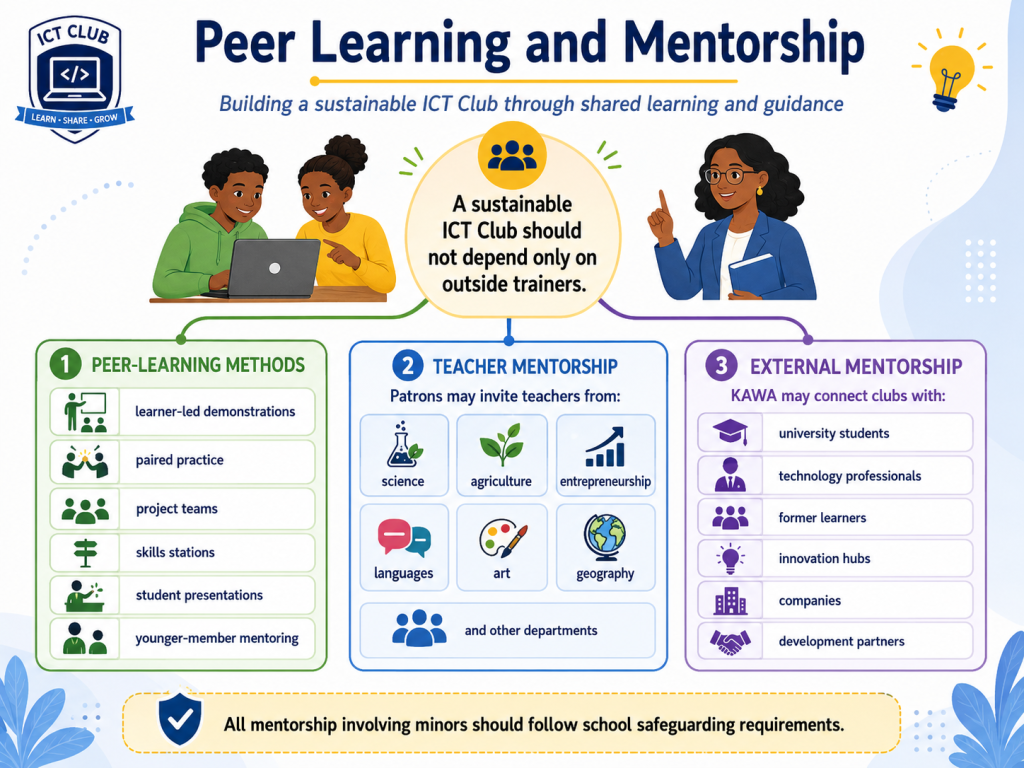
Peer Learning and Mentorship