
Protecting and Maximising School Technology Investment
A school computer laboratory is a major investment in teaching, learning, and innovation. It creates lasting value when its equipment remains functional, organised, secure, and regularly used by teachers and learners.
KAWA supports schools to establish practical systems for computer laboratory management, preventive maintenance, responsible technology use, and supervised learner participation. Our approach helps schools reduce avoidable damage, identify faults early, and make computers continuously available for meaningful learning.
Why Laboratory Sustainability Matters
Providing computers is only the beginning. Without proper management, maintenance routines, and supervision, a laboratory can quickly become underused, disorganised, or unsafe.
Sustainability means creating clear routines and responsibilities that protect equipment, support users, and keep workstations ready for lessons, research, digital projects, and ICT Club activities.
A well-managed laboratory helps a school to:
- Protect its technology investment;
- Reduce avoidable equipment failure;
- Improve physical safety and operational accountability;
- Support regular, cross-curricular teaching and learning;
- Strengthen digital skills among teachers and learners;
- And extend the useful lifespan of computers and accessories.
Common Challenges Schools Face
Without proactive systems, computer laboratories often encounter:
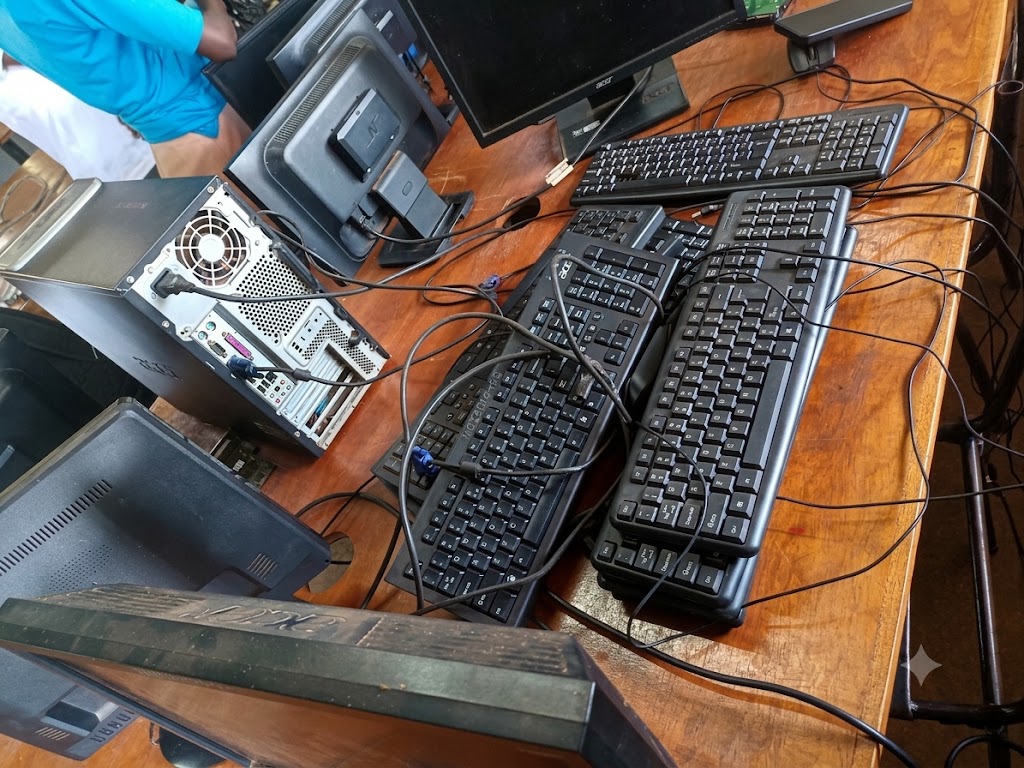
- Dust accumulation inside and around equipment;
- Poor cable organisation and hazard risks;
- Weak room ventilation and overheating;
- Unsafe electrical connections and overloaded power extensions;
- Improper computer shutdown habits;
- Delayed reporting of equipment faults;
- Incomplete or outdated asset inventories;
- Password sharing and weak data protection;
- Malware infection and unauthorised software installation;
- Low cross-curricular educational use outside Computer Studies.
Unaddressed issues lead to compounding hardware damage, expensive repair cycles, and loss of digital learning time.
How KAWA Supports Schools
KAWA collaborates with school leaders, ICT teachers, laboratory attendants, subject teachers, and ICT Club patrons to design and deploy practical maintenance and governance frameworks tailored to each school’s infrastructure.
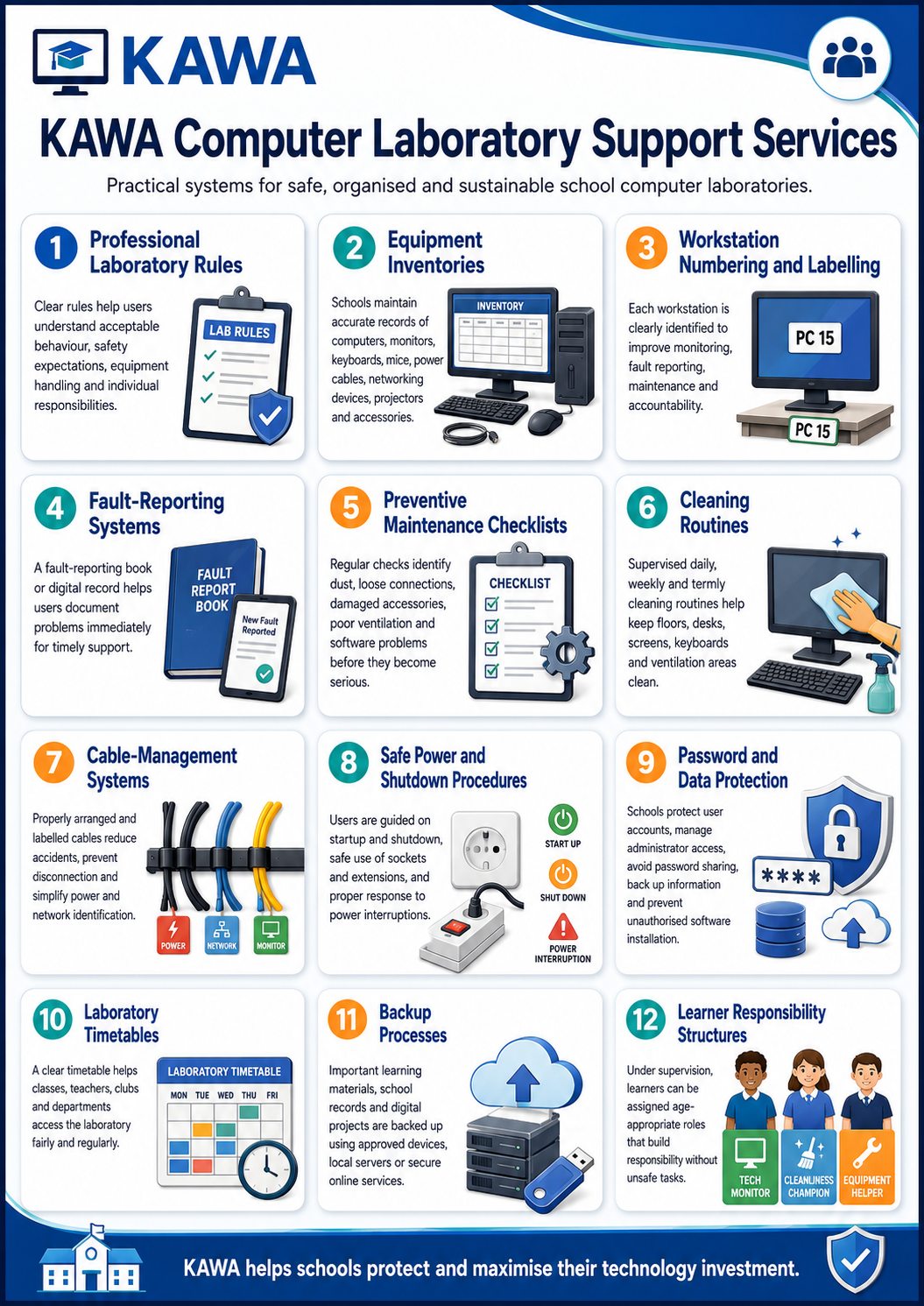
The Role of ICT Clubs in Lab Care
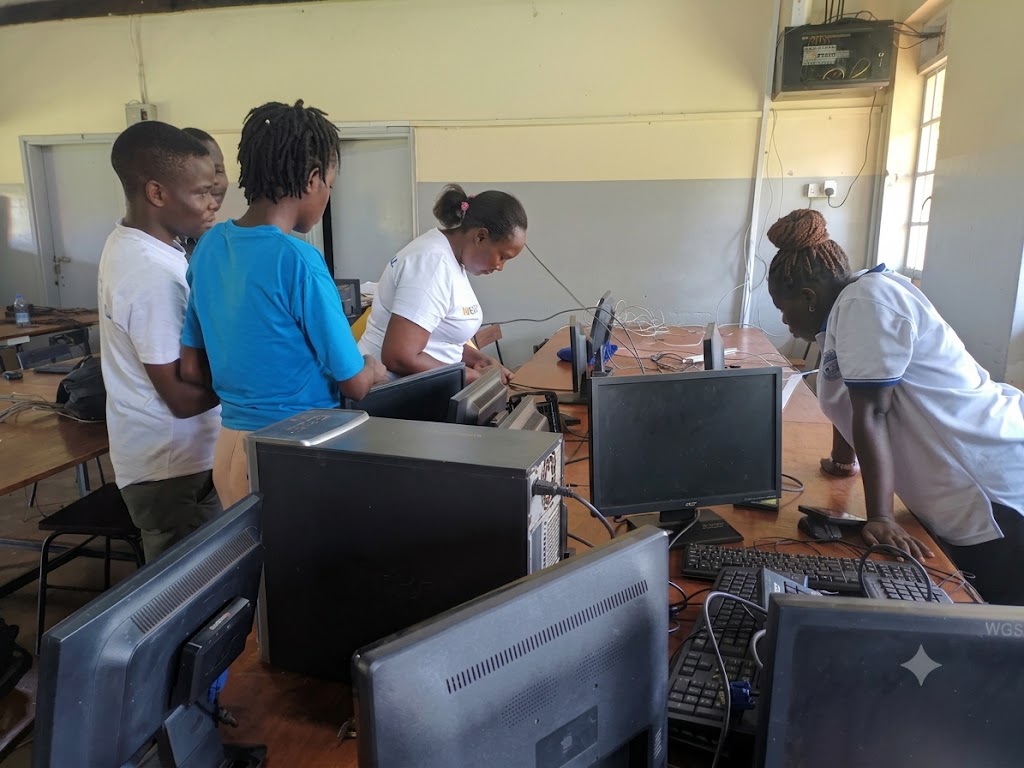
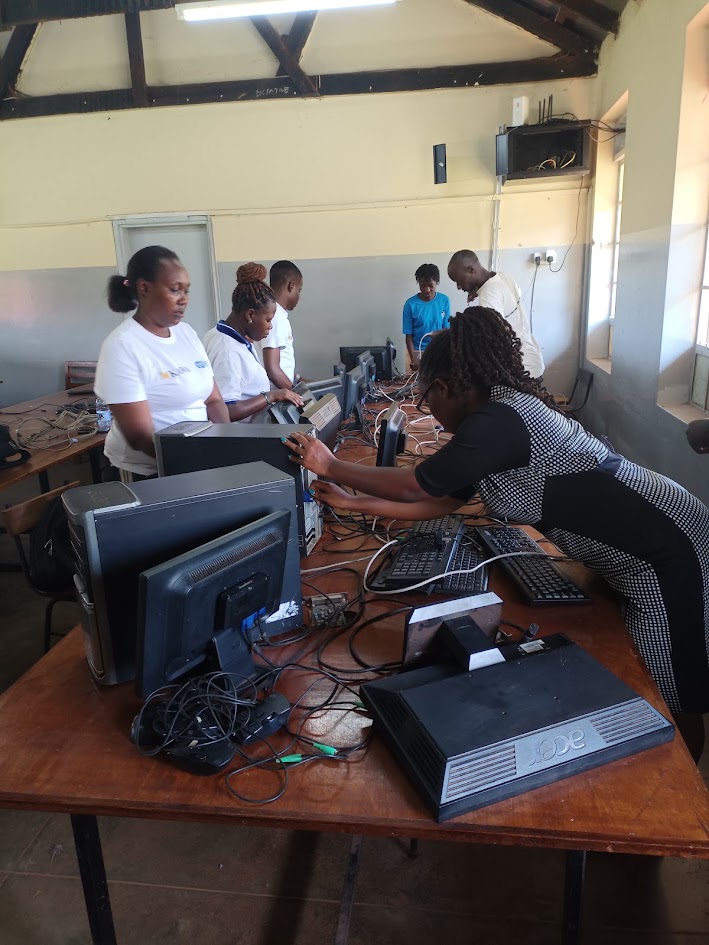
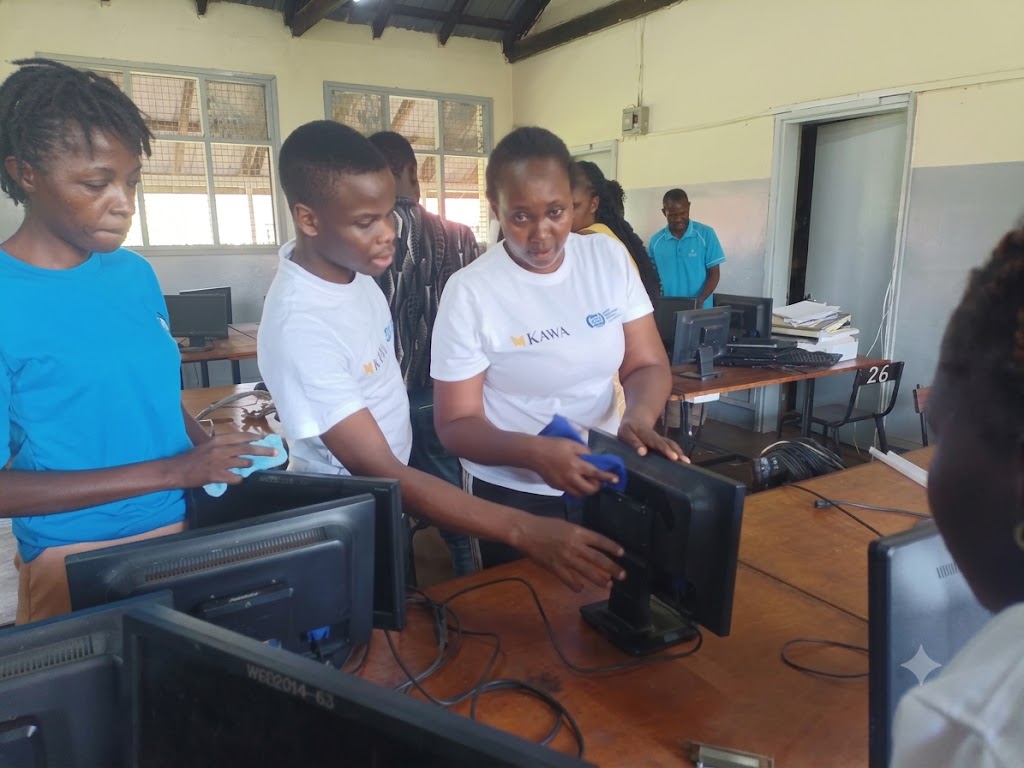
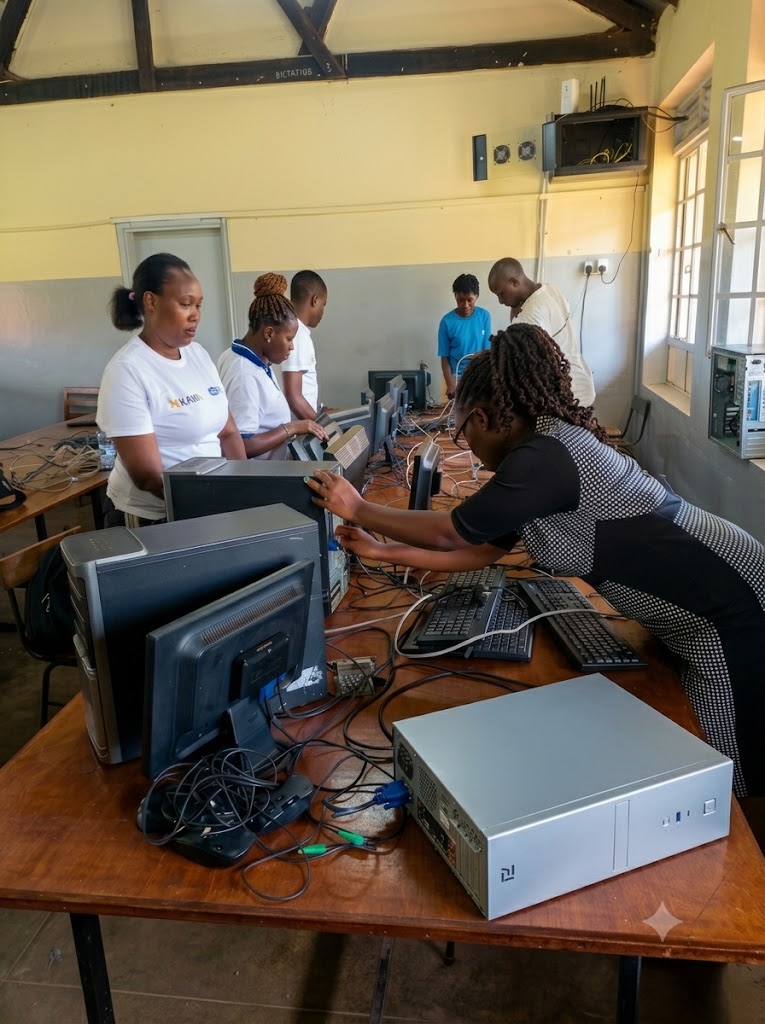
ICT Clubs empower students to become stewards of their school technology. Guided by club patrons and laboratory managers, club members actively support:
- Daily and weekly laboratory cleanliness routines;
- Visual inspection of workstations and peripherals;
- Logging issues in the laboratory fault register;
- Safe cable organisation and desktop layout;
- Peer guidance on laboratory rules and shutdown hygiene;
- Digital safety and password security awareness;
- User-awareness campaigns within the student body;
- Prompt reporting of anomalies to staff supervisors.
Safety Comes First: Learners should never undertake electrical work, open power supplies, repair live circuits, or carry out advanced hardware repairs. All technical maintenance must be handled by trained, authorised adults.
A Shared School Responsibility
Computer laboratory sustainability requires active coordination across all school stakeholders:
| Stakeholder | Primary Responsibility |
|---|---|
| School Leaders | Provide policies, scheduling approvals, maintenance budgets, and supervisory oversight. |
| Subject Teachers | Integrate digital resources into schemes of work and supervise responsible classroom lab use. |
| Lab Managers & ICT Staff | Maintain hardware asset registers, track fault log resolution, and manage local network safety. |
| ICT Club Patrons | Guide student lab-care squads and lead practical peer-learning activities. |
| Learners | Follow laboratory rules, practice safe shutdown, handle devices carefully, and report faults promptly. |
| Parents & Partners | Support maintenance sinking funds, connectivity investments, and long-term equipment renewal. |
Expected Results
Through practical laboratory sustainability systems, schools achieve:
- Better organised, cleaner, and safer computer laboratories;
- Rapid fault identification and resolution (cleared in under 48 hours);
- Substantial reduction in avoidable equipment damage;
- Robust hardware inventories and maintenance logbooks;
- Enhanced password security, user access control, and data protection;
- Increased teacher adoption across multiple academic subjects;
- Reduced lesson interruptions and higher workstation availability.
Is Your Lab Sustainable?
Your school will benefit from a laboratory diagnostic when:
- Several computers sit non-functional due to unaddressed faults;
- Equipment records and serial numbers are incomplete or missing;
- Faults are communicated only verbally without tracking;
- Power cabling is exposed, tangled, or overloaded;
- Users share administrative credentials or leave accounts logged in;
- The laboratory remains locked outside Computer Studies lessons;
- Maintenance happens only reactively after total system failure.
Protect Your School’s Technology Investment
Move from equipment ownership to educational value. Build a cleaner, safer, better-organised, and fully functional computer laboratory with KAWA Uganda.