
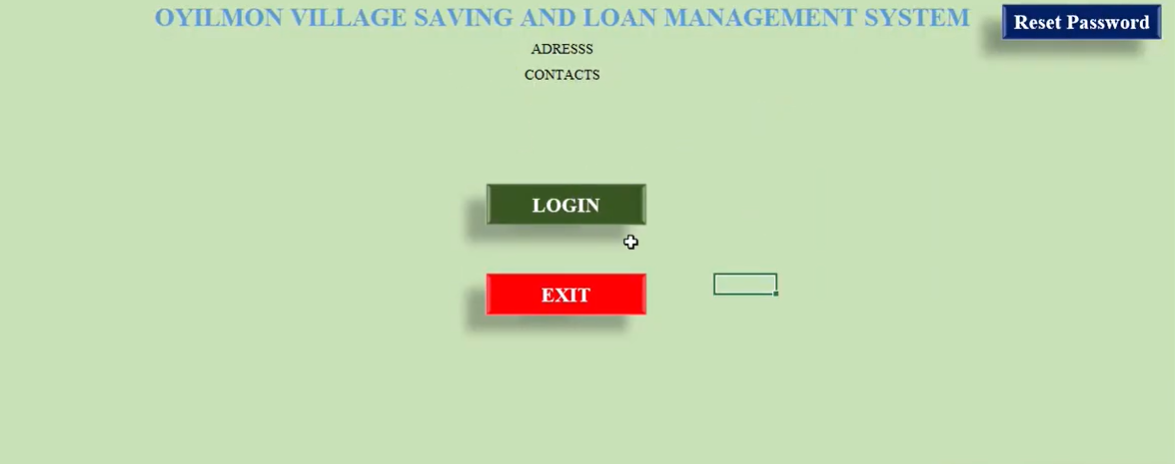
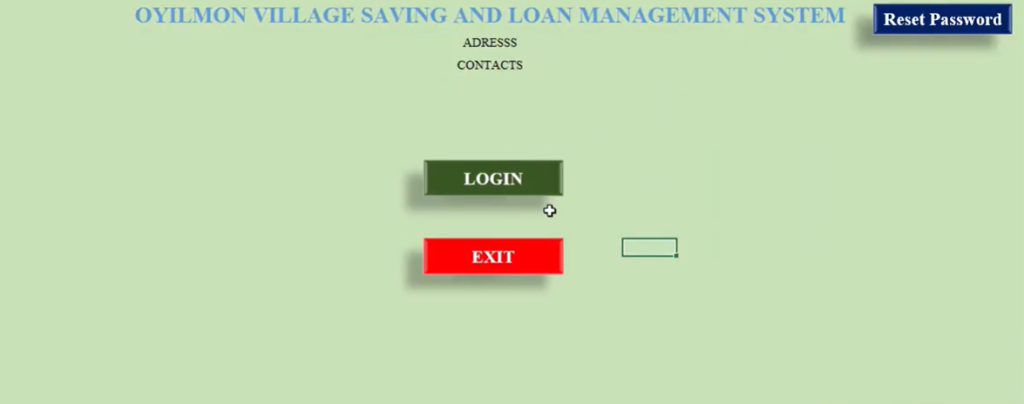
Students of Koro Secondary School have developed a digital information-management system designed to help Village Savings and Loan Associations manage members, savings, loans, repayments and financial reports more accurately.
The project, titled Design and Implementation of a VSLA Information System, was developed by Ogenrwot Stephen Ronald, Apio Teddy and Okema Felix Johson for the 2026 Secondary Schools’ ICT Club Competition.
Their innovation responds to a familiar challenge in many rural communities: savings groups handle important financial transactions every week, but many still depend on handwritten books, manual calculations and paper-based reports.
When One Calculation Error Affects an Entire Group
Village Savings and Loan Associations, commonly known as VSLAs, provide members with a community-based way of saving money and accessing small loans.
Members contribute agreed amounts during regular meetings. The accumulated funds can then be borrowed by members for school fees, farming, healthcare, small businesses and other household needs.
However, managing these transactions manually can be difficult.
A calculation error may affect a member’s savings balance. A misplaced record may make it difficult to confirm a loan repayment. Delayed reporting may also create confusion and reduce trust among group members.
The Koro Secondary School team identified these challenges while studying the operations of Oyil Mon VSLA Group in Obwola Village.
According to the presentation, the group experienced difficulties related to calculation errors, poor loan tracking, delayed reporting and the risk of losing paper records. These challenges affected transparency, accountability and efficient financial management.
Turning a Community Challenge into a Digital Solution
Instead of treating the problem as something only financial institutions could solve, the students applied their computer skills to develop a practical information-management system.
The system is designed to provide a central and organised platform for recording the activities of a savings group.
Its major functions include:
- Registering and managing members
- Recording individual savings
- Managing loan applications and approvals
- Tracking loan repayments
- Calculating financial balances
- Generating financial reports
- Storing records in a structured database
- Improving the security of group information
By bringing these functions together, the system could help group leaders reduce repetitive work and retrieve important information more easily.
Built with Microsoft Excel and VBA
The students built their prototype using Microsoft Excel as the main platform for data storage and management.
They then used Visual Basic for Applications, commonly known as VBA, to introduce programming and automation into the spreadsheet.
The technologies used include:
| Microsoft Excel | Excel provides the main working environment and stores information about members, savings, loans and repayments. |
| Visual Basic for Applications | VBA enables the students to program different system functions and automate repetitive activities. |
| Macros | Macros help perform calculations and generate reports automatically, reducing the need for users to complete every process manually. |
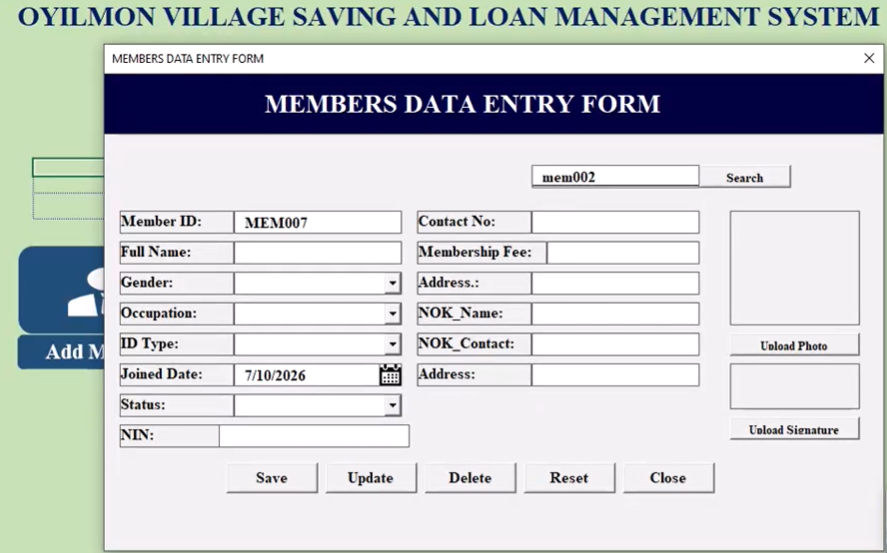
| Excel User Forms | User forms provide a simpler interface through which group leaders can enter and manage information without working directly inside complex spreadsheet tables. |
| Excel Database Tables | Structured tables organise records and make it easier to search, update and produce reports from the stored information. |
More Than a Spreadsheet
Although the project is built in Excel, it goes beyond an ordinary savings worksheet.
The students have attempted to transform Excel into a functional management application with automated processes, controlled data-entry forms and organised financial records.
This approach is especially practical because Excel is already available on many computers used in schools, offices and community organisations.
It also demonstrates how learners can use familiar software creatively instead of waiting for expensive or highly specialised development tools.
Building Transparency One Record at a Time
A well-managed digital system could provide several benefits to a VSLA.
| Improved Accountability | Every saving, loan and repayment can be recorded in a consistent format, making it easier for leaders to explain the group’s financial position. |
| Greater Accuracy | Automated calculations can reduce errors associated with manually adding savings, interest and repayment figures. |
| Better Loan Tracking | The system can help leaders identify active loans, expected repayment dates, amounts paid and outstanding balances. |
| Faster Reporting | Financial reports can be produced from existing records without rewriting information from several paper books. |
| Increased Member Confidence | When financial information is accurate and available, members are more likely to trust the group’s leadership and continue participating. |
| Better Decision-Making | Leaders can use organised records to understand saving patterns, loan performance and the overall financial health of the group. |
The students expect the system to contribute to stronger accountability, improved decision-making, greater trust, financial inclusion and rural development.
Students Learning Through a Real Community Problem
The project also provided valuable learning opportunities for the Koro Secondary School innovators.
By developing the system, the students gained practical experience in:
- Spreadsheet design
- VBA programming
- Database organisation
- Financial calculations
- User-interface development
- Community research
- Problem-solving
- System testing
- Teamwork
- Digital financial management
Rather than learning Excel and programming only through classroom exercises, the students applied their knowledge to a real problem affecting people within their community.
Challenges Faced During Development
Developing the prototype was not without difficulties.
The students reported challenges such as obtaining accurate VSLA records, balancing project activities with their academic schedules and learning advanced Excel and VBA programming.
Other difficulties included low digital literacy among some VSLA members, unreliable access to electricity and computers, and the need to keep the system simple while still making it functional.
These challenges are important because a successful community information system must be understandable and usable by the people it is intended to support.
The Next Step: Taking the System Mobile
The students plan to develop a mobile version of the VSLA Information Management System.
A mobile application could make the platform more accessible to group leaders who own smartphones but do not have regular access to computers.
Future development could also introduce:
- Password-protected user accounts
- Automated loan reminders
- Digital member statements
- Data backup and recovery
- Printable receipts
- Mobile money integration
- Cloud synchronisation
- Audit trails showing who changed each record
- Dashboards presenting savings and loan performance
- Support for multiple savings groups
Before handling real community funds, the system would also need strong security measures, regular backups, careful user training and proper testing.
Young Innovators Strengthening Community Finance
The VSLA Information Management System demonstrates how school ICT Clubs can connect technology education with community development.
The Koro Secondary School students did not begin with a complicated national problem. They observed a challenge affecting a local savings group and used the digital tools available to them to build a possible solution.
Their project shows that innovation does not always require expensive equipment or advanced laboratories.
Sometimes it begins with a paper ledger, a calculation problem and a group of students willing to imagine a better way.
By moving village savings records from vulnerable paper books toward a more organised digital system, the learners are helping build something every successful savings group needs:
Accuracy in its figures, accountability in its leadership and trust among its members.




Leave a Reply
You must be logged in to post a comment.