
Partners
Partner With KAWA to Strengthen Digital Education
Locally Led Programmes for Schools, Teachers, Learners and Sustainable Technology Use
KAWA Uganda works with government institutions, development agencies, foundations, universities, technology companies, and school networks to scale practical digital learning, empower educators, and protect institutional technology investments.

Sustainable Educational Change Requires Collaboration
No single institution can solve teacher digital capacity, offline content access, laboratory sustainability, and child online safety in isolation. We believe effective partnerships bring together public policy, educational expertise, technology, and community ownership.
Institutions Advancing Digital Learning With KAWA
We partner across public, private, and non-profit sectors with clearly defined mandates and verified scopes.

UCC / UCUSAF
Active ProgrammeSupporting National ICT Clubs Championships, patron training, and laboratory sustainability.

MoES Uganda
Policy AlignmentAligning teacher professional development and offline digital learning with national curriculum priorities.

Edify Uganda
Teacher TrainingCollaborating on continuous teacher digital literacy and pedagogical integration workshops.

NCDC
Curriculum ReviewEnsuring KAWA Connect offline resources strictly support the updated competence-based curriculum.

Recognized for local digital innovation & education inclusion.
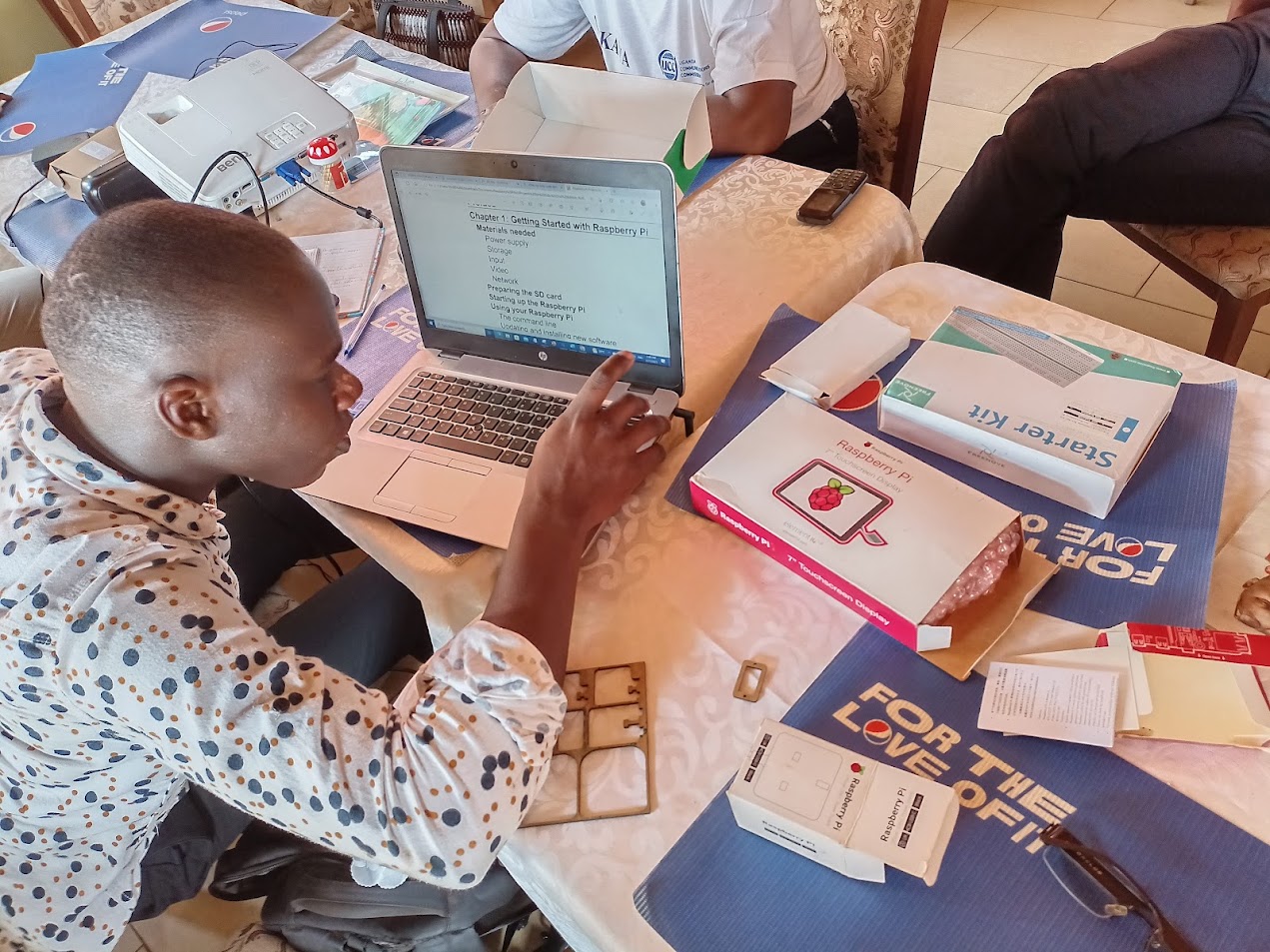
Supporting low-cost IoT, sensor circuits, and coding clinics.
Connecting secondary school innovators to incubation spaces.
Partnership Programme Areas
Select an initiative below to inspect the objectives, required contributions, and measurable deliverables.
Deploying KAWA Connect in Low-Connectivity Schools
The Objective: Equip secondary schools with local micro-servers containing pre-loaded national curriculum textbooks, interactive science simulations, and past examination papers at zero recurring internet data cost.
Partner Contribution: Sponsoring server hardware, routers, content licensing, or school deployment packages.
KAWA Contribution: School technical audit, local server installation, teacher orientation, and quarterly content updates.
Expected Result: Activated computer labs with over 1,000+ weekly student queries per school.
Available Sponsorship Scopes
- Single School Pilot: 1 Local Server + 15 Teachers Oriented
- District Cohort: 10–20 Secondary Schools in a selected region
- Regional Package: Complete sub-regional deployment with M&E
Sponsoring ICT Clubs & National Championships
The Objective: Cultivate student digital literacy, leadership, and problem-solving through structured extracurricular clubs and competitive exhibition platforms.
Partner Contribution: Sponsoring patron regional clinics, competition awards (tablets, lab tools), or prototype incubation grants.
KAWA Contribution: Club launch toolkits, weekly meeting guides, project mentorship, regional qualifiers, and national finals management.
Expected Result: Active clubs with verified learner-built community prototypes.
Available Sponsorship Scopes
- Patron Training Clinic: 30 Patrons trained in a district cluster
- Regional Championship Sponsor: Category naming rights & awards
- Innovation Incubation Fund: Micro-grants for top 5 student teams
Teacher Digital Literacy & Lesson Integration
The Objective: Support educators across Arts, Sciences, and Humanities to comfortably integrate digital curriculum aids into daily schemes of work.
Partner Contribution: Funding residential or school-based training workshops and follow-up accompaniment.
KAWA Contribution: Expert facilitators, digital lesson templates, post-training classroom observations, and certification.
Expected Result: Documented classroom lesson delivery by non-ICT teachers.
Available Sponsorship Scopes
- School-Based Seminar: Whole staffroom orientation (25+ Teachers)
- Subject-Specific Cohort: Science & Math simulation workshops
- Multi-School Masterclass: Regional teacher digital symposium
Computer Laboratory Sustainability & Revival
The Objective: Protect institutional technology investments by restoring idle workstations and embedding preventive maintenance systems.
Partner Contribution: Sponsoring diagnostic repair clinics, replacement components (RAM, SSDs, power units), or surge suppression.
KAWA Contribution: On-site diagnostic audits, OS re-imaging, lab manager training, and 48-hour fault log setup.
Expected Result: Restored workstations returned to service with extended hardware lifespans.
Available Sponsorship Scopes
- Lab Diagnostic & Repair: 1 School Lab audit & restoration
- Cluster Lab Overhaul: 5 Rural secondary school laboratories
- Maintenance Toolkit Rollout: Standardized logbooks & toolkits
Girls in Digital Learning & Accessible ICT
The Objective: Expand technical participation for female learners and students with disabilities in coding, circuit design, and leadership.
Partner Contribution: Sponsoring female mentorship bootcamps, assistive technology tools, and accessibility content development.
KAWA Contribution: Targeted club recruitment, female mentor placement, and gender-disaggregated impact reporting.
Expected Result: Documented female student leads in software, hardware, and project pitching.
Available Sponsorship Scopes
- All-Girls Club Cohort: 10 Girls’ secondary schools
- Assistive Tech Pilot: Screen-reader and accessible content setups
- Female Tech Mentorship Series: Industry expert visits
The 10-Step Partnership Journey
Click any stage below to inspect the key actions, requirements, and deliverables.
The 3-Way Partnership Responsibility Matrix
A balanced framework ensuring every stakeholder contributes to sustainable outcomes.
| Programme Dimension | The Partner Contributes | KAWA Uganda Delivers | The School Provides |
|---|---|---|---|
| 1. Funding & Resources | Provides agreed grant, equipment, or service funding | Manages approved operational budget with strict accounting | Provides facilities, electricity, and local logistics |
| 2. Programme Design | Reviews objectives and signs off on milestones | Co-designs contextual curriculum, toolkits, and M&E | Identifies local school priorities and schedule needs |
| 3. Mobilisation & Training | May provide guest technical experts or mentors | Mobilises schools, facilitates workshops, and trains patrons | Releases teachers, patrons, and learners for sessions |
| 4. Equipment & Infrastructure | Supplies or funds approved hardware specifications | Oversees deployment, asset recording, and setup | Secures lab, updates inventory, and maintains fault log |
| 5. Safeguarding & Data | Enforces child protection and compliance standards | Applies field consent protocols and protects records | Supervises learners and enforces acceptable lab use |
| 6. Monitoring & Reporting | Reviews milestone progress and financial reports | Collects field evidence, photographs, and analytics | Maintains daily logs, registers, and project notebooks |
| 7. Sustainability | Supports transition and post-programme exit plan | Builds local school capacity and handover binders | Continues club meetings, budgeting, and routine care |
Field Results from Joint Programme Delivery
Authentic examples of how collaborative support translates into school-level ownership.

Regional Patron Leadership Clinics
Supported by UCC/UCUSAF: Equipping 150+ secondary school patrons with lab sustainability toolkits.

Rural Digital Resource Access
Enabling rural school laboratories to operate independent of public internet data limitations.

Field Impact Monitoring
Collecting verified logs, meeting minutes, and learner feedback to confirm sustainable use.
The KAWA Partnership Information Pack
Access audited organizational profiles, programme concept briefs, and safeguarding frameworks.
KAWA Organizational Brief 2026
Detailed mission, legal registration status, governance structure, regional reach, and past programme track record.
Programme Sponsorship Menu
Modular, costed concepts for KAWA Connect, ICT Club regional championships, and teacher development cohorts.
Safeguarding & Data Framework
Comprehensive Child Protection Policy, media consent protocols, ethical AI rules, and data privacy standards.
Frequently Asked Questions
Key information regarding partnership governance, funding structures, and M&E.
Initiate a Partnership Discussion
Submit your organization’s focus area and interest. Our strategic partnerships directorate will schedule an exploratory discovery meeting.
Let Us Build a Practical Education Partnership
KAWA brings together local school experience, educational content, teacher development, learner programmes, field implementation, and verifiable evidence so that your resources create lasting value across Uganda.