
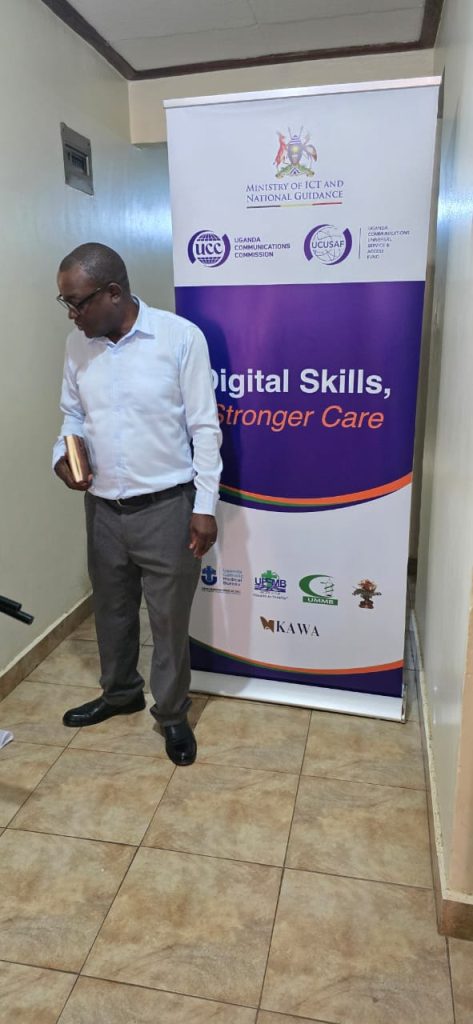
Kampala, Uganda — A major digital health capacity-building initiative is set to strengthen the practical ICT and health informatics skills of health workers serving in selected faith-based health facilities across Uganda.
The programme, titled ICT Skills Enhancement for Health Workers in Select Faith-Based Health Facilities, is supported by the Faith Medical Bureaus in Uganda and implemented under the wider Faith-Led Health Informatics Competency Program. The initiative seeks to improve the effective use of digital tools, health information systems, and ICT infrastructure in frontline health service delivery.
The project targets 600 health workers from 58 selected faith-based health facilities located across Central, Western, Eastern, North-East, Northern, and West Nile regions. It is designed to move beyond basic computer awareness by equipping health workers with practical, job-relevant digital skills that directly support patient care, records management, data reporting, cybersecurity, privacy protection, and evidence-based decision-making.
Strengthening Digital Health Capacity at Facility Level
Faith-based health facilities play a critical role in Uganda’s healthcare system, especially in rural and underserved communities. Many of these facilities have benefited from ICT infrastructure and connectivity support, but the full value of these investments depends on whether health workers can confidently use digital tools in their daily work.
This training programme responds to that need by focusing on practical digital literacy and health informatics competencies. Health workers will be supported to use ICT tools for patient registration, electronic clinical documentation, reporting, data analysis, secure information handling, and improved facility-level coordination.
The programme also emphasizes mentorship and sustainability. Selected facility staff will serve as digital health champions, helping colleagues continue practicing and applying the skills gained during training.
Practical Skills for Real Health Service Delivery
The ICT skills enhancement programme is expected to support two broad categories of health workers.
The first category includes clinical and service delivery staff such as medical officers, clinical officers, nurses, midwives, laboratory staff, counsellors, and dispensers. Their training will focus on digital workflows linked to clinical documentation, patient care, electronic records, results review, diagnosis coding, and readiness for technology-supported service delivery.
The second category includes administrative and records-related staff such as receptionists, records assistants, cashiers, ward clerks, facility in-charges, monitoring and evaluation staff, and data officers. Their training will focus on patient registration, record search and retrieval, prevention of duplicate records, queue management, DHIS2 reporting, Excel summaries, and dashboard use.
By aligning ICT training with the actual duties of health workers, the programme aims to make digital tools more useful, practical, and sustainable within health facilities.
A Partnership for Better Health Information Systems
The initiative brings together faith-based health networks, implementing partners, and facility-level teams to strengthen digital health practice. The programme is linked to efforts to improve the use of digital infrastructure, enhance data quality, support timely reporting, and strengthen the return on investment in public ICT deployments.
Kisubi Associated Writers Agency, KAWA, is involved as a technical implementation partner supporting curriculum design, digital content packaging, training methodology, field logistics, trainer deployment, and offline learning support through KAWA Connect.
Through this collaborative approach, the project is expected to improve confidence among health workers, reduce underuse of digital systems, and support better decision-making at facility and health system levels.
Official List of the 58 Selected Beneficiary Health Facilities
The following table presents the official contract registry of target beneficiary health facilities, including the health facility names, sub counties, districts, and regions as provided in the Grant Agreement schedule.
| No. | Health Facility Name | Subcounty | District | Region |
|---|---|---|---|---|
| 1 | Tapac HC III | Moroto | Moroto | North-East |
| 2 | St Francis Health Center | Migeera Town Council | Nakasongola | Central |
| 3 | Katulikire Health Center | Kichwabugingo | Kiryandongo | Western |
| 4 | Nyamwegabira Health Centre | Kihihi Town Council | Kanungu | Western |
| 5 | Butogota | Butogota Town Council | Kanungu | Western |
| 6 | Bitooma Health Center | Bitooma Town Council | Bushenyi | Western |
| 7 | Munteme | Kiziranfumbi | Hoima | Western |
| 8 | Nsonga St Denis | Matale | Kibaale | Western |
| 9 | Kyatiri | Kyatiri Town Council | Masindi | Western |
| 10 | Kangole | Napak | Napak | North-East |
| 11 | Kabogwe St Theresa | Kapeeka | Nakaseke | Central |
| 12 | Lusanja St Matia | Kapeeka | Nakaseke | Central |
| 13 | Karinga | Morita | Nakapiripirit | North-East |
| 14 | St Jerome Cove Kapeeka | Kapeeka | Nakaseke | Central |
| 15 | St Francis Kijaguzo | Semuto | Nakaseke | Central |
| 16 | Nabilatuk Health center | Nabilatuk | Nabilatuk | North-East |
| 17 | Adumi ojee | Adumi | Arua | West Nile |
| 18 | Katine | Soroti | Soroti | Eastern |
| 19 | Lwanjiri St. Charles Lwange | Kalwana | Mubende | Central |
| 20 | St Peter and Paul | Padibe Town Council | Lamwo | Northern |
| 21 | Ndibata St. Thereza | Ntwetwe Town Council | Kyankwanzi | Central |
| 22 | Kavule | Ssi-Bukunja | Buikwe | Central |
| 23 | Kicwamba | Ntare | Kamwenge | Western |
| 24 | Mbuye | Lwanda | Rakai | Central |
| 25 | Buyamba Disp &Mu HC III | Rakai | Rakai | Central |
| 26 | St. Matia Mulumba Health Centre | Kiganda Town Council | Kassanda | Central |
| 27 | Kambaala | Mityana | Mityana | Central |
| 28 | Nyamirima Health Centre | Nyabisirira Town Council | Mbarara | Western |
| 29 | Kibadde Kisa Health Centre | Igombe Subcounty | Bugweri | Eastern |
| 30 | Ziiru Health Centre | Lyabaana Town Council | Buvuma | Central |
| 31 | Kidawalime Nursing Home Health Centre | Ngando Subcounty | Butambala | Central |
| 32 | Alnoor Health Centre | Lori Subcounty | Yumbe | Northern |
| 33 | Pakegido Health Centre | Kobulubulu Subcounty | Kaberamaido | Eastern |
| 34 | Kinyanshohera Muslim Community Health Centre | Kihihi Town Council | Kanungu | Western |
| 35 | Anyiribu | Offaka | Madi-Okollo | West Nile |
| 36 | St. Luke Katiyi | Uleppi | Madi-Okollo | West Nile |
| 37 | Ebenezer SDA | Kasitu | Bundibugiyo | Western |
| 38 | Kabungo | Kalungu | Kalungu | Central |
| 39 | Nyabugando | Karambi | Kasese | Western |
| 40 | Bamusuuta | Kiboga TC | Kiboga | Central |
| 41 | Engari Community | Engari | Rushere | Western |
| 42 | New Life | Padwong Kitgum TC | Kitgum | Northern |
| 43 | Yotkom Medical Centre | Pandwong Division | Kitgum | Northern |
| 44 | KDDO (DCDS North | Kotido Municipality | Kotido | North-East |
| 45 | Karamoja Health Center) Namutamba | Bulera | Mityana | Central |
| 46 | Makonzi | Kasanda | Mubende | Central |
| 47 | Rutoto SDA | Ryeru | Rubirizi | Western |
| 48 | Zumbo | Zombo TC Nyapea | Zombo | West Nile |
| 49 | Anyavu | Logiri | Arua | West Nile |
| 50 | Mantoroba | Ntotoro | Bundibugiyo | Western |
| 51 | Karin Medical Centre | Unyama | Gulu | Northern |
| 52 | Well Springs | Mukungwe | Kalungu | Central |
| 53 | Kinyamaseke | Munkunyu | Kasese | Western |
| 54 | St. James C.O.U MASIRIBA | Bukomero | Kiboga | Central |
| 55 | Yivu Abea | Yivu | Maracha | West Nile |
| 56 | Kirema | Semuto | Nakaseke | Central |
| 57 | Anoonya orthodox | Luweero | Luwero | Central |
| 58 | Mpigi Orthodox | Boza | Mpigi | Central |
Expected Impact of the Programme
The ICT skills enhancement programme is expected to contribute to stronger health service delivery in several ways.
First, it will improve the confidence of health workers in using computers, digital tools, and health information systems. This is important because digital systems are only effective when the people expected to use them have the skills and support to do so.
Second, the programme will help improve the quality and timeliness of health data. Better data supports better planning, reporting, supervision, and decision-making at both facility and national levels.
Third, it will support stronger patient record management. When health workers can correctly register clients, search records, prevent duplicate entries, and document services electronically, facilities are better positioned to deliver organized and efficient care.
Fourth, the programme will promote responsible use of digital tools by emphasizing cybersecurity, privacy, and protection of patient information.
Finally, the creation of facility-level digital health champions will help ensure that the programme’s benefits continue beyond the initial training period.
A Step Toward Digitally Enabled Healthcare
The launch of this ICT skills enhancement initiative marks an important step in strengthening digital health capacity among faith-based health facilities in Uganda. By focusing on practical skills, continuous mentorship, and real workplace needs, the programme is positioned to help health workers make better use of existing ICT infrastructure and digital health systems.
For the selected 58 facilities, this initiative is not only about training. It is about improving service delivery, strengthening health data systems, empowering frontline workers, and ensuring that technology becomes a practical tool for better healthcare outcomes.
As Uganda continues to advance digital transformation across key sectors, programmes like this demonstrate how targeted ICT skills development can create lasting impact in communities, especially where health services are most needed.


Leave a Reply
You must be logged in to post a comment.