
From School Needs to Practical and Sustainable Educational Impact
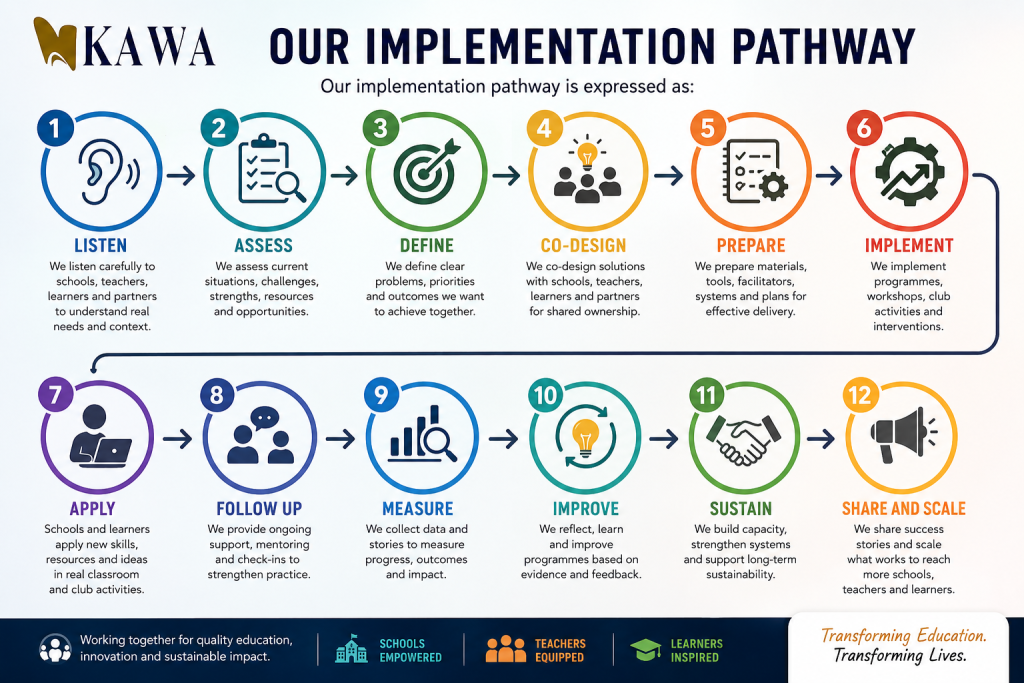
KAWA works with schools through a structured process that begins with listening and continues through assessment, programme design, capacity development, school-level application, follow-up, and evidence collection.
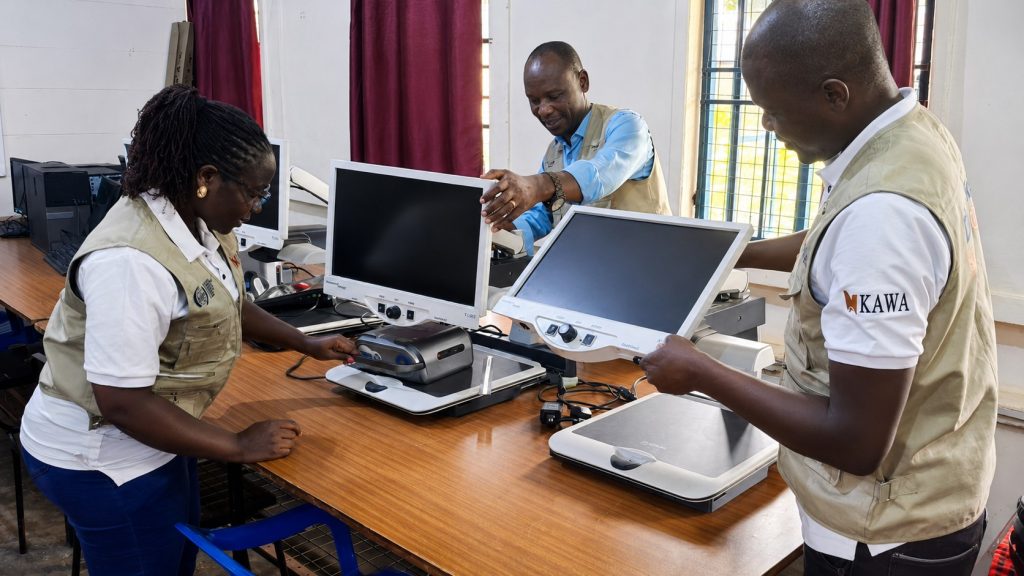
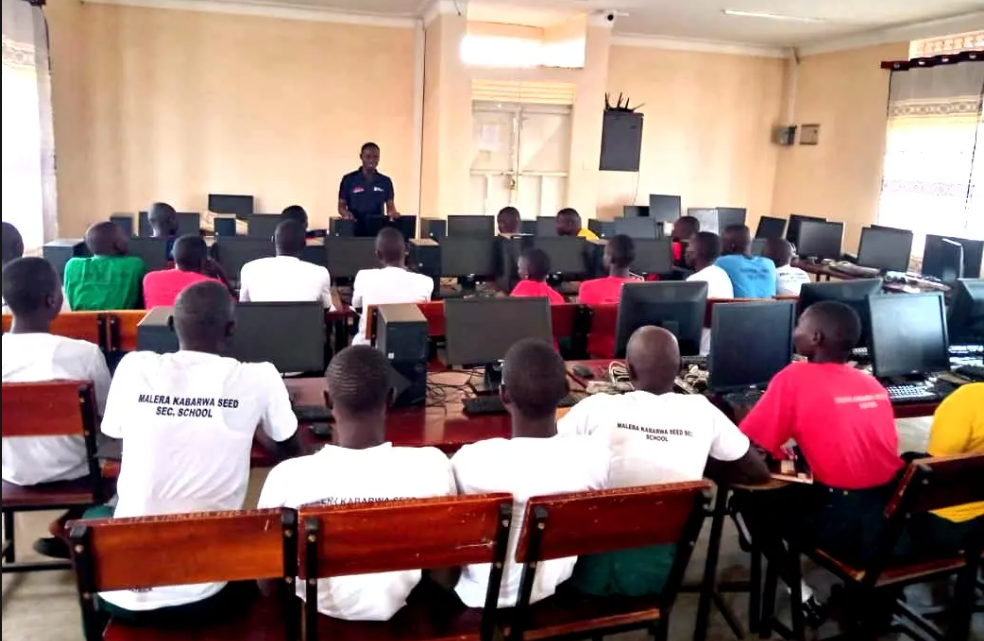
Our aim is not only to introduce technology or conduct activities. We help schools build the people, systems, content, and local ownership needed to use technology effectively and sustainably.
This approach helps us move from an identified school need to a practical intervention with clear responsibilities, measurable results, and a realistic plan for continuity.
We Begin With the School, Not the Technology
Different Starting Points
One school may own computers but lack digital content; another may have trained staff but an inactive ICT Club; a third may need lab fault registers or learner innovation mentorship.
Context Matters
KAWA avoids one-size-fits-all assumptions. We assess current infrastructure, curriculum priorities, teacher confidence, and learner readiness before proposing solutions.
Technology Follows Need
Digital tools are selected solely based on their capacity to solve authentic learning problems, improve instruction, and build sustainable institutional systems.
Our Core Programme Methodologies
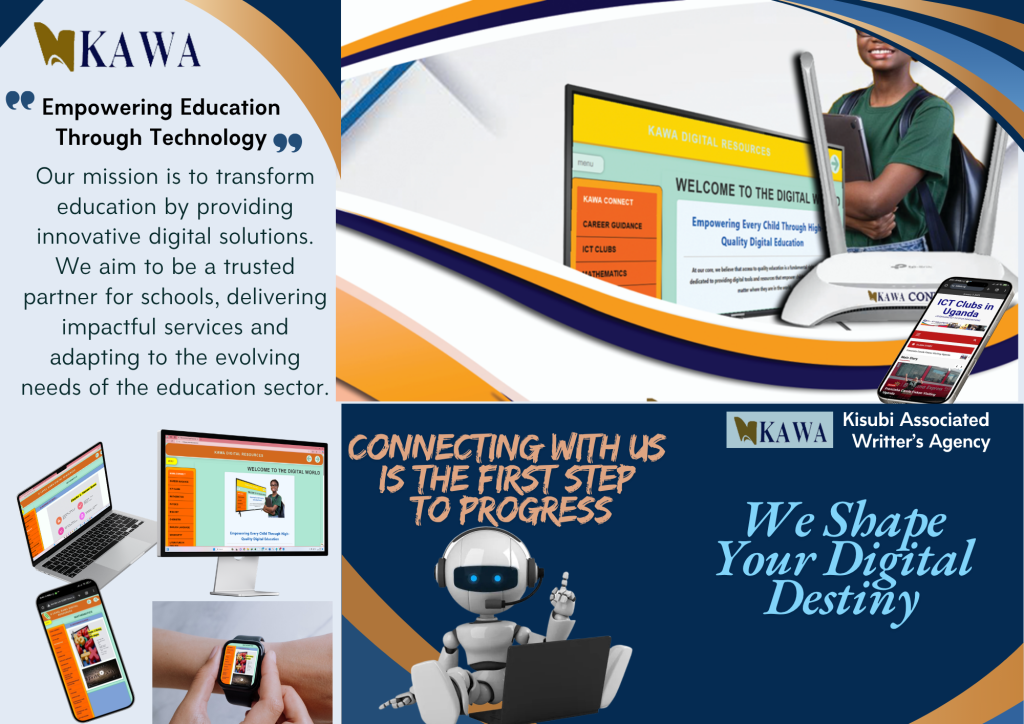
1. Our Approach to KAWA Connect
- School Readiness: Assessing computers, local network (LAN) options, power stability, and priority subjects.
- Content Planning: Curating syllabus-aligned notes, simulations, and textbooks organized by Level, Class, and Topic.
- Offline Deployment: Installing local servers, hotspots, or offline drives to run at zero recurring internet cost.
- Teacher Orientation & Follow-up: Training educators to integrate digital resources into lesson schemes and tracking classroom use.
2. Our Approach to ICT Clubs
- Leadership Approval: Securing dedicated laboratory timetables and appointing teacher patrons and assistants.
- Club Governance: Instituting student executive committees, constitutions, meeting agendas, and minute logs.
- Practical Skills & Projects: Hands-on coding, web design, multimedia, lab maintenance, and community innovation.
- Succession Planning: Mentoring junior learners to ensure continuity when senior candidates graduate.
3. Teacher Professional Development (CPD)
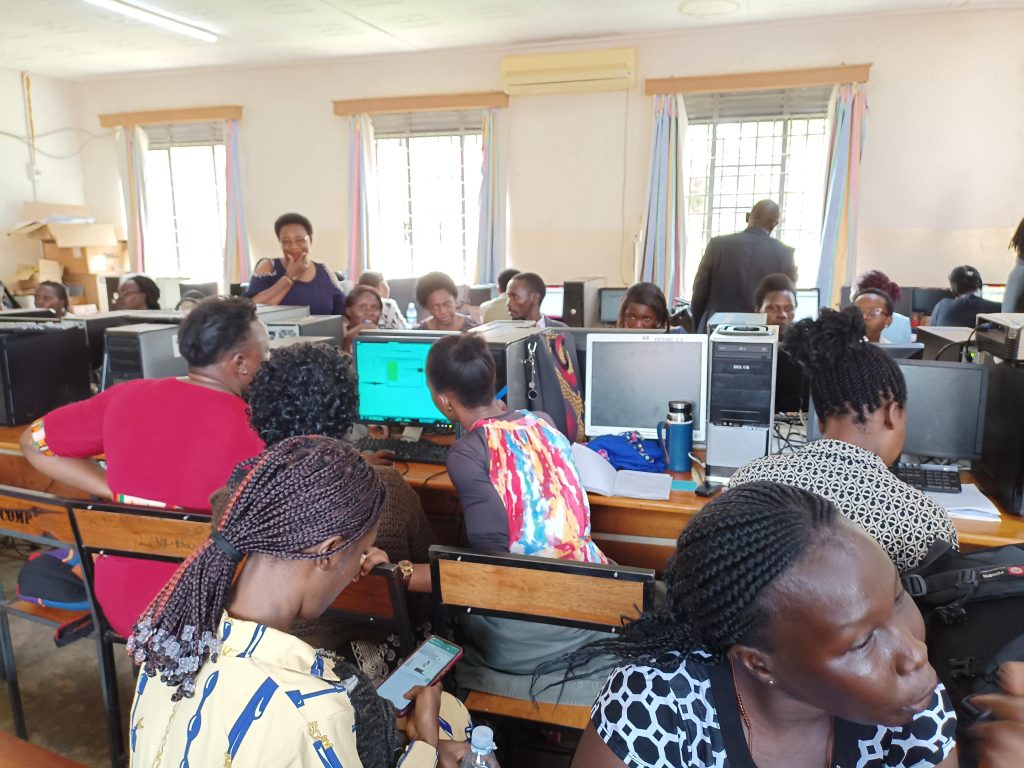
- Needs-Based Alignment: Identifying teacher subject areas, device familiarity, and specific pedagogical hurdles.
- Output-Driven Practice: Equipping teachers to design digital lesson plans, interactive quizzes, and visual aids.
- Action Planning: Requiring every participant to implement a documented classroom lesson post-training.
- Peer Sharing: Building departmental digital champion networks within school staffrooms.
4. Computer Lab Sustainability
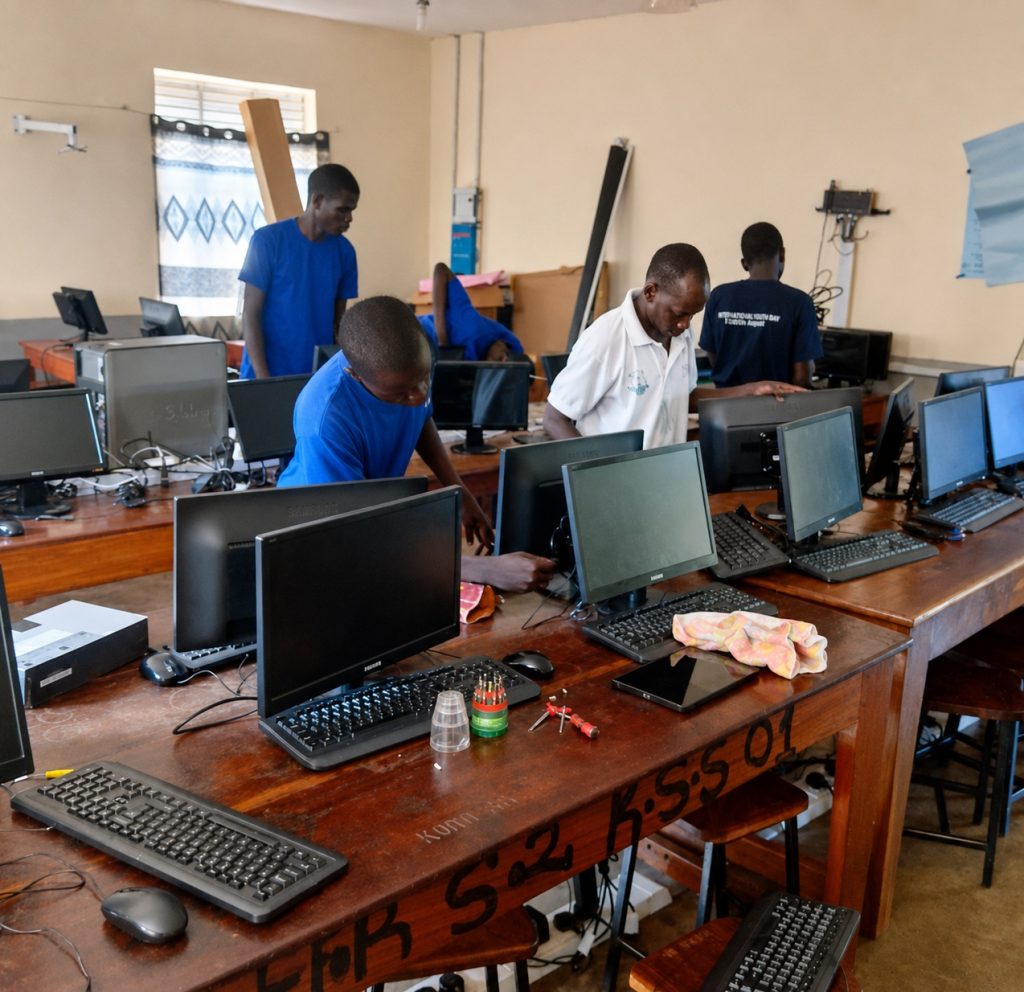
- Diagnostic Audits: Inspecting electrical safety, cabling, ventilation, malware protection, and workstation health.
- Standardized Systems: Numbering workstations and introducing daily fault logs with 48-hour resolution goals.
- Preventive Care: Establishing routine dust filtration, user account governance, and student lab-care squads.
- Cross-Curricular Access: Timetabling labs for arts, humanities, and sciences beyond Computer Studies.
5. Learner Innovation Pathway
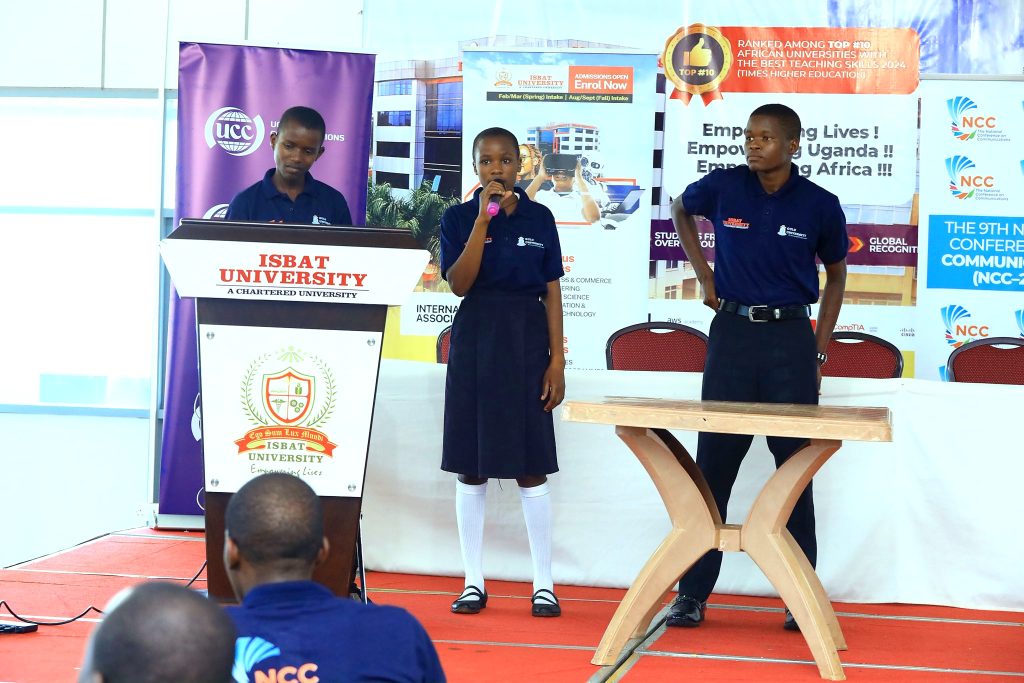
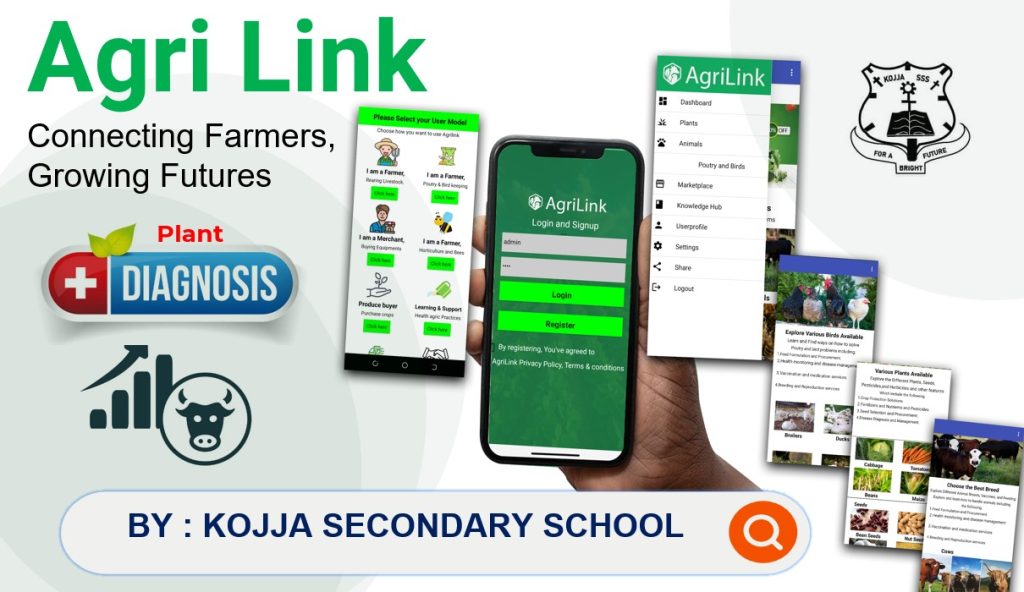
- Problem Discovery: Learners investigate authentic challenges in farming, health, education, or school systems.
- User Research & Prototyping: Interviewing real users to build testable, low-cost functional models.
- Testing & Refinement: Gathering critical user feedback and recording bug changelogs in project engineering notebooks.
- Evidence-Based Pitching: Presenting working demonstrations at regional and national championships.
The Role of Each Stakeholder
Sustainable educational impact requires clear, cooperative responsibilities across the entire school ecosystem:
KAWA Uganda
Program design, technical audits, curriculum development, teacher training, mentorship, M&E toolkits, and partnership coordination.
School Leadership
Administrative approval, appointing focal staff, lab schedule allocation, safeguarding enforcement, and maintenance budgeting.
Teachers & Patrons
Classroom digital lesson delivery, student club guidance, lab supervision, logging maintenance needs, and peer staffroom coaching.
Learners
Active club participation, team problem-solving, project documentation, responsible lab use, and peer knowledge transfer.
Parents & Communities
Encouragement, digital safety at home, attending project exhibitions, providing local challenge context, and testing prototypes.
Government & Partners
Policy direction, infrastructure funding, technical expertise, national exhibition platforms, and systemic quality assurance.
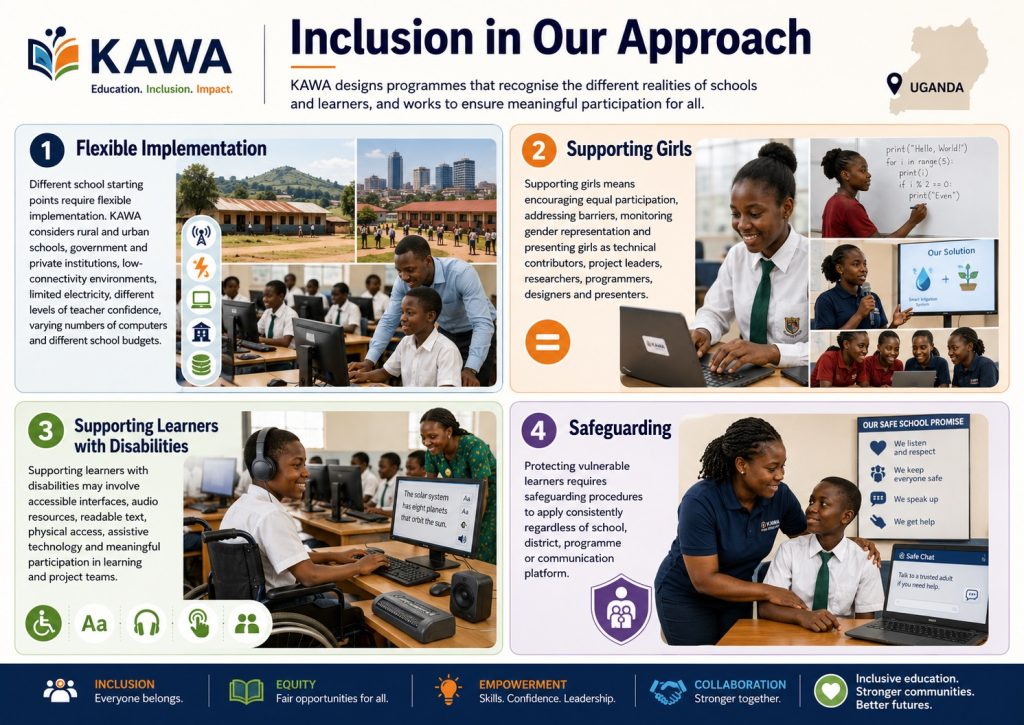
Safeguarding & Responsible Data
Learner protection is integrated into every phase of our programmes. It is an operational imperative, not a promotional afterthought.
- Formal institutional consent for student media and project showcases;
- Strict prohibition of publishing personal learner phone numbers or marks;
- Supervised online communication channels between adult mentors and minors;
- Encrypted data handling and confidential incident-reporting pathways.
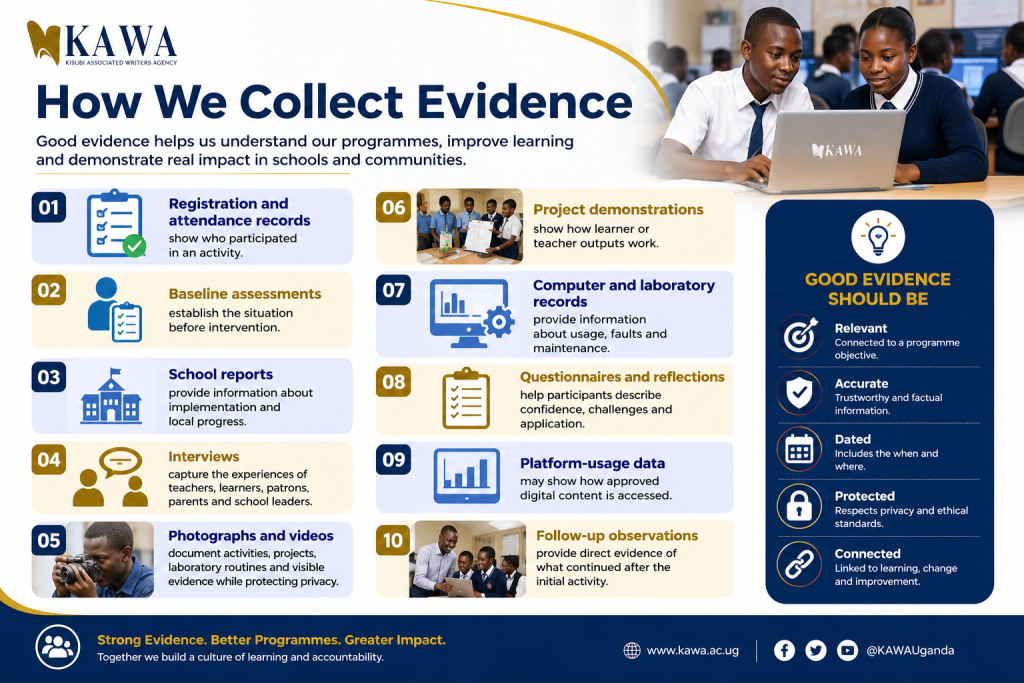
Evidence & Impact Standards
KAWA rigorously distinguishes between different levels of programme evaluation:
- Activities: What KAWA delivered (e.g., workshops held, labs inspected).
- Outputs: Immediate deliverables (e.g., teachers certified, action plans written).
- Outcomes: Sustained behavioural shifts (e.g., weekly club logs, active fault registers).
- Long-Term Impact: Systemic changes in digital competence and institutional independence.
What KAWA’s Approach Does Not Mean
- It does not mean dumping computers without understanding school needs.
- It does not mean conducting workshops without an implementation plan.
- It does not mean applying a rigid, one-size-fits-all model to every school.
- It does not mean taking promotional photos without documenting verifiable evidence.
- It does not mean treating learners as passive recipients rather than problem-solvers.
- It does not mean depending permanently on a single teacher or champion.
- It does not mean hiding implementation challenges or bottlenecks.
- It does not mean assuming hardware access automatically creates educational value.
“We are interested not only in what is delivered, but in what is applied, continued, and improved by the school community.”
A Typical School Partnership Journey
From initial diagnostic intake to long-term institutional sustainability:
1. Intake & Needs Assessment
School submits an enquiry; KAWA assesses infrastructure readiness, teacher confidence, and priority learning bottlenecks.
2. Proposal & Alignment
Co-designing a clear implementation plan confirming responsibilities, schedules, and expected milestones.
3. Field Implementation
Delivering on-site teacher training, offline KAWA Connect server installations, or inaugurating student ICT Club executive structures.
4. School-Level Application
Teachers apply digital schemes of work, clubs execute regular project meetings, and lab managers maintain active fault registers.
5. Follow-Up & Evidence
Conducting termly review audits, documenting classroom evidence, logging user feedback, and addressing technical challenges.
6. Long-Term Sustainability
Handing over operational ownership to the school’s leadership committee with local maintenance sinking funds and junior student succession.
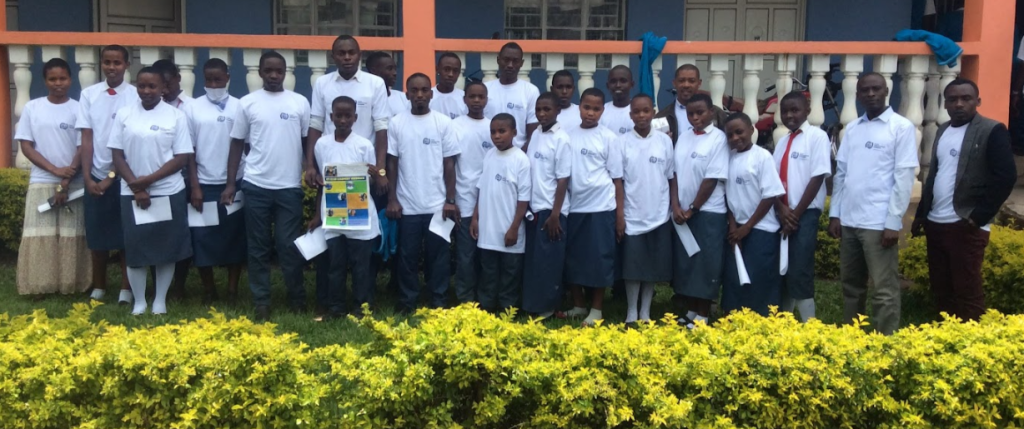
“We begin by understanding the school, developing a practical intervention with its stakeholders, building local capacity, supporting application, collecting credible evidence, and strengthening what schools can continue independently.”
Frequently Asked Questions
Does KAWA use the same programme in every school?
No. We first assess infrastructure, power stability, teacher digital confidence, and leadership commitment before recommending a tailored intervention.
Does KAWA only support schools with internet?
No. KAWA specializes in low-connectivity and offline solutions. KAWA Connect runs locally on school servers, requiring zero continuous internet access.
Does teacher training end after the workshop?
Not at all. Training requires implementing an action plan in class, followed by peer mentoring, digital toolkits, and termly review visits.
Can a school request multiple services?
Yes. Following a baseline audit, schools frequently combine KAWA Connect, Teacher CPD, ICT Club setups, and Lab Sustainability governance.
Begin Your School’s Digital Transformation Journey
Every school begins from a different starting point. KAWA collaborates with school leadership, educators, learners, and partners to map a practical, sustainable way forward.