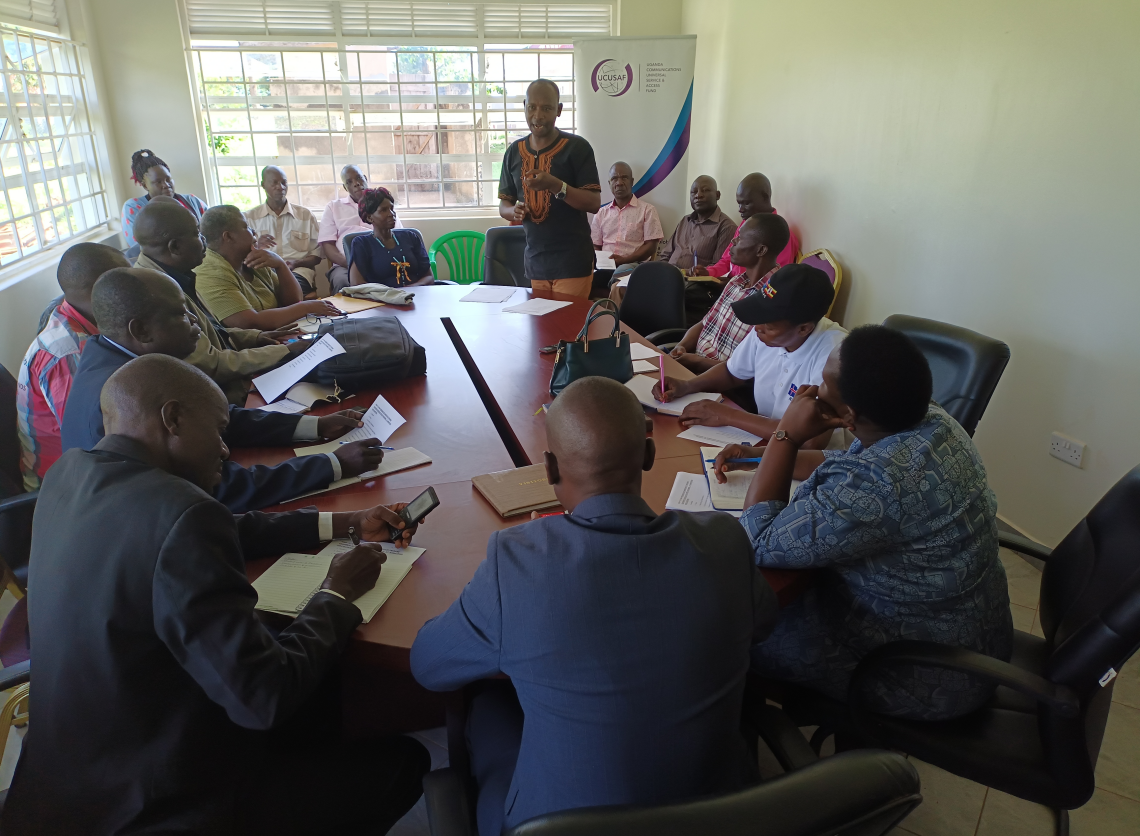
Active learner engagement sits at the core of Uganda’s Competency-Based Curriculum (CBC), and Kisubi Associated Writers Agency (KAWA) has deliberately positioned its teacher training and digital platforms to make this shift practical and sustainable in real classrooms. Moving away from passive, lecture-dominated instruction, KAWA’s approach focuses on helping teachers design learning experiences where pupils actively participate, think critically, collaborate, and apply knowledge to real-life situations. This philosophy aligns strongly with the CBC’s emphasis on skills, values, attitudes, and application of learning rather than rote memorisation.
A key foundation of KAWA’s methodology is active learning grounded in David Kolb’s experiential learning theory. Kolb’s model—built around concrete experience, reflective observation, abstract conceptualisation, and active experimentation—provides a powerful framework for classroom practice. Through KAWA teacher training, educators are supported to design lessons where learners first experience concepts through activities, experiments, stories, or digital simulations, then reflect on what they have observed, draw meaning and concepts from the experience, and finally apply that learning in new tasks or real-world contexts. This cycle transforms classrooms into spaces of exploration and discovery rather than passive listening.
In primary schools, KAWA is training teachers to use simple but powerful active engagement techniques such as guided discussions, pair and group work, learning stations, project-based tasks, storytelling, role-play, and inquiry-based activities. These techniques are carefully aligned to CBC learning outcomes and adapted to the learners’ age and context. Teachers are encouraged to shift their role from “content deliverers” to facilitators of learning, guiding pupils to ask questions, express ideas, and learn from one another. This approach significantly improves learner confidence, participation, and understanding.
KAWA CONNECT plays a central role in making active learning practical and scalable. As an offline digital learning platform, KAWA CONNECT provides teachers with ready-to-use, curriculum-aligned digital content that supports interactive teaching even in low-connectivity environments. Videos, animations, interactive exercises, images, and lesson guides help teachers introduce concepts in engaging ways and give learners concrete experiences that anchor understanding. Because the platform works offline, teachers in rural and underserved schools are equally able to deliver high-quality, technology-supported active learning.
This work is being implemented in primary schools with strong institutional support. KAWA is training teachers under the support of Edify Uganda, whose commitment to teacher professional development and values-based education strengthens the depth and sustainability of the program. At the same time, the initiative is focused on government schools that have received computer laboratories through the Uganda Communications Commission and its UCUSAF programme. By combining trained teachers, functional ICT infrastructure, and relevant digital content, KAWA ensures that ICT is not used as a standalone subject, but as a tool that enhances active learning across the curriculum.
What makes KAWA CONNECT particularly impactful is how it supports teachers to plan and deliver active lessons efficiently. Teachers can select content that introduces a topic visually, guide learners through discussion and reflection, and then assign practical tasks or group activities that encourage application. Learners are no longer limited to textbooks; they interact with content, collaborate with peers, and receive timely feedback. This approach mirrors Kolb’s learning cycle and fits naturally within CBC assessment practices, which value continuous assessment and demonstration of competence.
In classrooms where KAWA CONNECT has been adopted, teachers report increased learner engagement, improved classroom participation, and better understanding of concepts—especially among lower attainers who benefit from visual and interactive learning. Active engagement techniques also promote inclusion, as learners with different abilities and learning styles can participate meaningfully through varied activities rather than a single mode of instruction.
In essence, KAWA’s work demonstrates how active learning methodologies, grounded in sound educational theory and supported by appropriate technology, can make the Competency-Based Curriculum truly effective. Through teacher training, strong partnerships with Edify Uganda and UCC-supported schools, and the innovative use of KAWA CONNECT, KAWA is showing that active engagement is not an abstract idea—but a practical, classroom-ready approach that is transforming teaching and learning in Uganda’s primary schools.
