
A school philosophy becomes effective when it influences the systems through which the school operates. Planning, budgeting, staffing, teaching, discipline and leadership decisions should all reflect the school’s agreed purpose.
This requires leaders to connect each commitment to practical responsibilities. If the mission promises inclusive education, for example, the school should identify barriers to participation and plan how to address them. If the school values accountability, its leaders should explain decisions, maintain accurate records and follow up agreed actions.
Align the School Development Plan With the Vision
The School Development Plan should explain how the school intends to move towards its desired future over the planning period.
Each major development priority should have a clear educational purpose. Before approving a new building, equipment purchase or programme, leaders should consider:
- Which strategic goal does it support?
- What learner or school need will it address?
- What evidence supports the proposed investment?
- Can the school operate and maintain it?
- How will its contribution be reviewed?
For example, a school committed to practical science education might prioritise a safe, usable laboratory alongside teaching materials, teacher preparation and maintenance arrangements.
The plan should consider how facilities will support learning once they are available.
Use the School Improvement Plan to Address Specific Gaps
The School Improvement Plan should turn identified weaknesses into manageable actions.
Where inclusion is a core value, priorities might include accessible learning materials, improved participation or support for learners with persistent attendance difficulties.
Where excellence is a core value, priorities might include lesson preparation, assessment feedback or support for learners who have not mastered essential competencies.
Each action should identify the problem, intended improvement, responsible person, resources, completion date and evidence of progress.
The school should maintain a clear connection between its longer-term development priorities and its immediate improvement work.
Make the Budget Reflect Agreed Priorities
The budget shows which commitments the school is prepared to support with resources.
A school that prioritises teacher development should provide for relevant continuing professional development (CPD). A commitment to learner safety should influence spending on supervision, sanitation, repairs and appropriate safeguarding arrangements. Innovation may require materials for practical projects, teacher support or suitable technology.
Resources include money, staff time, existing facilities and locally available materials. Schools with limited funds can still make purposeful choices.
For example, teacher development may begin with structured peer support and school-based workshops. Practical learning may use carefully selected local materials.
Budget discussions should examine both the initial cost and the continuing requirements of an activity. Equipment may also need power, maintenance, consumables and staff training.
Connect Recruitment to the School’s Educational Purpose
Recruitment should consider the qualifications and professional capabilities required for the role, alongside conduct and commitment to learners.
Candidates should understand the school’s philosophy and how it relates to their responsibilities.
Interviews can explore practical situations, such as:
- How would you support learners with different levels of understanding?
- How would you respond to a learner who reports bullying?
- How do you use assessment feedback to improve teaching?
- How have you worked with colleagues to solve a problem?
These questions help the school assess relevant professional judgement. Selection should use clear, fair criteria connected to the role.
Explain Expectations During Staff Induction
New staff should receive an explanation of the vision, mission, core values and strategic goals, supported by examples from school practice.
Induction should clarify expectations concerning teaching, communication, discipline, accountability, safeguarding and teamwork. Staff should also know where to find relevant procedures and whom to approach for guidance.
For example, explaining the value of responsibility should include how to report an absence, record a concern, account for learning materials and follow up an assigned task.
A follow-up conversation after the initial induction can identify areas where further support is needed.
Use Appraisal to Support Professional Improvement
Appraisal can examine how staff practice contributes to the school’s mission and values.
Expectations should be communicated in advance and assessed through relevant evidence. A commitment to teamwork, for example, can be considered through contributions to joint planning, agreed departmental tasks and support for colleagues.
Appraisal should recognise strengths, identify development needs and agree practical follow-up. Staff should have an opportunity to discuss the evidence and explain their circumstances.
Broad labels such as “poor attitude” provide little guidance. Specific observations make improvement possible.
Carry the Philosophy Into Teaching and Learning
The school’s educational commitments should be visible in lessons and learner experiences.
| Commitment | Examples of classroom practice |
| Learner-centred education | Teachers check understanding and adjust explanations, activities and support. |
| Practical skills | Learners investigate, demonstrate, create and apply knowledge. |
| Inclusion | Teachers adapt resources and participation methods to address identified needs. |
| Integrity | Learners practise honest work and acknowledge sources. |
| Innovation | Learners test ideas, consider feedback and improve their work. |
| Preparation for life and work | Lessons connect learning to occupations, further study and community needs. |
Technology should be selected according to its educational usefulness and the school’s ability to support access and maintenance.
Ensure Discipline Reflects the School’s Values
Discipline should help learners understand expectations, take responsibility and improve their behaviour while protecting their dignity and safety.
A school promoting respect and compassion should demonstrate these values when responding to mistakes or misconduct.
Expectations should be clear, responses consistent and opportunities for guidance available. Learners should also know how to raise concerns and seek help.
Leaders should review whether disciplinary practice reflects the values the school teaches.
Use the Philosophy When Making Significant Decisions
Before deciding on fees, staffing, admissions, infrastructure, technology, partnerships or resource allocation, leaders should ask:
“How does this decision support our mission, values and strategic goals?”
They should also consider who will benefit, who may face difficulties, what resources are required and how the effects will be reviewed.
Recording the reasons for significant decisions helps the governing body and school community understand how priorities were determined.
12. Turning Strategic Goals Into Measurable Improvement
A strategic goal establishes direction. Measurable objectives and organised activities explain how the school will make progress.
Effective planning connects an identified need to action, then checks whether that action improves teaching, learner experience or learning outcomes.
Begin With a Baseline
Before setting a target, establish the current situation.
For a goal concerning teaching quality, the school might review lesson observations, learner work, assessment information and teacher feedback.
The review should clarify the specific gap. Teachers may already organise group activities, for example, while having difficulty checking what individual learners understand.
A baseline helps the school choose relevant support and realistic targets.
An Illustrative Planning Example
Strategic goal: Strengthen learner-centred teaching, formative assessment and practical skills.
| Planning element | Illustrative application |
| Identified need | Lesson reviews show limited opportunities for learners to explain their thinking and receive feedback during lessons. |
| Baseline | An initial review finds that 40% of sampled lessons meet the school’s agreed criteria for active participation and formative assessment. |
| Objective | Increase this proportion to 65% by the end of the next school year. |
| Activities | Organise focused CPD, joint planning, supportive peer observation and practical resource development. |
| Responsibility | Headteacher, director of studies or equivalent, departmental leaders and teachers. |
| Resources | Scheduled collaboration time, suitable learning materials and an agreed CPD allocation. |
| Monitoring | Review implementation and evidence each term. |
| Evidence | Observation records, lesson plans, learner work, assessment information and teacher reflections. |
The figures are examples, not prescribed targets. Schools should establish their own baseline and agree targets suited to their context.
Define What the Indicators Mean
Indicators should be clear enough for staff to interpret consistently.
For this example, the school could agree that:
- Active participation involves learners explaining, investigating, practising or applying learning through a suitable activity.
- Formative assessment involves checking understanding during learning and using the findings to provide feedback or adjust teaching.
- Practical skills are demonstrated through agreed tasks relevant to the subject and learners’ level.
Participation should allow different ways for learners to contribute. Speaking frequently in class is only one possible form of engagement.
Measure Activities and Their Effects
Counting activities helps leaders check implementation, but schools should also examine whether practice and learning have improved.
| Level of evidence | Example indicator | What it helps the school understand |
| Activity | Number of teachers completing the planned CPD. | Whether the support was delivered. |
| Application | Proportion of sampled lessons meeting agreed teaching criteria. | Whether classroom practice is changing. |
| Learner experience | Learner work and feedback showing meaningful participation and useful guidance. | How learners experience the change. |
| Learning outcome | Progress in selected competencies measured through suitable tasks. | Whether learning is improving. |
Training attendance alone cannot establish that teaching has improved. Equally, a single observation cannot represent every aspect of a teacher’s work. Schools should consider several relevant sources of evidence.
Review Progress and Adjust Support
Termly reviews should examine what was completed, what changed and what difficulties remain.
If progress is limited, leaders should investigate the reasons. Teachers may need further demonstration, more suitable materials, clearer assessment criteria or protected planning time.
Agree the next actions, assign responsibility and set a review date. Where evidence reveals a problem with the original plan, adjust it and record the reasons.
A strategic goal becomes useful when the school can show the need it addressed, the action taken and the difference that action made to learners.
-

Schools in Busia District: A Complete Directory of Primary, Secondary and Early Childhood Education Institutions
Schools in Busia District | KAWA School Directory KAWA • DISTRICT SCHOOL DIRECTORY Schools in Busia District Find pre-primary, primary and secondary schools, together with non-tertiary institutions, in Busia District. This directory brings together school names, ownership categories, locations, EMIS codes and learner figures to help families, teachers, school leaders and education partners find and…
-

Every Child Deserves a Safe School: Uganda Marks International Day Against Violence, Bullying and Cyberbullying
Today, 5 November 2026, Uganda joins the international community in commemorating the International Day Against Violence and Bullying at School, Including Cyberbullying. The day reminds educators, parents, learners, policymakers and technology providers that every child has the right to learn in an environment free from fear, humiliation, discrimination and abuse. As Uganda continues to embrace…
-
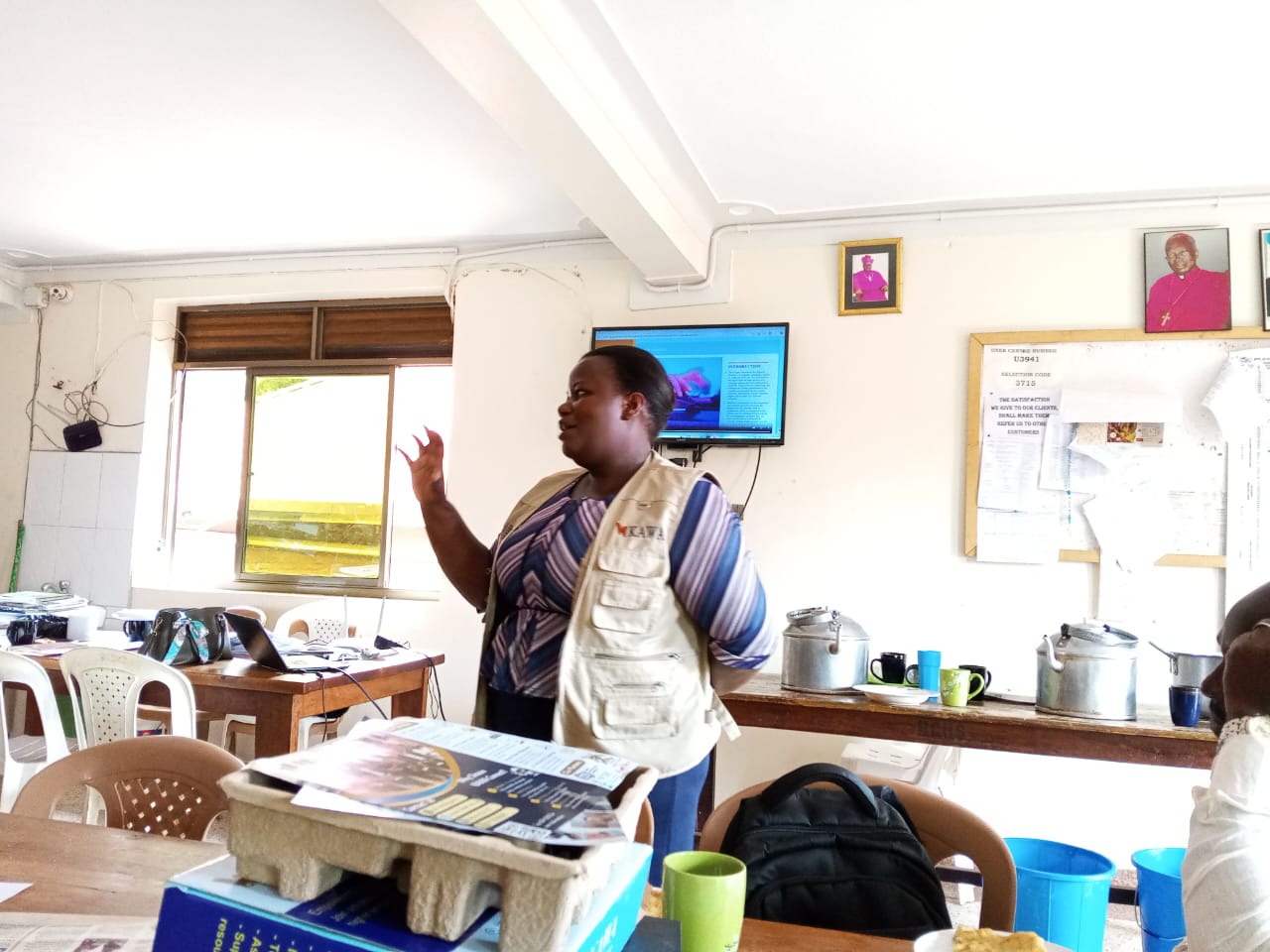
St. Cyprian High School Kyabakadde Embraces Digital Learning Through KAWA CONNECT Partnership
School visit: St. Cyprian High School Kyabakadde, Mukono District, Uganda. A New Chapter in Digital Education MUKONO, UGANDA — 2 November 2026. St. Cyprian High School Kyabakadde has taken a significant step towards strengthening digital education following a visit by a team from KAWA Uganda, led by Ms. Rebecca Auma, on Monday, 2 November 2026.…