
Every school has its own identity, community and circumstances. At the same time, it contributes to a wider national purpose: helping learners develop the knowledge, skills, values and confidence to improve their lives and contribute to society.
Aligning the school philosophy with the Ministry of Education and Sports and the country means making this contribution clear. The connection should run through the school’s vision, mission, core values and strategic goals, and be visible in everyday practice.
The Ministry of Education and Sports states its vision as “Quality Education and Sports for All.” This provides an important reference point for schools when considering educational quality, participation and learners’ wider development.
Uganda Vision 2040 sets a broader aspiration for a modern and prosperous society. Schools can contribute by developing learners’ capabilities, supporting practical learning and preparing young people to participate responsibly in their communities and the economy.
Alignment Begins With Understanding
Before reviewing their philosophy, school leaders should discuss the educational and national aspirations their school can help advance.
Useful questions include: What does quality education mean for our learners? Who faces barriers to participation? Which skills do learners need to apply knowledge in everyday life? How can our school encourage responsibility, cooperation and service?
These discussions help the school translate broad aspirations into commitments that fit its context.
A rural school, for example, may connect practical learning to agriculture, environmental care and local enterprise. An urban school may use community challenges involving waste management, transport or small businesses. Both can develop problem-solving, creativity and responsible citizenship through relevant learning experiences.
Develop a Distinctive School Philosophy
A school should express its own educational purpose in language that its community understands. Copying a national statement word for word provides little explanation of whom the school serves or how it intends to work.
A school might adopt the following illustrative vision:
“Confident, skilled and responsible learners contributing to thriving communities.”
It could support that vision with a mission such as:
“To provide inclusive, practical and engaging education that develops each learner’s knowledge, abilities and character through effective teaching and partnership with families.”
These statements establish a local educational purpose while creating opportunities to contribute to wider aspirations.
The test of alignment is whether the school’s commitments support national educational progress and lead to meaningful action.
Make the Connection Visible in School Practice
Schools can use the following framework to examine how their philosophy translates into action. These are practical examples for discussion, rather than prescribed wording or an official inspection checklist.
| Area of alignment | Commitment within the school philosophy | Examples of implementation |
| Quality education | Help learners understand, apply and build on their learning. | Prepared lessons, suitable resources, constructive feedback and support where understanding is weak. |
| Equity and inclusion | Enable learners from different backgrounds and with different needs to participate. | Accessible materials, adapted activities and follow-up for learners at risk of exclusion. |
| Learner safety and dignity | Provide a caring and respectful learning environment. | Respectful communication, appropriate supervision and clear ways to raise concerns. |
| Practical skills | Develop capabilities learners can use beyond examinations. | Investigations, projects, demonstrations and activities linked to everyday problems. |
| Responsible citizenship | Encourage honesty, cooperation and care for shared resources. | Learner leadership, fair decision-making and community service. |
| Innovation and creativity | Encourage learners and teachers to investigate and improve ideas. | Locally made teaching aids, learner projects and purposeful ICT Club activities. |
| Environmental responsibility | Promote care for the school and surrounding environment. | Responsible waste management, water conservation and practical environmental learning. |
| Accountable leadership | Manage duties and resources transparently and responsibly. | Accurate records, documented decisions and follow-up of agreed actions. |
| Physical development and participation | Recognise the contribution of sports and co-curricular learning. | Planned activities with fair opportunities to participate and develop abilities. |
Translate Alignment Into Strategic Goals
Alignment becomes easier to assess when a school links its philosophy to specific improvement priorities.
Suppose the mission promises inclusive, practical education. The school could identify two strategic goals:
- Improve participation and learning support for learners experiencing barriers.
- Strengthen practical learning across subjects.
Each goal should then have a baseline, realistic objectives, responsible people, resources and review dates.
For inclusion, the school might begin by examining attendance, classroom participation and access to learning materials. For practical learning, departments could review existing activities and identify where learners need more opportunities to investigate, practise and apply knowledge.
Targets should reflect the school’s actual circumstances. A commitment becomes credible when leaders provide the time, support and resources needed to fulfil it.
Use Technology According to Educational Need
Technology can support a school’s contribution to learning and innovation when it addresses a clear need.
For a school with limited internet access, offline digital resources may help teachers and learners access relevant materials. Where devices are scarce, a teacher may use one available screen for a guided lesson or organise supervised group activities.
The school should consider who can access the technology, how it supports learning and what arrangements are needed for maintenance and responsible use.
A useful planning question is:
“What learning problem will this technology help us solve, and how will we know whether it is helping?”
Questions for Reviewing Alignment
School leaders, staff and governing bodies can use these questions during a philosophy or school improvement review:
- Does our vision describe a worthwhile educational future for our learners?
- Does our mission explain how we support quality learning and meaningful participation?
- Do our values protect dignity and encourage responsible conduct?
- Do our strategic goals respond to evidence about learner and school needs?
- Are girls, boys and learners with disabilities given fair opportunities to participate?
- Do learners have opportunities to develop practical skills and apply knowledge?
- Do our activities encourage citizenship, service and environmental care?
- Does our budget support the commitments expressed in our philosophy?
- Can learners, staff and parents describe examples of these commitments in practice?
Schools should revisit the relevant official education and national planning documents when reviewing their philosophy, using current guidance to inform local decisions.
A well-aligned school philosophy gives the community a clear sense of purpose and shows how its daily work contributes to better learning, stronger communities and Uganda’s development.
-
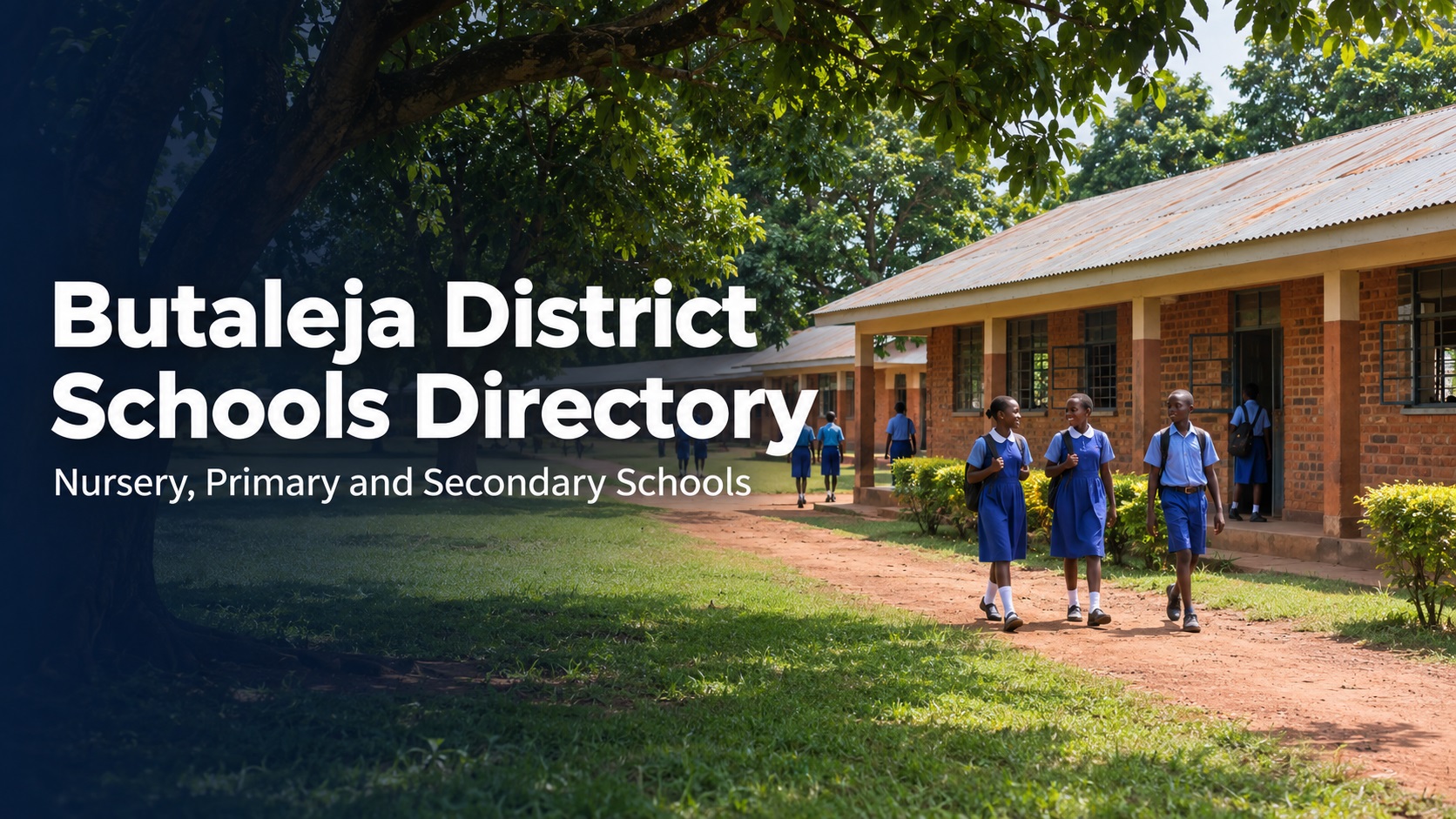
Butaleja District Schools Directory – Nursery, Primary and Secondary Schools
Butaleja District • Eastern Uganda Schools in Butaleja District Find nursery, primary and secondary schools by area, parish, ownership and EMIS code. Headquarters in Butaleja town. Borders Budaka to the north, Mbale to the east, Tororo to the south-east, Bugiri to the south and Namutumba to the west. Clear Tip: Type a name to filter…
-

Mapping Education in Bushenyi: Directory of 254 Primary, Secondary & Vocational Institutions
Schools, Colleges and Universities in Bushenyi District This KAWA Uganda directory helps families, learners and teachers find nursery schools, primary and secondary schools, vocational institutes, colleges and university campuses in Bushenyi District, including Bushenyi–Ishaka Municipality. Nursery and early childhood centres Primary schools Secondary schools Technical colleges and vocational institutes Nursing and allied health training Teacher…
-

STOP Guessing Your Future! Your Complete KAWA Career Guidance Map – 70+ Links to Careers, Universities, Scholarships & Jobs in Uganda
KAWA Uganda · Career Guidance What could you do after school? Explore careers, see where you can train and compare your study options in Uganda. This guide brings together the KAWA Career Guidance Handbook, occupational profiles, admissions and scholarship resources, and 39 institution profiles. Start planning ↓ Take the 30-sec quiz ✨ 📚 72+ Links🎓…