

Introduction: A School Is Only as Strong as the Leadership Behind Its Classrooms
Walk into two schools in any part of Uganda with almost identical facilities, numbers of teachers and financial resources, and you may discover remarkable differences in how children learn.
In one school, teachers arrive prepared, learners participate confidently, classrooms are orderly, and parents receive regular information about their children’s progress. Teachers support one another, struggling learners receive additional attention, and school resources are carefully managed.
In another school, lessons are frequently missed, teachers work without adequate supervision, learners remain passive, and school management concentrates primarily on collecting fees, enforcing discipline and preparing for examinations.
What explains the difference?
Resources certainly matter. Teacher qualifications, family backgrounds, school infrastructure and learning materials also influence educational outcomes. However, one important factor is often overlooked: the quality of school leadership.
The UNESCO 2024/5 Global Education Monitoring Report, Leadership in Education: Lead for Learning, makes a compelling case that effective school principals improve the conditions in which both teachers and learners succeed.
For Uganda, this finding raises an important question: Are our headteachers and school administrators primarily managing institutions, or are they deliberately leading improvements in teaching and learning?
This question deserves serious attention from school proprietors, headteachers, deputy headteachers, directors of studies, school management committees, boards of governors, teacher educators and education officials.
A school may have excellent buildings and impressive examination results in some years. But unless leadership creates a culture of continuous learning, professional growth, inclusion and accountability, improvements may not be sustained.
1. The Headteacher Must Be the Chief Learning Leader
Traditionally, many people measure a successful headteacher by visible administrative achievements: school buildings, enrolment growth, financial stability, discipline, examination performance and general organization.
These are important responsibilities. However, they do not fully describe effective educational leadership.
A headteacher’s most important professional responsibility is to create conditions in which every teacher can teach effectively and every learner has a genuine opportunity to learn.
Consider a typical Monday morning.
The headteacher attends assembly, checks teacher attendance, signs documents, responds to visitors, reviews fees balances and resolves administrative concerns. By the end of the day, the headteacher may have been extremely busy without entering a single classroom.
Such a day is not necessarily wasted. Schools need administrative attention. But when this becomes the pattern throughout the term, important questions remain unanswered.
Are learners understanding what teachers are teaching? Are classroom activities developing the intended competencies? Are learners with difficulties receiving support? Are teachers using assessment information to improve their lessons?
A school leader cannot answer these questions from an office alone.
At KAWA Uganda, we believe school leaders should spend meaningful time understanding what happens where education actually takes place: in classrooms, laboratories, libraries, workshops and other learning environments.
This does not mean headteachers must interfere with every lesson. It means they must understand the quality of learning taking place and work with teachers to strengthen it.
What should change?
Every headteacher should establish a regular instructional leadership routine that includes classroom visits, discussions with learners, reviews of learners’ work, professional conversations with teachers and follow-up on agreed improvements.
The emphasis should be on support rather than intimidation.
A teacher should not automatically become frightened whenever the headteacher enters the classroom. Instead, the visit should provide an opportunity to recognize good practice, identify challenges and discuss ways of improving learning.
2. Effective School Leaders Improve Learner Achievement
The UNESCO report highlights research from the United States estimating that principal and teacher leadership inputs explained up to 27% of the variation in student outcomes in the study concerned.
This is not a Ugandan national statistic, and it should not be interpreted to mean that leadership alone determines 27% of every learner’s achievement. Nevertheless, it illustrates the substantial influence that school leadership can have on educational performance.
This influence is often indirect.
A good headteacher may not personally teach mathematics to every learner, but can ensure that mathematics teachers receive appropriate support, have access to learning materials, assess learners regularly and address persistent learning difficulties.
The same applies to reading, writing, science, entrepreneurship, ICT and other learning areas.
For example, imagine a primary school where many Primary Four learners cannot read simple passages confidently.
An administrative response might be to tell teachers to work harder or organize additional examinations.
An instructional leader would investigate the problem more carefully.
Which learners are struggling? What reading abilities are missing? Are teachers using suitable methods? Is reading practice taking place regularly? Are appropriate books available? How can parents support reading at home?
After understanding the problem, the school could introduce short daily reading sessions, peer reading groups, teacher support meetings and monthly checks of learner progress.
The headteacher’s contribution is not necessarily to conduct every reading lesson. It is to ensure that an organized improvement process exists and is followed.
The quality of leadership becomes visible in the quality of learning opportunities available to children.
3. Good Headteachers Bring Out the Best in Teachers
Teachers are central to school improvement. However, even committed teachers need professional guidance, encouragement, useful feedback and opportunities to develop their skills.
UNESCO’s report refers to a study involving 32 countries that found a relationship between stronger school leadership and improved teaching practices.
This should encourage the Ministry of Education to reconsider how schools approach teacher supervision.
In some institutions, supervision is largely associated with checking schemes of work, lesson plans, attendance records and examination marks.
These activities have value, but they are not sufficient.
A teacher may have a properly written lesson plan while struggling to explain concepts clearly. Another teacher may complete the syllabus without establishing whether learners have understood it.
Effective supervision must therefore examine both teaching practice and evidence of learning.
Replace fault-finding with professional coaching
After observing a lesson, a school leader might ask:
- Which part of the lesson worked particularly well?
- What evidence showed that learners understood the concept?
- Which learners experienced difficulties?
- What alternative activity could support those learners?
- What assistance would make the next lesson more effective?
These questions create a professional conversation rather than a confrontation.
A teacher who receives constructive feedback is more likely to reflect honestly on practice and experiment with better teaching approaches.
Schools should also establish subject-based professional learning groups where teachers share materials, demonstrate teaching methods, review assessment tasks and discuss learner difficulties.
Experienced teachers should mentor newly appointed colleagues, while younger teachers with emerging digital skills should also have opportunities to support others.
Professional learning should flow in several directions.
A good school leader recognizes that teachers cannot be expected to improve continuously if the school does not provide a supportive environment for their own learning.
4. The Competency-Based Curriculum Requires a Different Kind of School Leadership
The curriculum reforms have placed greater emphasis on practical learning, competencies, learner participation and the application of knowledge.
The National Curriculum Development Centre introduced the revised Lower Secondary Curriculum in 2020. More recently, in July 2026, NCDC published assessment guidelines supporting competency-based teaching and assessment under the revised Advanced Secondary Curriculum.
These developments have important implications for school leadership.
A school cannot implement competency-based education effectively simply by changing the format of lesson plans or purchasing new textbooks.
Teachers need opportunities to interpret learning outcomes, prepare meaningful activities, assess competencies and help learners connect classroom knowledge to everyday life.
Consider an entrepreneurship lesson about identifying business opportunities.
In a traditional approach, learners might copy definitions from the chalkboard and reproduce them in a written examination.
In a competency-based lesson, learners could investigate an unmet need in the surrounding community, propose a practical business solution, estimate costs and present their ideas.
Both approaches may involve useful subject knowledge, but the second creates more opportunities for learners to apply it.
A school leader should be able to recognize this difference.
Practical steps for school administrators
Headteachers and directors of studies should ensure that departmental meetings examine actual classroom activities, learner portfolios, practical assignments and assessment quality.
Lesson observation tools should go beyond checking whether a teacher used an approved lesson-plan format.
They should help school leaders determine whether learners are thinking, discussing, creating, investigating, solving problems and demonstrating the intended learning outcomes.
School timetables should also provide sufficient opportunities for practical activities, projects, remedial support and teacher collaboration.
Curriculum implementation must become a whole-school responsibility rather than something left entirely to individual classroom teachers.
5. Effective Leaders Make Schools Safe, Healthy and Inclusive
Academic achievement is important, but a school cannot be considered successful if learners feel unsafe, excluded, humiliated or neglected.
A child who fears bullying, harassment or humiliation may find it difficult to concentrate. A learner with a disability may have the ability to succeed academically but face unnecessary barriers because the school environment has not been adapted.
Similarly, learners experiencing poverty, family difficulties, illness or emotional distress may require additional understanding and support.
UNESCO emphasizes that effective school leaders create safe, healthy and inclusive school environments.
This responsibility should be taken seriously in Uganda.
A school leader needs to ensure that child protection is not merely a statement in a school policy document.
It should be reflected in daily school practices, staff conduct, reporting procedures, disciplinary approaches and relationships among learners.
For example, when a learner’s attendance suddenly declines, an effective school should investigate the underlying circumstances rather than immediately label the child as unserious.
The problem might involve transport difficulties, illness, family responsibilities, bullying or financial hardship.
Understanding the cause makes an appropriate response possible.
Questions every school leader should ask
Does every learner have someone trustworthy to approach when experiencing difficulty? Are reports of bullying and abuse handled safely and appropriately? Are girls and boys equally encouraged to participate in science, leadership and technology-related activities? Are learners with disabilities receiving reasonable support?
Schools should also involve parents and relevant professionals when addressing learner welfare.
Inclusive leadership is not about treating every learner identically. It is about recognizing different needs while protecting every child’s dignity and opportunity to learn.
6. School Leaders Must Lead Digital Transformation, Not Simply Purchase Computers
Technology has become an increasingly important part of education, but purchasing equipment should not be confused with transforming teaching and learning.
We have schools that possess computers, projectors and internet connections yet struggle to integrate these resources into regular classroom activities.
Other schools have limited equipment but are making deliberate efforts to expose learners to practical digital skills.
The difference often lies in planning, teacher readiness, technical support and leadership commitment.
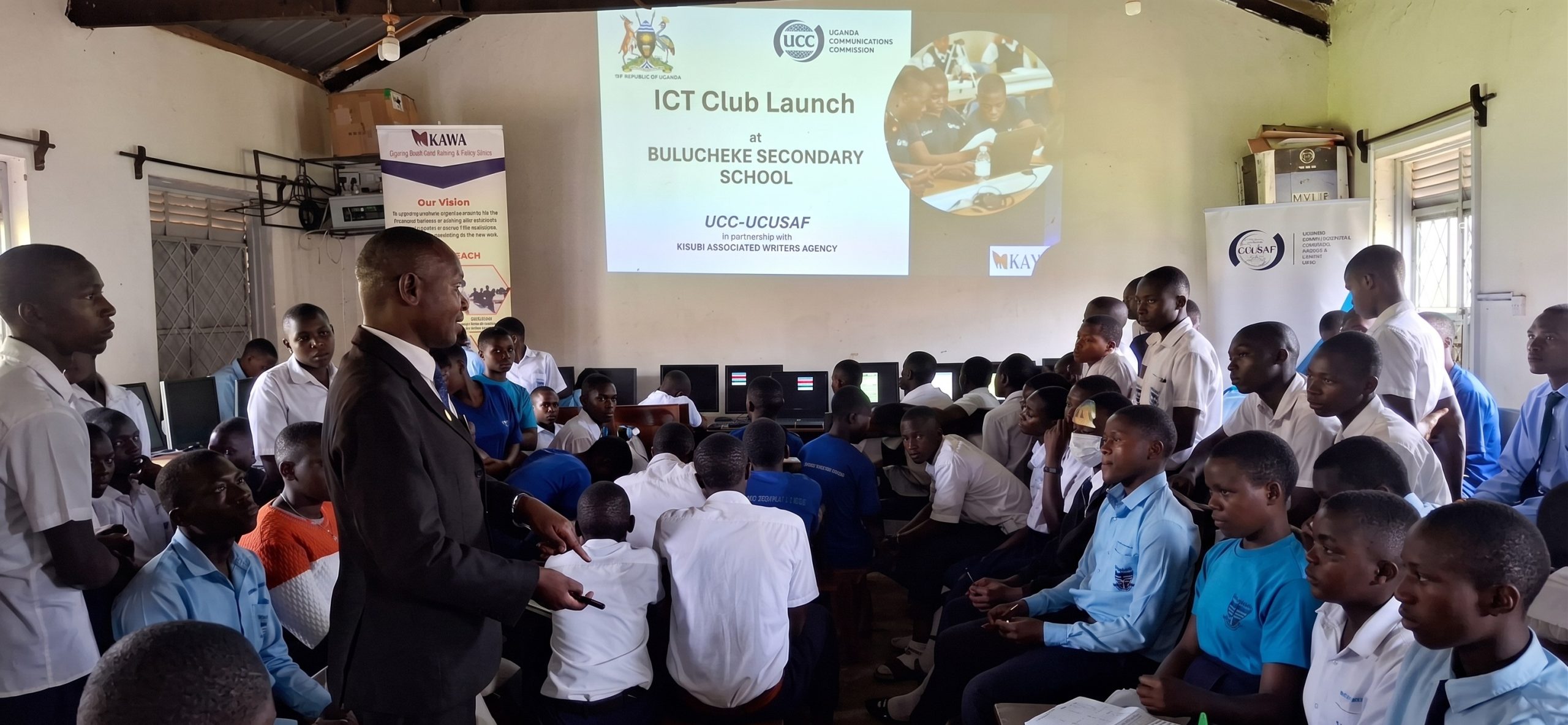
At KAWA Uganda, our work with ICT Clubs, teacher digital skilling and KAWA CONNECT reinforces an important principle: technology becomes educationally valuable when teachers and learners use it purposefully.
Imagine a school with twenty functioning computers.
If the laboratory remains locked for most of the week, the educational return on that investment is limited.
A school leader should establish a clear plan for access, practical sessions, teacher development, equipment maintenance, responsible internet use and learner safety.
Digital transformation should also extend beyond ICT as a standalone subject.
A geography teacher might use digital maps to explore settlement patterns. A science teacher might use simulations to explain difficult processes. A mathematics teacher could use spreadsheet activities to investigate data. An English teacher could guide learners in producing digital stories.
Where internet access is unreliable, offline educational content can help schools maintain meaningful learning activities.
School leaders should also understand emerging technologies such as artificial intelligence sufficiently to guide safe, age-appropriate and ethical educational use.
The objective is not to turn every headteacher into a computer programmer.
It is to equip education leaders to make informed decisions about technology investments, teacher preparation and learner opportunities.
7. School Improvement Requires Evidence, Not Assumptions
Many schools collect substantial amounts of information, yet do not consistently use it to guide improvement.
Attendance registers, continuous assessment records, examination results, inspection reports and learner progression data can reveal important patterns.
The real value of these records is not their existence. It is what school leaders do with the information.
Suppose examination results show that one class performs poorly in mathematics over several assessment periods.
The headteacher should not assume immediately that the subject teacher is incompetent.
The school should investigate whether the problem relates to prerequisite knowledge, absenteeism, teaching methods, insufficient practice, learning materials or other factors.
Data should initiate investigation, not automatically determine blame.
The Ministry of Education and Sports, through its Directorate of Education Standards, emphasizes stronger school supervision and data-informed improvement. Its Teacher Effectiveness and Learner Achievement (TELA) approach recognizes the headteacher’s role in monitoring teacher attendance, learner participation and effective use of instructional time.
However, attendance data alone cannot establish the quality of a lesson.
A teacher may be present throughout the school day without achieving the expected learning outcomes.
School leaders therefore need to combine administrative information with classroom observation, assessment evidence, learner feedback and professional judgment.
Introduce a monthly school learning review
Rather than focusing only on financial reports and administrative matters, school management meetings should examine a small number of meaningful learning indicators.
These may include learner attendance, completion of planned lessons, foundational literacy and numeracy performance, progress in practical competencies, teacher professional development, safeguarding concerns and interventions for struggling learners.
The meeting should end with specific actions, named responsibilities and realistic deadlines.
At the following meeting, leaders should review what was implemented and whether it made a difference.
This is how school data begins to influence real improvements.
8. Parents and Communities Are Partners in Educational Success
A school is not an isolated institution.
Learners arrive with experiences from their homes and communities, and their development is influenced by relationships both inside and outside the classroom.
Yet parent engagement is sometimes reduced to school-fees discussions, disciplinary meetings and occasional examination-result briefings.
Effective school leadership should create a broader partnership.
Parents can support reading at home, monitor attendance, encourage responsible behaviour, participate in school improvement discussions and contribute knowledge about community needs.
Local professionals and businesses can also enrich education through mentorship, career guidance, workplace exposure and practical demonstrations.
A school interested in agricultural innovation, for example, could invite experienced farmers or agricultural professionals to discuss local production challenges.
A school promoting digital innovation could build relationships with ICT practitioners, universities or responsible technology organizations to expose learners to real-world applications.
These partnerships must be purposeful, transparent and appropriately supervised.
The headteacher’s responsibility is to ensure that external contributions strengthen educational priorities rather than become isolated ceremonies or publicity activities.
Good leadership creates space for communities to contribute while keeping learner welfare and educational quality at the centre.
9. School Leaders Must Develop Leadership in Others
One of the mistakes schools can make is concentrating nearly every important decision in the headteacher’s office.
When this happens, teachers become dependent on instructions, emerging leaders lack experience, and school improvement slows whenever the headteacher is absent.
A more sustainable approach is to develop leadership throughout the institution.
Deputy headteachers, directors of studies, heads of department, senior teachers, librarians, ICT coordinators, club patrons and learner leaders can all contribute to school improvement.
For example, a science department could lead an initiative to strengthen practical investigations. An ICT coordinator could organize digital-skills workshops. A literacy committee could coordinate reading interventions, while learner leaders could support positive school culture.
However, delegation must involve more than assigning tasks.
Staff members need clearly defined responsibilities, appropriate authority, access to resources and opportunities to report progress.
Headteachers should remain accountable while giving colleagues room to contribute ideas and make decisions within agreed boundaries.
A good headteacher does not become less important by developing other leaders. The entire school becomes stronger.
10. A Practical 30-Day Improvement Plan for Headteachers
Educational improvement does not always require a large new budget. Many meaningful changes can begin with better organization, professional dialogue and consistent follow-up.
The following is a proposed starting framework that schools can adapt to their circumstances.
| Period | Priority action | Expected output |
| Week 1 | Meet teachers, observe selected lessons and review learner performance information | Identify three priority teaching and learning challenges |
| Week 2 | Organize professional discussions and agree on improvement strategies | Prepare a short school learning improvement plan |
| Week 3 | Implement targeted classroom support, mentoring and learner interventions | Put agreed improvements into practice |
| Week 4 | Review learner work, teacher feedback and early signs of progress | Identify successes, remaining difficulties and next actions |
At the end of the month, school leadership should be able to answer three important questions.
What have we learned about the quality of teaching and learning in our school?
What practical improvements have we introduced?
What evidence shows whether those improvements are helping learners?
Not every intervention will produce measurable improvement in four weeks. The purpose of this exercise is to establish a disciplined habit of identifying problems, taking action, reviewing evidence and refining practice.
Schools can then develop longer-term improvement plans with realistic targets.
11. What Education Officials and School Proprietors Must Do Differently
Improving school leadership cannot be left entirely to headteachers.
Education authorities, school proprietors, teacher training institutions and governing bodies also have important responsibilities.
First, school leaders need professional preparation. Strong classroom teaching experience provides an important foundation, but it does not automatically equip someone with skills in organizational leadership, teacher coaching, financial management, conflict resolution or strategic planning.
Second, education supervision should be developmental as well as accountable. Inspectors and education officers should help schools understand areas of weakness, identify appropriate remedies and monitor progress.
Third, governing bodies should evaluate school performance using broader indicators than enrolment, financial collections and examination grades alone.
Fourth, school leaders need adequate resources and reasonable working conditions. Expecting a headteacher to transform learning without the necessary staffing, authority or support is unlikely to produce sustainable results.
Finally, professional development for school leaders should be continuous.
Education is changing through curriculum reform, digital technology, evolving learner needs and new expectations of schools. Leadership preparation must respond to these changes.
School leadership should be treated as a professional discipline requiring deliberate preparation, mentoring, evaluation and improvement.
12. KAWA Uganda’s Call for a New Culture of School Leadership
At KAWA Uganda, we believe that meaningful education transformation must connect leadership development, teacher professional growth, curriculum implementation and responsible technology use.
Our experience in supporting teachers, promoting ICT Clubs and developing digital learning opportunities has highlighted the importance of school leadership in creating environments where innovation can take root.
A school may receive equipment, training opportunities or new learning resources. However, the sustainability of those investments depends significantly on whether its leadership promotes consistent use, staff collaboration, maintenance, monitoring and improvement.
For this reason, KAWA advocates a more integrated approach to school development.
Headteachers should understand the educational value of technology. Teachers should be supported to improve classroom practice. Learners should receive opportunities to demonstrate knowledge through practical activities. Parents should understand how to support learning, and education officials should use evidence to strengthen schools.
Innovation should not be confined to special events or competitions.
It should gradually become part of everyday teaching, school management and learner development.
Our challenge to school leaders is therefore simple:
Do not measure the success of your leadership only by what you have built, purchased or administered. Measure it also by what teachers are now able to do better and what learners are now able to understand, demonstrate and achieve.
Conclusion: The Future of Our Education Begins with Leadership That Values Learning
Our education system faces challenges that require investment, policy support and sustained institutional commitment.
Some schools struggle with inadequate classrooms, overcrowding, staffing shortages, limited teaching materials, unreliable electricity or insufficient access to digital technologies.
These challenges are real, and leadership alone cannot solve all of them.
Nevertheless, good leadership determines how effectively available resources are used, how teachers are supported, how difficulties are identified and how schools respond to opportunities for improvement.
A successful headteacher is not simply someone who maintains order or keeps the school operating.
A successful headteacher builds a professional community in which teachers improve, learners are supported, parents participate, resources are protected and decisions are guided by educational purpose.
The most important question facing school leaders should no longer be only, How well is my school being managed?
It must also be:
How much better are children learning because of the way I lead this school?
That is the standard of leadership government should increasingly expect, recognize and support.
And it is a standard worth pursuing in every school, regardless of its location, ownership or level of available resources.
About the Author
Moses Wamanga is an education practitioner and advocate for digital transformation, teacher professional development, ICT innovation and school improvement at KAWA Uganda. Through initiatives supporting digital learning, teacher capacity development and ICT Clubs, he promotes practical approaches to improving the quality and relevance of education in Uganda.
References and Further Reading
- UNESCO (2024). Global Education Monitoring Report 2024/5: Leadership in Education — Lead for Learning. https://www.unesco.org/reports/gem-report/en/2024
- National Curriculum Development Centre (2026). NCDC Releases Assessment Guidelines to Support Effective Implementation of the Advanced Secondary Curriculum. https://ncdc.go.ug/2026/07/27/ncdc-releases-assessment-guidelines-to-support-effective-implementation-of-the-advanced-secondary-curriculum/
- Ministry of Education and Sports, Uganda. Directorate of Education Standards. https://www.education.go.ug/directorate-of-education-standards-2/





Leave a Reply
You must be logged in to post a comment.