
A school’s core values should be evident in its classrooms, offices, playgrounds and relationships with families. They should influence how lessons are taught, how resources are managed, how concerns are addressed and how people treat one another.
For every value, the school should explain three things: what it means, what behaviour demonstrates it and what evidence shows that it is being practised.
The following examples can help school leaders translate values into clear expectations. Schools should adapt them to their circumstances and use them for reflection, staff development and improvement.
- Butaleja District Schools Directory – Nursery, Primary and Secondary Schools
- Mapping Education in Bushenyi: Directory of 254 Primary, Secondary & Vocational Institutions
- STOP Guessing Your Future! Your Complete KAWA Career Guidance Map – 70+ Links to Careers, Universities, Scholarships & Jobs in Uganda
- Applying the Ten Professional Standards to Transform School Leadership and Improve Education
- School Improvement: Leading Continuous Change for Better Teaching, Learning and School Performance
Integrity: Being Honest and Trustworthy
Integrity means acting honestly and doing what is right, including when nobody is watching. It requires consistency between what the school promises, what it records and what it actually does.
In school management, integrity should be visible in accurate records, responsible handling of funds, fair assessment and honest communication. When mistakes occur, staff should acknowledge and correct them.
For example, if an attendance register contains an error, the responsible teacher should correct it through an appropriate, traceable process. If a financial report contains an unexplained difference, management should investigate and resolve it.
Observable behaviour and evidence include:
- Attendance records that reflect actual attendance.
- Financial reports supported by receipts and other relevant records.
- Procurement decisions with documented reasons and appropriate approvals.
- Assessment results that reflect learners’ work.
- Enrolment figures that can be checked against school records.
- Corrections to inaccurate information, with an explanation where necessary.
Integrity also shapes what learners are taught about honesty. Teachers should acknowledge sources, discourage plagiarism and guide learners to take responsibility for their own work.
Reflection question: Can the school explain and support the information it presents to parents, governing bodies and other stakeholders?
Respect: Protecting Dignity in Every Interaction
Respect means recognising the dignity of every person and treating them with consideration. It should guide communication between leaders and staff, teachers and learners, learners themselves, and the school and its families.
Respect is particularly important when someone has made a mistake, raised a complaint or expressed a different opinion. These situations reveal whether the school’s values hold under pressure.
For example, a learner who gives an incorrect answer should receive guidance that helps them learn. A parent raising a concern should be heard courteously, with sensitive information handled discreetly.
Observable behaviour and evidence include:
- Considerate language in classrooms, meetings and school communication.
- Correction of mistakes without public humiliation.
- Complaints received, recorded and followed up respectfully.
- Sensitive conversations held in an appropriate setting.
- Fair treatment across different backgrounds, beliefs and abilities.
- Learners given opportunities to ask questions and seek help.
Respect does not remove the need for clear expectations. It shapes how those expectations are explained and upheld.
Reflection question: Would a learner, parent or staff member feel able to raise a concern without fear of ridicule or retaliation?
Responsibility: Fulfilling Duties and Following Through
Responsibility means understanding one’s duties, carrying them out reliably and accepting accountability for the results.
A responsible school community cares for shared property, honours commitments and reports problems early. Leaders demonstrate responsibility by ensuring that agreed actions receive follow-up.
For example, reporting a broken classroom door is an important first step. Responsibility also requires someone to assess the problem, arrange an appropriate response and check that the issue has been addressed.
Observable behaviour and evidence include:
- Teachers attending and teaching their scheduled lessons.
- Learners completing appropriate classroom and leadership duties.
- Duty staff understanding and performing their assigned roles.
- Textbooks, equipment and other resources being issued and returned responsibly.
- Faults and safety concerns being reported promptly.
- Meeting actions having named owners and review dates.
- Management checking whether agreed tasks have been completed.
Learner responsibilities should suit their age and abilities and be carried out safely.
Reflection question: When the school agrees on an action, is it clear who will do it and who will check progress?
Excellence: Preparing Well and Improving Continuously
Excellence means working carefully, maintaining meaningful standards and using evidence to improve.
It should be visible in preparation, teaching, feedback, professional learning and the quality of school management. It should also recognise learners’ progress from different starting points.
For example, a teacher demonstrates excellence by identifying a common misunderstanding in learners’ work, adjusting the next lesson and checking whether understanding has improved.
Observable behaviour and evidence include:
- Lessons prepared with clear learning intentions and suitable activities.
- Learning materials organised before they are needed.
- Assessment feedback that helps learners improve.
- Staff participating in relevant professional development.
- Teachers applying and reviewing what they learn.
- Performance information used to identify strengths and gaps.
- Improvement actions followed by a review of their effect.
Schools should recognise quality in academic work, practical skills, creativity, sports, leadership and service.
Reflection question: What has improved because staff and learners received feedback and acted on it?
Inclusion: Enabling Meaningful Participation
Inclusion means identifying and addressing barriers that prevent learners from attending, participating, learning or feeling that they belong.
It requires attention to girls, boys, learners with disabilities and learners facing other difficulties. Support should respond to actual needs while protecting privacy and avoiding labels that stigmatise individuals.
For example, a learner who struggles to read small print may need a clearer copy, suitable seating or another accessible format. A learner who repeatedly misses school may need a supportive conversation with the family to understand the reasons.
Observable behaviour and evidence include:
- Facilities and learning spaces that learners can access and use.
- Teaching methods that allow different ways to participate.
- Learning resources adapted where needed.
- Fair opportunities to join clubs, sports and learner leadership.
- Support for learners at risk of falling behind or leaving school.
- Classroom interaction that encourages participation beyond the most confident learners.
- Follow-up that checks whether support is helping.
Providing a place in the classroom is only the beginning. The school should also consider whether the learner can understand, contribute and make progress.
Reflection question: Which learners participate least, and what can the school change to support them?
Teamwork: Working Together Towards Shared Goals
Teamwork means combining knowledge, effort and responsibility to achieve agreed results. It depends on clear roles, respectful communication and reliable contributions.
In schools, teamwork should connect departments, committees, learner groups and leadership structures. Collaboration becomes useful when it leads to action and improved practice.
For example, teachers may jointly examine why learners struggle to interpret written questions, agree on approaches across subjects and review learner progress together.
Observable behaviour and evidence include:
- Joint planning with clear tasks and responsibilities.
- Committees that meet, act and report on progress.
- Teachers sharing resources and supporting colleagues.
- Learner group activities in which everyone has a meaningful role.
- Consultation with relevant stakeholders before significant decisions.
- Collaborative responses to learning, welfare and operational challenges.
- Shared recognition of contributions and achievements.
A committee’s existence alone does not demonstrate teamwork. Its contribution should be visible in the work completed.
Reflection question: What has the school achieved through collaboration that individuals would have struggled to accomplish alone?
Innovation: Testing Better Ways to Solve Problems
Innovation means developing or adapting useful approaches to improve learning and school practice.
It can involve technology, but it can also involve locally made learning materials, a better recordkeeping method or a more effective way to organise classroom activities.
For example, teachers might develop teaching aids from available materials, while an ICT Club might create an offline resource index that helps learners find suitable content more easily.
Observable behaviour and evidence include:
- Learner projects responding to clearly identified problems.
- ICT Clubs and other clubs undertaking purposeful activities.
- Teachers testing and reviewing new teaching approaches.
- Locally developed learning resources.
- Appropriate technology chosen for its educational usefulness.
- Feedback used to improve an approach or system.
- Successful ideas documented and shared with others.
Schools should give learners room to investigate, test and improve ideas. Projects should be suitable for their age, available resources and safety needs.
Reflection question: What problem did an innovation address, and what evidence shows that it helped?
Service: Using Knowledge and Skills to Support Others
Service means contributing to the wellbeing of others through useful, respectful action.
Within a school, service may involve peer learning, mentorship, learner leadership or support for shared activities. Beyond the school, it may involve partnerships responding to needs identified with the community.
For example, older learners can support younger learners with reading under teacher supervision. Teachers can mentor colleagues, while school clubs can work with community members on an appropriate environmental project.
Observable behaviour and evidence include:
- Community activities planned around an identified need.
- Peer learning with guidance and follow-up.
- Learner leaders representing and supporting fellow learners.
- Teachers mentoring colleagues.
- Partnerships with clear purposes and responsibilities.
- Participants reflecting on what they contributed and learnt.
- Feedback from the people the activity was intended to support.
Service activities should be safe, age-appropriate and respectful. Learners should understand their purpose and how their contribution benefits others.
Reflection question: How do we know that our service activities are useful to the people involved?
Reviewing Whether Values Are Being Practised
Schools can use a simple review table during staff meetings, departmental discussions or school improvement reviews.
| Value | Agreed behaviour | Evidence to consider | Improvement needed |
| Integrity | Keep accurate records. | Registers and supporting documents. | Address unexplained gaps. |
| Respect | Handle concerns courteously. | Feedback and complaint follow-up. | Improve listening and response. |
| Responsibility | Complete agreed duties. | Duty records and action reviews. | Clarify ownership of tasks. |
| Excellence | Use feedback to improve. | Learner work and revised teaching. | Strengthen follow-up support. |
| Inclusion | Address barriers to participation. | Participation patterns and support reviews. | Adapt activities or resources. |
| Teamwork | Contribute to shared tasks. | Joint plans and completed actions. | Improve coordination. |
| Innovation | Test useful improvements. | Projects, feedback and results. | Refine and share effective approaches. |
| Service | Respond to an identified need. | Activity records and participant feedback. | Improve relevance and participation. |
Documents provide useful evidence, but schools should also listen to learners, staff and parents and observe everyday practice. A completed form cannot, on its own, establish that a value is understood or consistently applied.
School values become credible through repeated experience: an honest record, a well-prepared lesson, a respectful response and an agreed action completed.
-
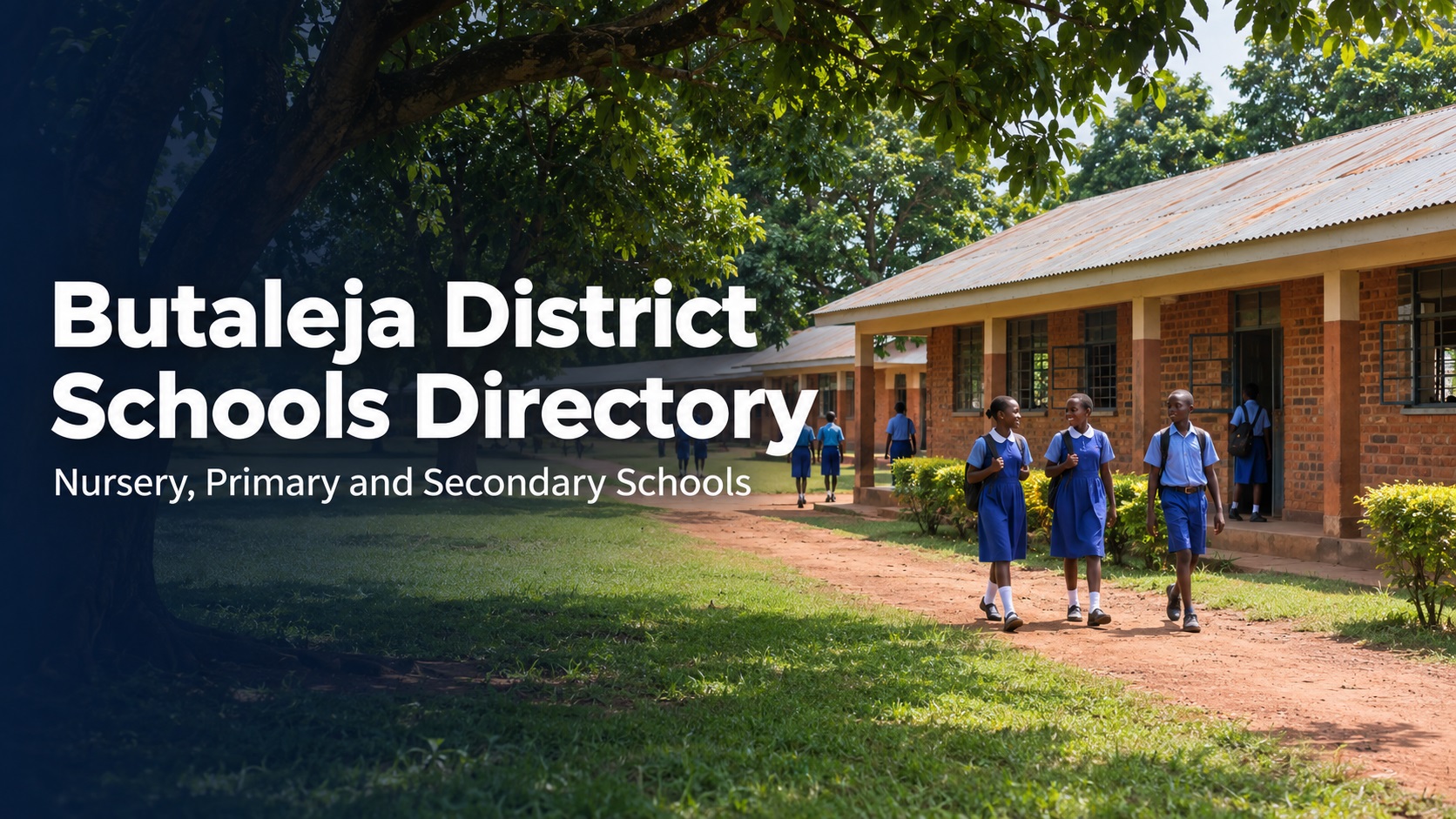
Butaleja District Schools Directory – Nursery, Primary and Secondary Schools
Butaleja District • Eastern Uganda Schools in Butaleja District Find nursery, primary and secondary schools by area, parish, ownership and EMIS code. Headquarters in Butaleja town. Borders Budaka to the north, Mbale to the east, Tororo to the south-east, Bugiri to the south and Namutumba to the west. Clear Tip: Type a name to filter…
-

Mapping Education in Bushenyi: Directory of 254 Primary, Secondary & Vocational Institutions
Schools, Colleges and Universities in Bushenyi District This KAWA Uganda directory helps families, learners and teachers find nursery schools, primary and secondary schools, vocational institutes, colleges and university campuses in Bushenyi District, including Bushenyi–Ishaka Municipality. Nursery and early childhood centres Primary schools Secondary schools Technical colleges and vocational institutes Nursing and allied health training Teacher…
-

STOP Guessing Your Future! Your Complete KAWA Career Guidance Map – 70+ Links to Careers, Universities, Scholarships & Jobs in Uganda
KAWA Uganda · Career Guidance What could you do after school? Explore careers, see where you can train and compare your study options in Uganda. This guide brings together the KAWA Career Guidance Handbook, occupational profiles, admissions and scholarship resources, and 39 institution profiles. Start planning ↓ Take the 30-sec quiz ✨ 📚 72+ Links🎓…