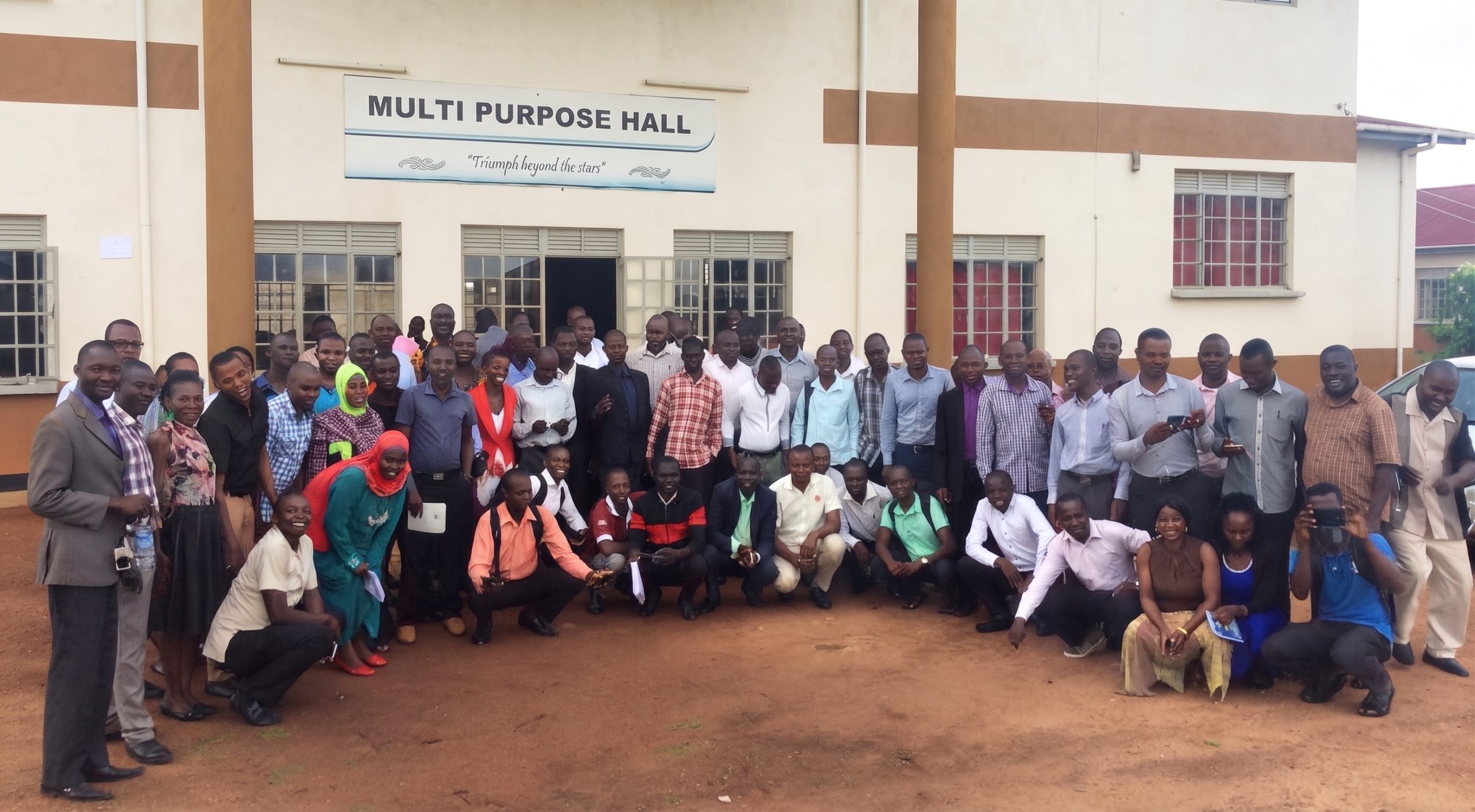
In May 2018, the Ministry of Education and Sports (MoES), the Uganda Communications Commission (UCC), through its Rural Communications Development Fund (RCDF), and Kisubi Associated Writers’ Agency (KAWA) brought together ICT and Computer Studies teachers from schools across Eastern Uganda for a five-day tooling and re-tooling workshop at Mbale Secondary School.
The workshop was organised at a time when government investment in school ICT infrastructure needed to be matched by stronger teacher capacity, effective use of computer laboratories and meaningful integration of technology into teaching and learning.
The initiative recognised an important reality: providing computers to schools does not automatically translate into improved learning. Teachers need the knowledge, practical skills and pedagogical confidence to use those facilities effectively. School administrators must also appreciate the value of ICT, support its use and ensure that equipment is properly maintained.
The workshop brought together teachers from 66 schools, according to the report, and provided an opportunity to examine the progress, challenges and practical possibilities of ICT in education in the Eastern Region.
Beyond the training sessions, the report remains a useful record of the issues that education stakeholders must continue to address when investing in technology for schools.
Why the workshop was important
The Ministry of Education and Sports, working with UCC through the RCDF, had supported the establishment of ICT laboratories in government secondary schools. The next important task was to strengthen the capacity of teachers to use these facilities.
The workshop therefore went beyond basic computer literacy. Its objectives included improving teachers’ understanding of the ICT and Computer Studies syllabuses, strengthening teaching methods, developing assessment skills and encouraging the use of practical, project-based learning.
Participants were also introduced to practical areas such as desktop publishing, website development and elementary programming. The training considered how ICT could be integrated across different subjects rather than being confined to Computer Studies.
Another important objective was to enable teachers to identify the challenges affecting ICT use in their schools and districts, develop possible solutions and identify stakeholders who could support the sustainability and expansion of school computer laboratories.
This approach was significant because it treated teachers not merely as recipients of training but as people capable of identifying problems and initiating improvements within their schools and communities.
The contribution of the Ministry of Education and Sports
The Ministry of Education and Sports played an important role in the initiative through its involvement in school ICT development, teacher capacity building and the coordination of education-sector priorities.
At the workshop, Mrs Mary Ntete Kunteese, Principal Education Officer in the Secondary Education Department and the Ministry’s desk officer for the Eastern Region, represented the Ministry.
She appreciated KAWA for taking ICT-in-education services closer to schools, particularly those in rural areas. She also recognised the importance of addressing the gap between teachers who possessed ICT skills but lacked pedagogical skills and teachers who had teaching experience but insufficient ICT skills.
Her message to participants was practical. Teachers were encouraged to become innovative, maintain the computer equipment under their responsibility, apply the knowledge acquired during the workshop and pursue continuous professional development, including through online courses.
She further encouraged teachers to develop personal professional growth plans and to consider opportunities for contributing to educational publishing.
One important lesson from the Ministry’s contribution is that teacher development cannot be treated as a one-off activity. The introduction of new equipment, curriculum approaches and digital learning resources must be accompanied by continuous professional development and appropriate institutional support.
The Ministry’s role also demonstrates the importance of linking school-level training to national education priorities. Training is most valuable when it responds to the actual needs of schools and helps teachers implement the curriculum more effectively.
UCC and the importance of investing in both infrastructure and capacity
UCC’s contribution, through the Rural Communications Development Fund, formed part of the wider effort to extend ICT facilities and communication services to schools.
The workshop provided an opportunity for UCC representatives to engage directly with teachers. Mr Ibrahim Bbosa, Manager of Consumer Affairs, and Mr Paul Mukasa, Manager of Content Regulation, made presentations on the Commission’s work and issues relating to the communications sector.
The report records discussions on consumer rights, complaints procedures, communications services and content regulation. These engagements helped teachers understand that digital development also requires awareness of the rights, responsibilities and protections associated with communication services.
The wider lesson from UCC’s involvement is that investment in ICT infrastructure should be accompanied by efforts to ensure that the infrastructure is understood, used and sustained.
A computer laboratory is not an end in itself. Its value is measured by the opportunities it creates for learners, teachers and communities. Schools need reliable electricity, adequate equipment, technical support, connectivity where available, and trained personnel who can put the facilities to productive use.
The report also shows why the sustainability of ICT investments requires collaboration between government institutions, schools, teachers and other stakeholders.
What the teachers discovered: The real challenges facing ICT in schools
One of the most valuable parts of the workshop was the district group discussions. Teachers worked together to identify the barriers affecting ICT use in their schools and propose possible solutions.
The discussions revealed that the challenges were not limited to a shortage of computers. They involved infrastructure, leadership, teacher capacity, maintenance, connectivity and attitudes towards technology.
The report’s summary of district presentations identified the following major challenges:
1. Unreliable or inadequate electricity
Lack of stable power was identified as the most serious challenge in the regional presentations. Some schools were not connected to the national electricity grid, while solar systems were not always reliable, particularly during periods of heavy rain.
This finding demonstrates that ICT planning must consider the basic infrastructure needed to operate and sustain digital equipment.
2. Negative attitudes towards ICT
The report identified negative attitudes among some school administrators and teachers as another major barrier. Where ICT is regarded as an expensive subject rather than an important resource for teaching and learning, laboratories may receive inadequate support and maintenance.
Technology integration requires leadership commitment. School administrators must create an environment in which teachers are encouraged to use available resources across the curriculum.
3. Inadequate computers compared with learner numbers
Many schools had limited computers in relation to their student populations. This restricted access, particularly for learners who were not studying Computer Studies or Sub-ICT.
The lesson is that computer laboratories should support learning across the school, not only the teaching of one subject.
4. Limited, slow or expensive internet connectivity
The report noted that some schools struggled to sustain internet connectivity after the initial period of support had ended.
This raises an important planning question: how can schools continue benefiting from digital learning resources when internet services are unavailable, unreliable or unaffordable?
It also points to the importance of exploring appropriate offline digital learning solutions alongside online platforms.
5. Inadequate numbers of trained ICT teachers
The discussions revealed that some schools relied on teachers trained in other subjects to teach ICT, while some teachers with ICT qualifications faced challenges relating to formal employment and professional deployment.
The report therefore highlighted the need for deliberate investment in the preparation, recruitment, support and professional development of ICT teachers.
6. Poor maintenance and servicing of equipment
The report also identified inadequate maintenance as a major concern. Limited technical skills, insufficient administrative support and challenges accessing computer administration facilities affected the ability of schools to keep equipment functioning.
Schools must plan for maintenance from the beginning of an ICT project. Equipment needs responsible users, basic technical support, maintenance schedules and realistic budgets.
Other challenges included shortages of projectors and the absence of computer laboratory technicians in some schools.
Important lessons for teachers and school leaders
The 2018 report offers lessons that remain useful to anyone responsible for planning, managing or implementing ICT in education.
First, computer literacy is not the same as ICT integration.
A teacher may know how to operate a computer but still lack the skills to use technology to improve learning in Mathematics, Geography, Biology, English, History or other subjects.
Professional development must therefore focus on how technology supports teaching, assessment, learner participation and the understanding of difficult concepts.
Second, practical training is more valuable when teachers can apply it immediately.
The workshop used participatory approaches, group discussions, practical tasks and presentations. This allowed teachers to draw on their professional experiences and learn from one another.
Training should not be dominated by presentations and theoretical explanations. Teachers need opportunities to practise, create resources, solve problems and demonstrate what they have learnt.
Third, ICT laboratories should serve the whole school.
The computer laboratory should not be viewed as a facility reserved for Computer Studies lessons. With appropriate planning, teachers across the curriculum can use digital resources to enrich their lessons and expose learners to new ways of understanding information.
Fourth, school leadership determines sustainability.
A school may receive computers and internet connectivity, but these investments can lose value if administrators do not provide adequate support, encourage use, budget for maintenance and monitor the condition of equipment.
Fifth, teachers should become problem-solvers.
The district discussions encouraged teachers to identify problems within their reach, consider possible interventions, identify beneficiaries and determine the support required.
This is an important model of professional practice. Teachers should not only report challenges; they should also participate in developing practical solutions.
Why the district discussions were particularly valuable
The workshop’s district-based discussions deserve special attention because they connected professional training to the realities of individual schools.
Teachers were organised into groups according to the locations of their schools. They examined the challenges affecting ICT use, proposed solutions and considered which stakeholders could help.
The discussions also strengthened teamwork, critical thinking, problem-solving, budgeting and advocacy skills.
Participants were encouraged to identify possible partners, including parents, non-governmental organisations and old students, who could support the utilisation, sustainability and expansion of school computer laboratories.
This approach provides an important lesson for education programmes: schools should participate in diagnosing their own challenges and designing interventions. Solutions developed with the involvement of teachers and local stakeholders are more likely to respond to actual needs.
What future ICT-in-education programmes should learn
The report suggests several priorities for institutions and organisations involved in ICT development in schools.
- Train teachers continuously. Initial training should be followed by refresher courses, school-based support, peer learning and opportunities for professional development.
- Connect ICT training to classroom practice. Teachers should be able to demonstrate how technology improves lesson delivery, assessment, research, collaboration and learner understanding.
- Plan for infrastructure sustainability. Electricity, equipment maintenance, connectivity, security and technical support should be considered as part of the original investment.
- Strengthen school leadership. Head teachers and school management teams should understand their responsibilities in supporting ICT integration and maintaining school facilities.
- Promote access beyond Computer Studies. ICT facilities should benefit learners and teachers across different subjects, within the available resources and appropriate school arrangements.
- Use local evidence to guide interventions. District-level consultations and school needs assessments help identify the challenges that require urgent attention.
- Build partnerships around clear responsibilities. Government, regulators, schools, development partners and education organisations should coordinate their contributions and follow up on agreed actions.
- Measure outcomes, not just activities. The success of an ICT programme should be assessed by how effectively teachers use technology, how many learners benefit, whether equipment remains functional and whether learning activities improve.
KAWA’s role in the development of ICT in education
For KAWA, the Mbale workshop formed part of a wider commitment to strengthening education through teacher development, educational publishing and the use of appropriate technology.
KAWA had recognised that computer literacy alone was insufficient. Teachers needed support to integrate ICT into different subjects and use digital resources to make learning more practical and meaningful.
The report records that KAWA had signed a Memorandum of Understanding with the Ministry of Education and Sports in 2017. The areas of collaboration included training educators, developing digital content, supporting online and offline e-learning platforms, providing academic e-library resources and making educational materials available in digital formats.
KAWA also highlighted its work in computer repair and maintenance training, educational digital content development, ICT literacy workshops and the eLearning Uganda conferences.
The 2018 workshop demonstrated the importance of bringing these different areas together. Teacher capacity, curriculum delivery, digital content, equipment maintenance and school leadership are interconnected. Progress in one area is difficult to sustain when the others are neglected.
A continuing lesson for Uganda’s digital education agenda
The 2018 Mbale workshop remains an important historical example of collaboration between the Ministry of Education and Sports, UCC and an education-sector organisation to address practical challenges in the use of ICT in schools.
Its central message is straightforward: digital transformation in education is not achieved by distributing computers alone. It requires capable teachers, supportive school leadership, relevant learning content, reliable infrastructure, maintenance systems and sustained institutional commitment.
The report also reminds us that teachers are essential partners in digital transformation. They must be involved in identifying needs, shaping solutions, developing learning resources and ensuring that technology contributes to better teaching and learning.
As Uganda continues to invest in digital education, the experiences documented in 2018 deserve to remain part of the national conversation. They provide a useful reference point for assessing progress, identifying persistent challenges and designing more sustainable interventions.
For education stakeholders, the task is not simply to put technology in schools. It is to ensure that teachers and learners can use it meaningfully, consistently and productively.