Education in Amuria District: District Education Profile, Institutional Directory & Digital Learning
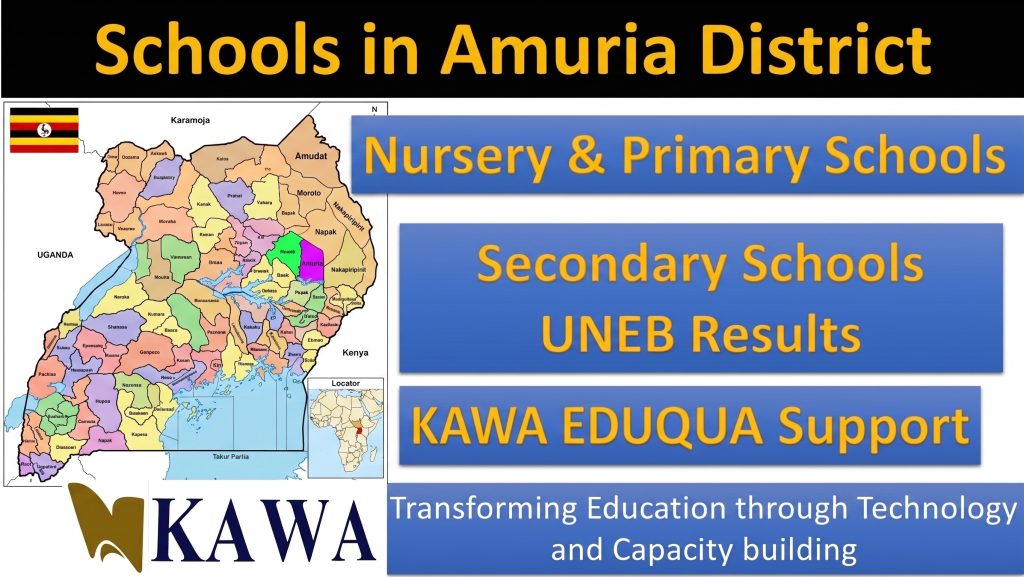
Amuria District is an educational and agrarian district located in the northern part of the Teso Sub-region, Eastern Uganda. Covering an area of approximately 1,383 square kilometres, its administrative headquarters are situated in Amuria Town Council, approximately 45 kilometres north of Soroti City and about 325 to 330 kilometres from Kampala. The district is bordered by Katakwi District to the east, Soroti District to the south, Kapelebyong District to the north, Kalaki District to the southwest, and Alebtong District to the northwest.
According to the 2024 National Population and Housing Census, Amuria District has a total population of 251,653 people (118,804 males and 132,849 females) residing across 47,550 households, with an average household size of 5.3 persons. The population is predominantly rural (90.6%) and youth-dominated, with 54.5% of residents aged 0–17 years. Administratively, the district is structured into two parliamentary constituencies—Amuria County (166,650 residents) and Orungo County (85,003 residents)—comprising 18 lower local governments (14 rural sub-counties and 4 town councils), 99 parishes/wards, and 528 villages/cells.
KAWA Uganda works in close partnership with the Chief Administrative Officer (CAO), Ms. Angella Akurut, the District LC V Chairperson, Mr. Isaac Okello Omiat, and the District Education Officer (DEO), Ms. Florence Ekolot, to address severe primary teacher shortages (56% staffing level), infrastructural deficits, and low literacy proficiency. Through KAWA Connect offline content servers, teacher Continuous Professional Development (CPD), science kit integration, and secondary school ICT Clubs, KAWA delivers sustainable digital educational interventions across the district.
Economic Structure, Governance & Infrastructure Realities
Agrarian Economy & Enterprise
Agriculture is the economic anchor of Amuria, with 91.7% of households engaged in crop farming alongside extensive cattle, goat, and poultry rearing. Main crops include cassava, groundnuts, maize, beans, sorghum, millet, sweet potatoes, simsim, citrus, and improved mangoes, alongside paddy rice in seasonal wetlands (covering 13.6% of the district’s land area). ICT Clubs and school STEM programmes leverage these agricultural contexts to design digital tools for farm records, crop disease tracking, weather updates, and market pricing.
Administrative Hierarchy
Amuria is divided into two counties spanning 18 lower local governments:
- Amuria County (11 LLGs): Amuria Town Council, Kuju, Abia, Asamuk Town Council, Asamuk, Wera Town Council, Wera, Amolo, Abarilela, Apeduru, and Willa.
- Orungo County (7 LLGs): Orungo Town Council, Orungo, Morungatuny, Ogolai, Olwa, Ogongora, and Akeriau.
Critical Infrastructure Gaps
District engineering audits establish severe school infrastructure deficits: a deficit of 634 classrooms (116 pupils per classroom), a shortage of 869 latrine stances (87 pupils per stance), and a deficit of 11,602 desks (7 pupils per desk). Additionally, 41 of the district’s 99 parishes lack a government-aided primary school, forcing pupils to commute up to 9 kilometres daily.
Digital Environment & Offline Systems
Only 4.5% of residents aged 10+ use the internet, with commercial data costs and unstable grid electricity hindering connectivity. To bridge this gap, KAWA Connect offline learning micro-servers operate on local school Wi-Fi and solar setups, delivering complete syllabus digital content, video lessons, and interactive textbooks to classrooms without internet dependency.
Statistical Overview of Education in Amuria District
Reconciled data comparing the Ministry of Education and Sports (MoES) Statistics Abstract 2025 and the District Development Plan:
| Education Level | Government / Public | Private / Community | Total Institutions | Reported Enrolment |
|---|---|---|---|---|
| Pre-Primary (ECCE) | 0 | 84 District Roster (14 EMIS 2025) | 84 | 951 in EMIS (504 Boys | 447 Girls) |
| Primary Education | 68 | 39 EMIS (89 District Roster) | 107 – 157 | 59,834 – 64,268 Learners |
| Secondary Education | 10 Budget-Funded | 9 EMIS (8 District Roster) | 17 – 20 | 6,170 (3,113 Boys | 3,057 Girls) |
| Technical / Vocational (TVET) | 2 (Wera TS & Ogolai TI) | 3 – 6 Pending Verification | 5 – 8 | 951+ Students |
| Total System Baseline | 80 | 135+ | 215+ | 71,000+ Learners |
In the 2024 PLE, 3,690 candidates sat and 2,990 passed (81% pass rate; performance index 46%). However, foundational literacy assessments reveal that only 16.1% of P6 learners achieve English literacy proficiency and 37.6% achieve numeracy proficiency. Amuria’s approved FY 2026/27 Education Department budget stands at UGX 17.11 billion (UGX 13.53 billion in wages).
Directory of Secondary Schools in Amuria District
Publicly funded, seed, and private secondary institutions operating across Amuria and Orungo counties:
| No. | Secondary School Name | Funding / Governance Status | Location (County / Sub-County) |
|---|---|---|---|
| 1 | Amolo Seed Secondary School | Government Seed (UgIFT Supported) | Amuria County / Amolo Sub-county |
| 2 | Amuria Secondary School | Government-Aided (Equipped with Science/ICT Lab) | Amuria County / Amuria Town Council |
| 3 | Apeduru Seed Secondary School | Government Seed (UgIFT Supported) | Amuria County / Apeduru Sub-county |
| 4 | Asamuk Seed Secondary School | Government Seed | Amuria County / Asamuk Sub-county |
| 5 | John Eluru Memorial Secondary School | Government-Aided | Amuria District |
| 6 | Kuju Seed Secondary School | Government Seed | Amuria County / Kuju Sub-county |
| 7 | Morungatuny Seed Secondary School | Government Seed (Equipped with Science/ICT Lab) | Orungo County / Morungatuny Sub-county |
| 8 | Ococia Girls Secondary School | Government-Aided (Girls’ Boarding O & A Level) | Orungo County / Ogolai Sub-county |
| 9 | Orungo High School | Government-Aided (Equipped with Science/ICT Lab) | Orungo County / Orungo Town Council |
| 10 | St. Paul Abarilela Secondary School | Government-Aided | Amuria County / Abarilela Sub-county |
| 11 | Wera Seed Secondary School | Government Seed (Equipped with Science/ICT Lab) | Amuria County / Wera Sub-county |
Technical, Vocational & Higher Education Institutions
Wera Technical School
Location: Amuria County (Wera)
Programmes: Government-supported TVET institution receiving budget capitation. Offers National and Junior Technical Certificates in Building Construction, Motor Vehicle Mechanics, Carpentry, Electrical Works, and Agriculture.
Ogolai Technical Institute
Location: Orungo County (Ogolai)
Programmes: Publicly funded vocational training centre offering practical trades in metal fabrication, solar installation, masonry, plumbing, garment design, and agribusiness entrepreneurship.
Higher Education Access: While no chartered university campus is physically situated within Amuria District, secondary graduates transition to regional universities including Soroti University, Busitema University (Arapai Campus), Kyambogo University Study Centre, Kumi University, and Lira University.
Verified Government Primary Schools Directory (68 Schools)
Official master roster of the 68 government-aided primary schools funded under the Amuria District Local Government Approved Budget Estimates for FY 2026/27:
Amuria County (Part 1)
- Kuju Area: Abuket, Amilimil, Amusus, Angorom, and Aojakitoi Primary Schools.
- Apeduru Area: Acia, Ajaki Asinge, Amucu, Apeduru, Dokolo-Asamuk, Odoon, and Takaramyem Primary Schools.
- Willa Area: Abota, Abwanget-Kuju, Akisim-Kuju, Alere, and Ojota Primary Schools.
- Amuria Town Council: Amuria Primary School and Kuju Primary School.
- Asamuk Area: Aparisa-Asamuk, Atirir-Asamuk, Obur, Okwalo, and Olekai Primary Schools.
Amuria County (Part 2)
- Wera Area: Ajota, Angole-Wera, Aten, Olianai, Opam, and Wera Primary Schools.
- Abarilela Area: Abarilela, Akamuriei, Arute, Katine-Wera, Moru Arengan, Ocal, Oidala, Olelai-Wera, and Ongutoi Primary Schools.
- General Capitation Allocation: Abia, Agereger, Agwara-Kuju, Amolo, Amukurat, Asamuk/Moru Asamuk, Awelu, Ayola, Jalam, Oyamai, Torongole, and Willa Primary Schools.
Orungo County
- Akeriau Area: Akeriau, Okude, Otubet, and Temele Primary Schools.
- Morungatuny Area: Ateuso, Odekere, and Ogangai Primary Schools.
- Ogolai Area: Akore, Ococia, Ogolai, Ogwarat, and Okao Primary Schools.
- Orungo Area: Moruinera, Ocakai, Oriebai, Orungo, and Olwa-Orungo Primary Schools.
Community & Private Primary Schools Directory
Working directory of registered private, faith-based, and community primary schools across Amuria District:
- Agape Aloysius Primary School
- Agule Primary School
- Aita Modern Primary School
- Akili Junior School
- Akisim Shepherds Primary School
- Alliance Global Primary School
- Amolo Township Primary School
- Amuria Integrated Primary School
- Amuria Junior School – Ariamet
- Angerepo Willa Primary School
- Aoja School
- Aojakitoi Modern Primary School
- Apeulai Township Primary School
- Apeulia Vineyard Primary School
- Asamuk Parents School
- Atakia Primary School
- Atapara Primary School
- Atubakinei-Ojamai Primary School
- Awakwet Primary School
- Bright Hope Primary School
- Bright Kids Primary School – Abilesas
- Bright Primary School
- Canon John Primary School
- Christ the King Primary School
- Cornerstone Primary School
- Delighted Angels Primary School
- Divine Grace Primary School
- Divine Mercy Primary School
- Eagles Nest Primary School
- El-Shaddai Primary School
- Everlight Primary School
- Good Foundation Primary School
- Kaswabuli Primary School
- King Solomon Primary School
- Lifeline Primary School
- Madel Infant ECD Centre
- Morungatuny Modern Primary School
- Morungatuny Parents Primary School
- Narrow Gates Primary School
- New Hope Parents Junior School
- Odele Township Primary School
- Odepe Primary School
- Ojama Primary School
- Ojolai Community Primary School
- Olaboro Franco Primary School
- Olungura Community Primary School
- Ongolol Primary School
- Orungo Parents Primary School
- Orungo Township Primary School
- Owangai Primary School
- Paradise Junior Academy
- Rainbow Primary School
- Rhoda Acen Primary School
- Santa Lucia Primary School
- Shammah Primary School
- St. Albert Akoyo Primary School
- St. Aloysius Primary School
- St. Benedict Primary School Acucu
- St. Boniface Primary School
- St. Bonny Apuriet Primary School
- St. Charles Primary School
- St. Clare Primary School
- St. Enos Primary School
- St. Hilder Primary School
- St. John Primary School
- St. John’s Education Centre
- St. Joshua Primary School
- St. Jude Primary School
- St. Martin Primary School
- St. Paul Junior School
- St. Silver Primary School
- Stan Hope Primary School
- Star Primary School
- Valour Children Primary School
- Victory Primary School
- Wateso Primary School
- Wera Grace Primary School
Nursery & Early Childhood Development (ECD) Centres
Working directory of established pre-primary and kindergarten centres across Amuria District:
- Akisim Shepherd Nursery School
- Amuria Eagle’s Nest Nursery School
- Amuria Grammar Junior School
- Amuria Integrated Nursery School
- Angerepo-Willa Nursery School
- Aoja Nursery School
- Canaan Christian Nursery School
- Canon John Nursery School
- Destiny Nursery School
- Exodus Junior Nursery School
- Jamela-Amuria Nursery School
- Jehiel Christian Nursery School
- Lifeline Nursery School
- Living Hope Education Centre
- New Hope Nursery and Primary School
- Orungo C.O.U. Star Nursery School
- Orungo Parents Nursery School
- Paradise Kindergarten
- Selobe Memorial Nursery School
- St. Gerald Okude Nursery School
- St. John’s Education Centre Nursery School – Orungo
- St. Paul Okude Nursery School
- St. Silus Foundation Nursery School
- St. Simon Ogolai Nursery School
Connect Your School in Amuria District to KAWA
Are you a Headteacher, teacher, patron, or educational development partner in Amuria District? Connect with KAWA to access curriculum-aligned offline learning servers (KAWA Connect), teacher professional development, school ICT club kits, and laboratory sustainability frameworks.
Education information last verified: August 2026. Institutional records and statistical baselines are reconciled in collaboration with the Amuria District Education Office (DEO) and national census baselines.